spot_img

HinduPost is the voice of Hindus. Support us. Protect Dharma

Will you help us hit our goal?

spot_img
Hindu Post is the voice of Hindus. Support us. Protect Dharma
20.7 C
Sringeri
Wednesday, April 1, 2026
Home Blog Page 3519

Arrest of Hindu Aikya Vedi leader to appease Islamic fundamentalists: BJP

0

Bharatiya Janata Party state president K Surendran has charged that the arrest of Hindu Aikya Vedi state general secretary RV Babu on non-bailable charges for speaking against Halal food certification is to appease Islamic fundamentalists.

Hindu Aikya Vedi Kerala state general secretary RV Babu was arrested by the Ernakulam police on Friday on non-bailable charges. The Hindu Aikya Vedi and the RSS have been on a major campaign in the state against Halal certification. There are several instances of Halal certification being made compulsory in food joints and provision shops by a section of the populace and the Hindu Aikya Vedi had come out against this with a counter campaign.

K Surendran while speaking to IANS over telephone said, “Is Kerala an Islamic state to foist police case against those who speak against ‘Halal’. The CPM and the Kerala Chief Minister are trying to appease Islamic fundamentalists and this has been continuing in the state for several years.”

He added that the move to muzzle the voice of those speaking the truth has to be opposed at any cost.

Surendran said “The CPM is aiming at the ensuing assembly elections and this is blatant appeasement of the Islamic fundamentalists.”

RV Babu has been charged under Section 153 A which is a non-bailable offence. The Hindu Aikya Vedi and the RSS is taking out protest marches across the state against the arrest of RV Babu who is a former pracharak of the RSS and a vocal commentator of the Hindu Aikya Vedi in all public platforms and debates.

(The story has been published via a syndicated feed.)


Did you find this article useful? We’re a non-profit. Make a donation and help pay for our journalism.

HinduPost is now on Telegram. For the best reports & opinion on issues concerning Hindu society, subscribe to HinduPost on Telegram.

BJP requests EC to deploy only central forces for Bengal polls

0

A Bharatiya Janata Party (BJP) delegation on Friday met the Election Commission (EC) and requested it to deploy only Central Armed Police Forces (CAPF) in upcoming West Bengal Assembly polls to maintain the sanctity of the process.

The eight member BJP delegation was led by its National General Secretary Bhupender Yadav and party’s West Bengal unit chief Dilip Ghosh.

“Mamata Banerjee government can’t be allowed to hijack democratic processes and let violence go on. BJP Bengal stands committed to restoring rule of law. Met EC officials with party leaders seeking early deployment of forces for peaceful polls,” Yadav tweeted after meeting with EC.

In a memorandum to the Election Commission, the BJP said that it is necessary to “deploy members of only CAPF”, duly trained to ensure fairness, dignity, and sanctity of the process.

The BJP delegation requested that the EC should appoint “special observers” to oversee the police and administrative, machineries of the state including their role in deployment of central forces.

The BJP also demanded that police officers who have been accused of political partnership in the past, should be strictly kept out of any or all poll related duties.

The party pointed out that in past there been reported incidents of CCTV cameras been deliberately malfunctioned or destroyed or disruption of its webcast facility in order to effect electoral malpractices.

“Fresh CCTV guidelines be framed wherein re-polling should be mandated for any or all polling stations having CCTV malfunction or destruction or any disruption to its webcast proceedings,” it said.

The BJP also demanded that an all party meeting be called for identification or marking of sensitive booths with real time webcast facilities.

Elections for 294 Assembly seats in West Bengal will take place in April- May this year.

The party further requested the EC to in lieu if “postal ballot” facility — for senior citizens (above 80 years), persons with disability flagged in the electoral roll and Covid affected or suspected person — separate and additional polling booths or stations be made so that they can cast their valuable votes with ease and convenience.

(The story has been published via a syndicated feed.)


Did you find this article useful? We’re a non-profit. Make a donation and help pay for our journalism.

HinduPost is now on Telegram. For the best reports & opinion on issues concerning Hindu society, subscribe to HinduPost on Telegram.

Uttarakhand : Pooja married Shafiq, found dead in mysterious circumstances

0

In the Raipur area of Uttarakhand’s Dehradun, a recently married women has been found dead in mysterious circumstances. The maternal relatives of the women have accused the husband of killing her. Pooja, originally from Pauri Garhwal district of Uttarakhand had been living in Dehradun along with her family. A few years ago , Shafiq Ansari, a resident of Dehradun, came in contact of Pooja and a relationship started. Both got married about two and a half years ago.

Pooja also converted to Islam and took the name of Inayat. According to the brother of the girl, immediately after the marriage, Shafiq started torturing the girl. However, the family intervened to sort out the matter. Her uncle told the media that Shafiq used to have doubts on Pooja’s character and that was the major source of their fights. About a week ago, the accused Shafiq had a big fight with Pooja, after which she came to her maternal home with her 8 month old child.

On Thursday, Shafiq came to pick up his wife and took her home. According to reports, there was an argument again on the morning of Friday. The maternal relatives of Pooja got a call at 11 in the morning on Friday itself that Pooja has committed suicide. However, they claim that she has been murdered and then hanged. The dead body has been kept in a mortuary and the post mortem would be conducted to find out the truth. The accused has also been arrested.

Uttarakhand has laws that try to stop the cases of grooming jihad, commonly also called “love jihad”. The law requires the person to intimate to government at least a month in advance about the conversion of faith. However, hardly anyone has been booked under the laws. On the other hand, in recent months many cases of missing young girls have come to light in hill areas of Uttarakhand.

Although the police found the girl after 2 weeks in the above case, many cases remain unsolved. The grooming of Hindu girls is not an issue specific to Uttarakhand. From almost every part of the country, we hear news of girls deceived into a romantic relationship, mostly based on the initial fake identity of the boy as Hindu. Later, she is converted to Islam, has a nikah and in a significant number of cases, is murdered. Some state governments have made laws to tackle this and that could be part of the solution.

However, an exclusively legalistic solution to a social issue is not possible. Unless the girls realize the full legal, social and cultural implications of marrying a Muslim, and marries the man under the Special Marriage Act, she surrenders most of the rights that are available to Hindu women.

That apart, the marriage of Hindu women into other religious groups, without the same proportion of women from other religions marrying Hindu men is a sure shot way to demographic disaster. For reference, this is one of the reasons why Coptic Christians are a small minority in Egypt, when they were a majority just 6-7 centuries ago. In Lebanon, Christians were more that 50% even in 1932, now Christians are somewhere around 40%. Hindus need to learn and take necessary steps to ensure that our “intolerant minority” does not become a genocidal majority in any foreseeable future.

Featured image : Dainik Jagran 


Did you find this article useful? We’re a non-profit. Make a donation and help pay for our journalism.

HinduPost is now on Telegram. For the best reports & opinion on issues concerning Hindu society, subscribe to HinduPost on Telegram.

Bharat’s post-Covid Budget transparent, futuristic: Anurag Thakur

0

Bharat’s first Budget after the outbreak of the Covid-19 pandemic is prudent, transparent and futuristic and is aimed at making the country self-reliant, Minister of State for Finance, Anurag Thakur, told IANS.
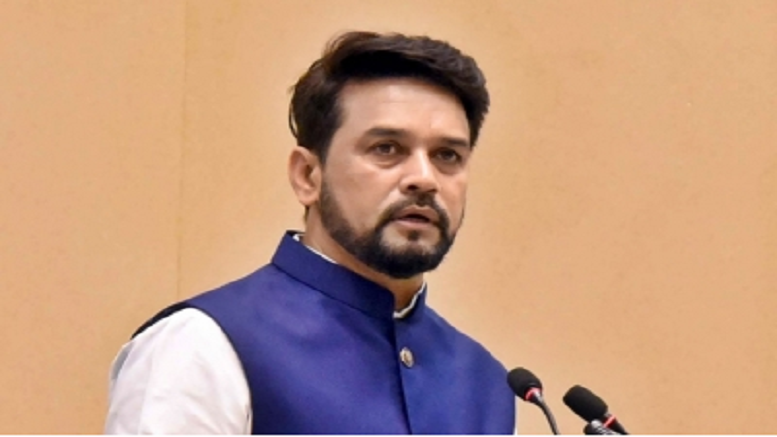
Following are the excerpts from the post-Budget exclusive conversation IANS had with Thakur.

Q1. What were your first thoughts regarding the economic impact that will occur due to the Covid-19 lockdown? What was your first reaction?

Ans. Today, you can see that Bharat has emerged stronger from this pandemic. We know what happened in those countries which did not impose the lockdown or those that did but were not able to save as many lives.

Bharat on the other hand emerged as one of the countries with the lowest mortality rates as we implemented a systematic lockdown. This was our main goal — to save as many lives — as possible.

Besides, we have grown our capacity. Earlier, we had negligible manufacturing of PPE kits, today we are a major exporter. We are also exporting vaccines which have been made in Bharat to around 100 countries.

Our approach has been to save lives and livelihood, and the results of the same can be seen.

We had taken steps to support the MSME sector and the economy by the way of additional funding, there was also the loan moratorium as well as other schemes and steps which were taken such as partial credit guarantee scheme, additional working capital loans that were given to protect businesses and jobs.

Q2. Is the worst behind us in terms of economic shock that was unleashed by this pandemic?

Ans. If you look at the projections, the International Monetary Fund (IMF) expects Bharat’s GDP growth to be over 11 per cent in FY22, while the RBI’s estimates show a growth of around 10.5 per cent. Bharat is seen as the only major economy in the world to have a double-digit growth next year.

This recovery has been made possible because of the structural reforms that we have undertaken under the AatmaNirbhar Bharat package. These reforms range from power, coal, agriculture to defence production, mining and space sector amongst others.

These reforms were even bigger than the ones carried out in the 1990s decade. The Prime Minister has turned this crisis into an opportunity which has given the pace to this recovery.

This V-shape recovery has been made possible due to the measures taken to combat the Covid-19 pandemic, and the historic reforms that were implemented to support the economy.

Q 3. With stepped up expenditure, as is also visible in the Budget proposals, to counter the adverse effects of the pandemic, are we moving away from the path of fiscal consolidation?

Ans. We have to look back at the period of 2013-14. Bharat was known as among the fragile five economies under the Congress-led UPA Government. After 2014, for the next the Narendra Modi government gave more than 7.5 per cent growth rate, every year, on an average. Now we are among the top six big economies of the world.

What is the challenge in the financial year, 2021, which was the Covid-19 year. For us it was important to borrow and more than Rs 12.5 lakh crore has been borrowed by government of Bharat to give food grains, funds, subsidies, to those who actually require this. More than 80 crore people got food grains, pulses for a period of eight months. No other country was able to even afford that, but Bharat did it.

Also, 30 crore women have been given Rs 31,000 rupees in their Jan Dhan accounts by the government. Three crores disabled, especially abled, widows and old age people have got more than Rs 3,000 crore, farmers got more Rs 1.10 lakh crore. And during the pandemic time, they got thousands of crores rupees into their bank accounts.

Apart from this, the EPF contribution of the employer and employee has been paid by the Government of Bharat totaling about Rs 7,000 crore. Now that kind of money was required. You also wanted to help the states to fight the pandemic.

So, virtually for the first three months, the economy was shut in a way and no economic activity was taking place. So, what could you do as a country, you have to borrow and help people.

Now in this budget also we have utilised those funds for the capital expenditure. So that clearly means, more amount in respect of the capital expenditure, close to 35 per cent capital expenditure increase. Now, the multiplier effect will be 2.5 times. There will be more job creation, more revenue for the government.

So, I think it is very important for us to borrow, build, monetize and then repay. It will help the Bharat’s economy to grow, create more jobs, and also be among the top leading economies where the growth will take place.

Q 4. The privatisation policy announced in the budget has not found favour in several quarters with certain sections of the political class terming it as an exercise to sell the family silver?

Ans. We have to see the government’s decision on privatisation in perspective. The UPA government also tried to do this during the Prime Ministership of Manmohan Singh. But they could hardly raise about Rs 10,000 crore from 2004 to 2009. But the Modi government raised close to Rs 3 lakh crore between 2014-2019. That is the big difference.

You have more credibility. You can deliver better. You could have that transparent policy for the disinvestment. We have also divided the companies into priority and non-priority sectors and disinvestment will be based on this categorisation. This while giving opportunity to the government to mobilise more funds will also help companies to grow up the ladder with the infusion of fresh capital that will also generate more opportunities for employment.

If in the operation of certain entities, PSUs are not able to do well or the government has too many players in the field, why not to pursue privatisation initiative involving change of management. Government job is not to be in business but to facilitate more people to do more business activities and the government should get more revenue out of it.

Q 5. So, through budget proposals as well, the government wants to make a statement that it is solidly behind the economy?

Ans. Absolutely. Economy needs investment and sentiments improve once the government invests. So, when the government itself increases capital expenditure next year by 35 per cent, it would give a necessary boost to the investment climate in the country and help improve the health of the economy and generate more employment opportunities for its people.

Worldwide experience has proven that economies where the government initiates the investment, the growth pick up is faster. This also helps to bring in private investment. The multiplier effect of capital expenditure 2.5 times. The budget also aims to achieve this with higher capex.

Q 6. Will the higher capex announced in the Budget, are we on course to become a $5 trillion economy faster?

Ans. The growth of any economy takes time. But for Bharat, we became the sixth largest economy in the world from earlier eleventh in a matter of just five years. Our effort to raise economic growth has continued but with Covid-19 pandemic we have lost one full year. Any economy takes time to recover from acute slowdown. But the steps that we have taken, have ensured that the recovery is faster.

We presented a good budget that was also acknowledged by the capital markets with a consistent rise over the past few days. This clearly shows that if you take the right steps, the overall sentiment improves and investments too picks up.

Q 7. You have also announced privatisation of two public sector banks and one general insurance entity. These announcements have already evoked sharp reactions from bank unions. How do you aim to pursue this critical disinvestment plan?

Ans. During the UPA time, the way the funds were distributed to the banks and loans were given, putting the banks in a difficult situation that were also having higher NPA ratio. And this year, there was a reduction in the NPA ratio by 20 per cent. So that clearly showcases that we have done well in the last five six years.

We have done the asset quality review of the banks; we have done the recapitalisation of more than Rs 5.5 lakh crore for public sector banks. Bharat needs more facilities for the consumers or the people who bank. Then what do you do. You have 12 banks.

We have done the amalgamation/ merger of banks, we have strengthened the banks, brought them out of the PCA framework. But the government can’t keep on investing in the banks, every year. They have to stand on their feet, or they have to earn, they have to be more profitable.

That is where we said that out of 12, even if the government does the privatisation for two, and one insurance company, it will also help the employees also to get better salaries and to get more benefits, and those banks and insurance companies can also grow.

If the present management is unable to do justice then the new management could be able to do so. If we look at the past experiences, most of the companies have grown manifolds and the employees are also very happy.

Q 8. But will the government take bank employees into confidence before stating the privatisation process?

Ans. The Government will take all steps that are required for healthy disinvestment.

Q 9. Will we also see weaker banks that are in prompt corrective action (PCA) framework being put in the sell off list?

Ans. We have to think from buyers’ perspective also. We have to offer something to buyers that attracts investment.

Q 10. The budget has put a cap on tax free interest earnings on individual savings put in provident fund (PF) and ULIPs. Is this not reducing the shrinking list of avenues available to salaried to save in instruments that offer security and assured returns?

Ans. Many have taken advantage of investment in PF that give tax free assured returns. But this advantage is also being taken by high net-worth individuals (HNIs), some of whom have put over Rs 2 crore into their PF accounts. This raises a question, whether the savings is for workers or for ones who have amassed huge wealth and are depositing in excess Rs 50 crore in PF accounts in a year and taking 8 per cent tax free returns.

The Budget proposal will keep less than half per cent of EPFO subscribers out of the tax-free savings benefit. But 99.5 per cent of EPFO subscribers will get the services as it is. So, no change for the common man.

Q 11. The Budget is yet to be passed by Parliament. Is the government looking to bring more changes in the Finance Bill to further strengthen proposals required for putting on path of a speedy recovery or there is a rethink on some proposals that may be rolled back?

Ans. I think we have covered everyone from youth to women to farmers to the common man or traders. We have tried to take care of all the sectors. Even if you look at the scheduled caste and scheduled tribes, there is an increase of 51.65 per cent in the budgetary allocation.

So, the government has taken care of several sectors and a scientific thought process has gone behind devising schemes for each sector so that a larger population benefits from this Budget.

(The story has been published via a syndicated feed with a modified headline and minor edits to conform to HinduPost style-guide.)


Did you find this article useful? We’re a non-profit. Make a donation and help pay for our journalism.

HinduPost is now on Telegram. For the best reports & opinion on issues concerning Hindu society, subscribe to HinduPost on Telegram.

Jat youth murdered by Muslims in Bijnore

0

A Hindu youth Rachit Chaudhary (27) was brutally gunned down in broad daylight by 5 Muslim men in Jhalu, district Bijnore, Western UP on Friday morning. Rachit tried running into a shop to save his life, but the accused barged in there and shot at least 13 rounds at him with country pistols, killing him on the spot.

Four of the killers – Shadab, Sariq, Shahbaz, Shehzad – were apprehended by police along with their murder weapons while one got away. Police claims that the murder was done due to an old rivalry.

Rachit file photo (Credit: Amar Ujala)

The whole town and market area is in terror after this brazen murder. Chillingly, in a video where the accused are seen being taken away by the police, one of them can be heard telling someone ‘Make sure our video comes on YouTube’. As per reports, the murderers even smoked cigarettes and joked around after shooting Rachit, while he lay dead at their feet.

Many netizens are wondering why Rakesh Tikait, who has been fashioned as a major Jat leader in the last few days by the left-liberal media, is silent on Rachit’s murder, seeing that it has occurred in the same region of UP from where Tikait is trying to draw support for his protest against the agricultural reforms. Many were sharing the news with the hashtag #JusticeForRachit.

The protests started in Punjab last year by farmers, middlemen and politicians with a stake in continuing the monopolistic APMC mandi system. They were soon infiltrated by Khalistani elements, and by the time the protests came to Delhi’s borders they were hijacked by all sorts of #BreakingIndia elements, including Naxal supporters. On Republic Day, Khalistani separatists stormed the Red Fort and hoisted a religious flag.

Tikait, who had welcomed the reforms when they were passed by Parliament, soon made a complete U-turn and has now emerged as a central figure of the protests, for what critics claim are his own political goals. Tikait and RLD have joined hands under the guise of these protests keeping the UP 2022 elections in mind, and are also trying to build an alliance with Muslim leaders like SP’s Ghulam Mohammed.

Incidentally, Rakesh Tikait and his brother were accused of ‘communal incitement’ over the 2012 Muzaffarnagar riots that erupted after multiple incidents of Hindu women and girls being sexually assaulted, harassed and stalked.

Meanwhile, local Hindus have gathered outside the police station in Bijnore demanding stringent action against Rachit’s murderers.

With media desperate to create a narrative of a Jat-Muslim alliance in Western UP, it remains to be seen what impact Rachit Chaudhary’s murder and the continued grooming of Hindu girls by Muslim youth in West UP has on events in the coming days.


Did you find this article useful? We’re a non-profit. Make a donation and help pay for our journalism.

HinduPost is now on Telegram. For the best reports & opinion on issues concerning Hindu society, subscribe to HinduPost on Telegram.

Kerala govt exam question insults Hindu Gods and glorifies Jesus

0

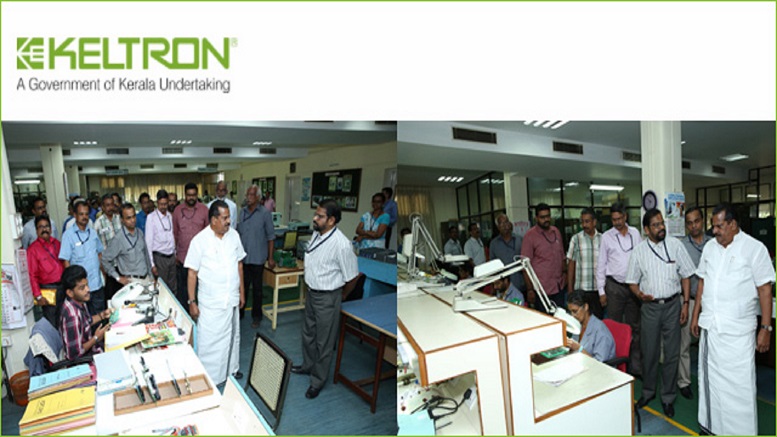
Kerala State Electronics Development Corporation Limited (Keltron) is a Government of Kerala undertaking based out of Thiruvanathapuram. Known for multiple controversies in the past, this time they have insulted the 100 crore Hindus living in Bharat and all over the world. It happened at an examination conducted by Keltron.

Akshaya Kendras are a useful bridge that helps citizens access government online services without visiting the concerned office physically. These centers handle online applications. Aadhaar card, driving licenses, domicile certificates, E Filing of taxes, etc. to name a few. 

The State Government conducts exams for recruiting eligible candidates to operate Akshaya Kendras all over the state. These exams are conducted by Keltron on behalf of the state government and the results are published online.

A innocuous looking yet repulsive question appeared in an exam conducted this week that has left Hindus in shock. It asks,

“Which god lost his relevance after the coming of Jesus Christ?” 

    1. Brahma
    2. Vishnu
    3. Maheshwaran 
    4. Indra”

As usual, there was an outcry from both candidates (who appeared) and common citizens, but it didn’t even last a week. Keltron blamed another agency entrusted with preparing the question papers and vice versa. No FIR has been registered yet and the perpetrators of this anti-Hindu bigotry and sacrilege have not been punished or for that matter even brought to book. The whole incident has already receded from public view. Had it been Mohammed or Jesus, things would have been different. 

Many such government undertakings exist that are mere recruiting centers for party cadres, be it Communist or the Christian converts. These departments are also fronts that are used to bypass the tender system in awarding contracts to third parties. 

In January this year, under pressure from left-leaning workers unions, 296 temporary workers were given permanent appointments at Keltron. This was done overlooking the Supreme Court orders against this practice. This was also done at a time when the current regime had entered its final three months and elections are just around the corner. 

The appeals and protests of lakhs of young men and women who were on the PSC rank list were pushed aside and the Cabinet of Ministers went ahead and approved these appointments. Thousands have been appointed in the same unconstitutional manner in several departments all over the state. It is also alleged that employees thus confirmed have to pay one month’s salary as a levy to the Communist party.

The government had based its arguments on two factors. That Keltron is now showing profits for the last few years and that humanitarian considerations were looked into while confirming the appointments. Don’t the PSC rank list holders deserve humanity? Wouldn’t the unnecessary extra burden of around 43 Lakh rupees per month (salaries) bring down the profit? 

There were allegations against Keltron earlier when they were entrusted with conducting examinations for the post of sub-inspectors by the Government of Assam. Exams scheduled to be conducted in September of last year had to be canceled after it was found that the question papers were leaked. The uproar to punish the guilty there too fizzled out soon in a similar manner to the current exam debacle, and no one has been punished as yet.

It is alleged that there is a powerful lobby at work behind the scenes led by the Centre of Indian Trade Unions (CITU) that hampers action against such culprits. The chronology of events leads us to believe that something sinister lurks and links such incidents. The latest insult to Hindu Gods is a pattern of things going on in Kerala for a long time now.


Did you find this article useful? We’re a non-profit. Make a donation and help pay for our journalism.

HinduPost is now on Telegram. For the best reports & opinions on issues concerning Hindu society, subscribe to HinduPost on Telegram.

NIA arrests hawala operator Manpreet in narco-terror case

0
NIA

A day after seizing Rs 20 lakh and 130 cartridges, the NIA on Friday arrested hawala operator Manpreet Singh from Punjab in connection with a narco-terrorism case involving Hizbul Mujahideen, officials said.

An National Investigation Agency (NIA) official connected to the case told IANS: “The agency arrested Manpreet from Amritsar, where he had been residing for the last three months in a rented accommodation.”

He said that Manpreet will be presented in a Special NIA court to seek his custody.

The development comes a day after the NIA conducted searches at the premises of Manpreet in Amritsar and Gurdaspur. The accused is a close associate of co-accused Ranjit Singh aka Cheetah and Iqbal Singh aka Shera.

The case relates to the arrest of Hilal Ahmad Shergojri — an overground worker of Hizbul and close associate of terror outfit’s then commander Riyaz Ahmed Naikoo — who had visited Amritsar to collect funds for terror activities in Jammu and Kashmir.

The Punjab Police had seized Rs 29 lakh along with a truck from the accused on April 25 last year.

The case was re-registered by the NIA on May 8 last year. The NIA has since filed charge sheet against 11 persons in the Special NIA court in SAS Nagar adjoining Chandigarh in the case.

“Investigation revealed that Manpreet had involved in transporting heroin, drug smuggling proceeds and weapons in his car as per directions of accused Ranjit and Iqbal,” another NIA official said on Thursday.

The official said that Manpreet had delivered Rs 35 lakh and weapons to charge-sheeted accused Bikram Singh aka Vicky, a relative of Ranjit, in March last year.

“During searches conducted on Thursday, Rs 20 lakh, 130 live rounds of 9 mm pistol, mobile phones, pen drive, a bunch of polythene bags used for packing heroin, a Hyundai Verna car, a two-wheeler, documents related to properties, and other incriminating documents were seized from the suspect’s house,” the official had said.

(The story has been published via a syndicated feed.)


Did you find this article useful? We’re a non-profit. Make a donation and help pay for our journalism.

HinduPost is now on Telegram. For the best reports & opinion on issues concerning Hindu society, subscribe to HinduPost on Telegram.

Iran conducts surgical strike against Pakistan based terrorists, shows the weakness of Pakistani military

0

An ordinary country has a military, however about Pakistan Army it has often been said that the “military has a country”. So powerful is the army that it decides who becomes the Prime Minister and frequently deposes leaders it does not agree with. Since its independence, Pakistan has been dominated by the military with direct military rule for about 35 years and indirect rule at other times. In fact it was only in 2013, that Pakistan had a first peaceful transfer of power from one elected government that had completed its tenure to another!

Pakistani military also has a track record of killing its own citizens, specially in Baluchistan. However, it has not been successful in carrying out its primary duty, which is to win wars with other countries. It has lost all its wars against Bharat and has also lost when deployed in support of Arab countries during their conflicts with Israel. In fact, powerful countries have been carrying out military operations within the territory of Pakistan without its permission for years.

The latest event is the surgical strike by Iran deep inside the territory of Pakistan. Iran’s Revolutionary Guards (IRGC), an elite force, has freed its two soldiers in an intelligence operation inside Pakistan’s territory. This was reported by the Anadolu Agency based in Turkey.

“A successful operation was carried out last Tuesday night to rescue two kidnapped border guards who were taken as hostages by Jaish ul-Adl organization two and a half years ago,” the IRGC was quoted as saying on last Wednesday.  Pakistan based terrorists of Jaish ul-Adl had  kidnapped 12 IRGC guards on October 16, 2018.  Nine of these were subsequently rescued and two rescued in the latest surgical strike. Jaish ul Adl had is believed to be affiliated to Al Qaeda and has previously attacked Chabahar in Iran, where Bharat is building a port city. It is the same terror organisation that had kidnapped Bharatiya national Kulbhushan Jadhav from Iran.

Surgical strikes are not a new experience for Pakistan, where between 2004 and 2018, the US conducted thousands of drone strikes. Bharat has also regularly conducted surgical strikes, most famously in 2016 cross border raid in the aftermath of Uri attack and the Balakot airstrike in 2019.


Did you find this article useful? We’re a non-profit. Make a donation and help pay for our journalism.

HinduPost is now on Telegram. For the best reports & opinion on issues concerning Hindu society, subscribe to HinduPost on Telegram.
BJP accuses PSC of conducting backdoor postings in Kerala

0
Muslim BJP Supporter

Kerala BJP chief K Surendran on Friday accused the state government of converting the Public Service Commission (PSC) into a non-functional entity and is rampantly conducting postings through backdoor.

Citing the example of former CPI(M) MP M.B. Rajesh’s wife, Ninitha Kanichery getting posted as the Assistant Professor at Sree Shankara Sanskrit University in Kalady, Surendran said that wives of several CPI(M) leaders have been getting backdoor postings in government departments across the state.

Professor Ummer Tharammal, the expert member of the interview panel which was attended by Kanichery, has alleged that the list was totally manipulated and she was given the first rank under the Muslim quota, for the post.

The Kerala BJP president also accused the state government of looting public money and said that the CPI(M) cadres have been filling up posts at the government departments.

He also attacked the former Chief Minister Oommen Chandy saying that he was the epitome of corruption.

The BJP president J.P. Nadda had chalked out several programmes including micro level management of booths and also called upon the party leaders to concentrate more on the booths rather than thrusting into the limelight.

Surendran said that the BJP with its “Mission Kerala” project is eyeing win in Kerala.

Speaking to IANS, the Kerala BJP chief said: “BJP is the only alternative in Kerala. Both the CPI (M) and Congress have no moral right to attack the saffron party in the state as these parties are in a political alliance in West Bengal while fighting each other at Kerala. This is a farce and both these parties are trying to hoodwink the people of the state.”

(The story has been published via a syndicated feed.)


Did you find this article useful? We’re a non-profit. Make a donation and help pay for our journalism.

HinduPost is now on Telegram. For the best reports & opinion on issues concerning Hindu society, subscribe to HinduPost on Telegram.

Chikkamagaluru Assistant Commissioner issues directive to private temples to register with HRCE

0
temples hrce

Private Hindu temples have been given a month’s time to register with the administration in the directive issued by Chikkamagaluru Assistant Commissioner Shri HL Nagaraj. This directive excludes all those temples which already fall under the Muzrai department. The directive also says that those temples that fail to comply would have to face action.

The Hindu report quotes Shri Nagaraj:

As per the Karnataka Hindu Religious Institutions and Charitable Endowments (Amendment) Act, 2011, the private temples have to register with the Assistant Commissioners concerned. Though there had been clear instructions in this regard, no temple had been registered so far. “The registration process will avoid the possible misuse of funds. The applicants have to furnish details of the place, bank account, buildings belonging to each temple to get the registration done”, he said.

The government would also evaluate gold, silver and other valuables belonging to the temple in the presence of recognized evaluators and tahsildar. The evaluated gold ornaments could be utilised during special events and celebrations, he added.

Amendments to the Muzrai Act brought those Hindu temples and mutts under the purview of the HRCE (Hindu Religious Institutions and Charitable Endowments Act) which were earlier exempt from government control. As per a report in The Hindu, a seven-member committee had recommended bringing mutts as well as temples controlled by the mutts under government control by amending the HRCE Act of 1997.

A division bench of the Karnataka High Court had ruled in 2015:

In fact, non-inclusion of mutts and temples run by them, and keeping away Jains, Buddhists, and Sikhs from the definition of “Hindus” had led a Division Bench of the Karnataka High Court to strike down the 2011 and 2012 Amendments brought to the Hindu Religious Institutions and Charitable Endowments Act, 1997. Terming the exclusion as “illegal and discriminatory”, the high court had struck down amendments in 2015.

Back in 2017 when the then Karnataka government was mulling overhauling the Act, the state government had informed the press:

On what was being considered for overhauling the 1997 Act, he said: “The High Court’s observation on the Amendments to the Act when it was stuck down had raised issues pertaining to Article 14, 25 and 26 of the Indian constitution that refer to fundamental rights of the citizens. These included how the mutts had been kept away from the Act and how Jains, Buddhists, and Sikhs were not brought under the Act. These observations of the court are being considered. Apart from this, there are Supreme Court observations too that will be incorporated,” he said, adding that some Sections of the Act are not clear, and some rules are also missing.

The fresh directive indicates that the government is again scrambling to bring even temples managed by mutts, that have been independent, so far under its control. Hindus, on the other hand, have been demanding the freeing of temples from government control. This directive, however, instead of liberating existing temples aims at bringing more temples under the purview of the HRCE department.

At a time when the demand to keep temples out of government control has been rising among Hindus, this directive aims at working in the opposite direction. While there have been attempts to justify keeping temples under the HRCE department’s purview, the circumstances/reasons given to justify the same aren’t currently favorable.

This directive by Assistant Commissioner HL Nagaraj seems to be just another attempt by the government to take over the wealth of private Hindu temples as well.


Did you find this article useful? We’re a non-profit. Make a donation and help pay for our journalism.

HinduPost is now on Telegram. For the best reports & opinions on issues concerning Hindu society, subscribe to HinduPost on Telegram.