


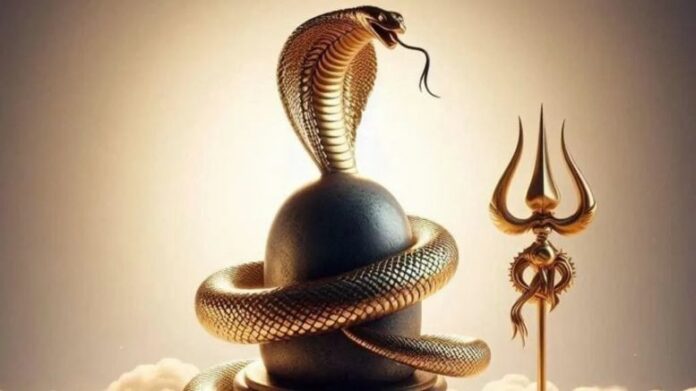
Nag Panchami is an important Hindu festival celebrated during the Shravan (Sawan) Maas. It falls on Shukla Paksha Panchami tithi. It is a day when women worship Nag Devata and pray for the welfare of their families, particularly their brothers.
Importance of Shravan Maas
Shravan Maas, the fifth month of the Hindu calendar, is one of the most auspicious periods in Hindu Dharma, particularly dedicated to Bhagwan Shiva. This month is marked by heightened spiritual practices, with devotees observing fasts, performing rituals, and engaging in deep devotion. The Mondays of Shravan, known as Shravan Somvar, hold special significance, with devotees fasting and offering prayers to Bhagwan Shiva for blessings and protection.
The month coincides with the monsoon season in Bharat, reminding us of the intimate connection between the divine and nature. It serves as a reminder to respect and protect the environment, reflecting the harmonious relationship between humans and the natural world.
Shravan Maas is also rich in cultural significance, with festivals like Nag Panchami, Raksha Bandhan, and Krishna Janmashtami celebrated during this time, highlighting familial bonds, community unity, and the victory of good over evil. The Kanwar Yatra is also conducted during this Maas, during which Kanwariyas carry Jal from holy rivers and perform abhishek to Bhagwan Shiva. Overall, Shravan Maas is a period of deep devotion, spiritual reflection, and cultural celebration, offering an opportunity to strengthen one’s connection with the divine and embrace the teachings of dharma.
Significance of Nag Panchami
Nag Panchami is dedicated to worshipping serpents, particularly the Nagas, considered powerful and sacred in Hindu Dharma. The festival holds deep religious, cultural, and environmental importance. In Hindu tradition, snakes are revered as symbols of fertility, protection, and divine energy, often associated with Bhagwan Shiva and Sri Hari Vishnu.
Rituals and offerings to snake murtis and real serpents, with devotees seeking blessings for protection from snake bites, prosperity, and the well-being of their families, mark the festival. Nag Panchami also underscores the harmonious relationship between humans and nature, reminding people to respect and coexist with all living beings. This festival highlights the belief in the cyclical nature of life, death, and rebirth, as well as the protective role of serpents in Hindu cosmology, making it an important day for spiritual reflection and community observance.
Nag Panchami celebrations across Bharat
Nag Panchami is celebrated with unique customs and traditions across various regions of Bharat, reflecting the country’s cultural diversity. Here’s a glimpse of how this festival is observed in different parts of Bharat:
- Maharashtra: In Maharashtra, Nag Panchami is celebrated with great fervour. Devotees visit temples dedicated to Nagas, like the Nagoba temple in Nagpur. They offer milk, flowers, and turmeric to snake vigrahas and sometimes to live snakes. Traditional folk songs and dances are performed, and women draw images of Nagas on the walls of their homes to invoke blessings for their families’ well-being.
- West Bengal and Assam: In the eastern states of West Bengal and Assam, the festival is closely associated with the worship of Manasa Devi. Devotees make clay murtis of Manasa Devi and offer prayers, seeking protection from snake bites and other calamities. The festival is celebrated with processions, singing of devotional songs, and rituals that emphasize the power and benevolence of the Devi.
- Uttar Pradesh and Bihar: In Uttar Pradesh and Bihar, the festival is marked by the worship of live snakes by snake charmers who bring them to village squares and temples. Devotees offer the snakes milk, sweets, and flowers and seek blessings for health, prosperity, and protection from harm. In some rural areas, farmers also worship snakes as guardians of their crops, praying for a good harvest.
- South Bharat (Karnataka, Tamil Nadu, Andhra Pradesh): In South Bharat, especially in Karnataka, Nag Panchami is observed by women who perform rituals in front of anthills, believed to be the abode of snakes. They pour milk and place offerings of turmeric, vermilion, and flowers to appease the Nagas. In Tamil Nadu and Andhra Pradesh, snake murtis are worshipped in temples and homes, with special prayers for the family’s well-being and protection from snake bites.
- Madhya Pradesh and Chhattisgarh: In central Bharat, the festival is celebrated with a focus on agricultural rituals. Farmers worship snakes to ensure the fertility of their land and a bountiful harvest. In some tribal communities, the festival is marked by unique customs like worshipping a snake carved out of wood or stone with offerings of milk and food.
- Rajasthan: The festival is celebrated with a blend of folk traditions and religious observances. People create snake vigrahas from cow dung and clay, which are then worshipped with rituals to protect their households from evil. The day also involves storytelling and singing of folk tales that celebrate the power of the Nagas.
These diverse celebrations of Nag Panchami across Bharat highlight the festival’s spiritual significance and reflect the deep cultural connection between humans and nature in Hindu tradition.
(Featured Image Source: TV9 Bharatvarsh)
