


To the modern mind, a surname feels as natural as breathing. It is the anchor of individual identity, the foundation of legal property, and the default setting of global bureaucracy. But if you reverse the historical gaze, a starkly different reality emerges: the universal, hereditary surname is not a natural evolution of human society, but a technology of state surveillance and extraction.
The Organic Fluidity of Ancient Bharat
For much of human history, identity was organic, relational, and highly contextual. In ancient Dharmic civilization, social identity fundamentally eschewed rigid legalism. As S.N. Balagangadhara argues, Western frameworks systematically err by obsessively searching for legally defined, rigid social structures in Dharmic traditions where they simply do not exist. Instead of permanent bureaucratic labels, a person was located within a dynamic matrix of Gotra (scholastic or spiritual lineage), Kula (family), Grama (geography), and fluid occupational identifiers that adapted naturally to reflect a community’s evolving expertise and societal contributions.
The Mandasor Inscription from the 5th century CE provides a perfect historical blueprint of this organic fluidity. It records the migration of a prosperous guild of silk weavers (Pattavaya Sreni) from the Lata region (modern Gujarat) to Dashapura (modern Mandsaur, Madhya Pradesh). Once they settled in their new geography, the community naturally diversified its societal roles. According to the inscription, while some members continued their ancestral trade of silk weaving, others mastered entirely new fields based on their inclinations and the local economy’s needs. Within the same community, some became valiant archers and soldiers, others became learned astrologers, some turned to spiritual asceticism, and others became storytellers and civic administrators.
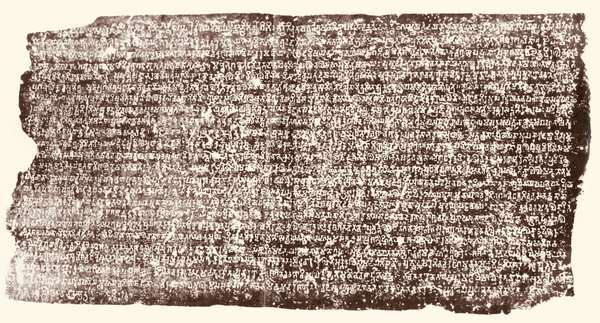
When these weavers took up arms or studied astrology, they were not attempting to climb a rigid feudal ladder to artificially reclassify themselves as Kshatriyas or Brahmins. There was no desperate scramble for vertical status; they were adapting laterally. Consider a hypothetical weaver from this guild named Ravi who migrated and became an archer. He would never have been saddled with a fixed legal surname like “Ravi Sreni” or “Ravi Kshatriya” because neither term functioned as a permanent family name. Instead, his contextual introduction would organically shift based on the situation. In a spiritual or ritual context, he would be identified by his unbroken ancestral Gotra (e.g., “Ravi of the Kashyapa Gotra”). In a civic or legal dispute, he would be identified by his patronymic and geography (”Ravi, son of Devadatta, from Lata”). In his daily occupation, he would be described by his function or an earned title, perhaps “Ravi the Bowman” or Senapati (commander) if he demonstrated exceptional martial expertise.
Ravi did not need to petition a state authority to legally change a permanent surname to reflect his new profession; the community organically recognized his new societal contribution. Crucially, the inscription records that this collective of weavers—a community that colonial administrators and modern Marxist frameworks would later box in as ‘exploited Shudras’—used the vast wealth acquired from their diverse trades to independently fund and build a magnificent Sun temple in 437 CE. This thoroughly shatters the myth that commoners lacked economic prosperity or religious agency in ancient Bharat.
As Nicholas Dirks has extensively documented, colonial administrators fundamentally misunderstood both Varna and Jati. They violently mapped Varna—a broad, theoretical cosmological model of societal functions with no normative notion of hierarchy—and Jati—localized, fluid kinship groups—onto the European concept of lineage, birth-based status (the Iberian casta), and the static, inherited surname.
This relational fluidity was not unique to Jambudvipa. Across West Asia, the pre-Columbian Americas, and Africa, people relied on fluid patronymics, localized clan affiliations, or descriptive titles. One ancient exception was China, which, acting as the pioneer of the bureaucratic state, mandated universal surnames under the Qin Dynasty (221 BCE) explicitly to manage mass military conscription, corvée labor (unpaid labor tax), and tax extraction. Even the much-touted Roman tria nomina—the rigid three-part naming system of personal, clan, and family names used to project legal lineage, as in Gaius Julius Caesar—was strictly an exclusive privilege of patrician elites, collapsing entirely when the Western empire fell.
The European Trauma Loop & State Legibility
The modern template of the compulsory last name was birthed in the crucibles of European feudalism, religious policing, and a relentless cycle of violent replacements. The history of Britain itself is a trauma loop of subjugation: indigenous Celtic tribes (the ancestors of the modern Welsh, Scottish, and Irish) were first invaded by the Romans in 43 CE (who Latinized the native Celtic identifier Pritani into the colonial exonym ‘Britain’), and later violently pushed to the mountainous fringes and western isles by invading Germanic Anglo-Saxons in the 5th century (the word ‘English’ itself deriving from the Angles, a Germanic tribe originating from the Angeln region of modern-day Germany). Centuries later, in 1066, those Anglo-Saxons were themselves crushed by the Normans—a hyper-militarized ruling class of Viking descent speaking French.
Following this Norman Conquest, the victors violently confiscated ‘native’ Anglo-Saxon lands. To lock down these stolen property rights and secure generational wealth, the Norman aristocracy adopted the names of their French estates as hereditary titles. Over the centuries, these foreign colonial markers were strategically Anglicized—dropping the French ‘de’ so that invading names like de Mortimer or de Warenne morphed into quintessentially ‘blue-blooded’ English surnames like Mortimer and Warren. The European ‘sur-name’ (literally an added name) was born not as an expression of family heritage, but as a legal property deed designed to protect elite bloodlines. In 1086, William the Conqueror codified this through the Domesday Book—an obsessive, unprecedented registry designed to map and tax every inch of the conquered population.
While the aristocracy weaponized surnames to protect stolen wealth, the mass imposition of fixed surnames upon ordinary people occurred centuries later, driven entirely by the needs of the state and the church. Between the 14th and 16th centuries, European monarchs desperately needed to fund expanding militaries and endless regional wars. To systematically tax commoners, they required a permanent tracking system, leading to innovations like the English Poll Taxes. Simultaneously, the Catholic Church’s Council of Trent (1563) mandated strict parish registers for births and marriages to police social morality and tether the peasantry to their local parishes. As political scientist James C. Scott famously termed it, this drive for administrative “legibility” is the core function of the modern state. For the European commoner, the surname was not an expression of self; it was the ultimate tool for bureaucratic enclosure.
Even as these state mechanisms were being perfected at home, the newly synthesized Norman-English elite began testing this blueprint of subjugation on their neighbors. Ireland became the very first laboratory of the British Empire when the Norman-English breached the island in 1169, triggering a centuries-long campaign of brutal subjugation. Because the unconquered Irish maintained a fluid, decentralized clan system and restorative indigenous jurisprudence (Brehon Law) rather than a rigid, top-down feudal state, English propagandists branded them as ‘uncivilized’ savages to justify violent land theft. Over the ensuing centuries, colonial administrators systematically dismantled indigenous Irish institutions and forcefully stripped away native clan prefixes like ‘O’ and ‘Mac’ to impose static, Anglicized surnames for state legibility and taxation.
This continuous European trauma loop—where conquering races hoard wealth, weaponize identity, and erase indigenous fluidity—would later have devastating consequences for India. When British colonial administrators encountered the decentralized Dharmic ecosystem of the subcontinent, they were psychologically incapable of understanding organic, lateral cultural evolution. Instead, they projected their own violent history of the Norman Conquest and the subjugation of Ireland onto the Indian past.
They hallucinated the Aryan Invasion Theory (AIT), imagining a “superior” race of fair-skinned Aryans invading on chariots to subjugate a dark-skinned indigenous population. It was simply the Norman Conquest wearing a Sanskrit mask. Through this fractured, parochial lens, they forcefully misinterpreted Varna and Jati—a cooperative, occupational ecosystem like the Pattavaya Sreni in Dashapura—as an ancient racial apartheid system. They assumed, tragically, that ancient Indians must have been as obsessed with race, invasion, and blood purity as the Europeans themselves.
Armed with this worldview, European administrators mistook their own localized history of ecclesiastical (Church) control and state extraction for a universal marker of “civilization.” When these empires expanded globally, they weaponized this naming architecture. From the indigenous populations of the Americas and Africa to the complex societies of the Indian subcontinent, colonial powers encountered communities with fluid, relational identities that were impossible for an imperial center to tax, police, or map. Through the brute enforcement of colonial censuses, Western land registries, and punitive legislation, administrators arbitrarily froze dynamic, localized identifiers into permanent, inescapable grids. By forcing the world to adopt the European surname, colonialism successfully transformed living, breathing social ecosystems into rigid, taxable barcodes.
The Eurocentric Distortion of Indian Society
This profound social and occupational fluidity—as seen with the weavers of Dashapura—is exactly why the ancient Bharat that modernity loves to demonize never required the rigid, hereditary surname. The very term “feudalism”—derived from the Medieval Latin feudum (a land grant tied to military service)—is a uniquely European pathology. It was fundamentally anchored in the institution of serfdom, where peasants were legally tethered to the land as the literal property of an aristocratic lord.
Modern Eurocentric historians lazily copy-pasted this framework onto ancient Bharat, completely ignoring the historical reality of the subcontinent. When the Greek ambassador Megasthenes visited the Mauryan Empire in the 3rd century BCE, he was profoundly shocked by what he saw. Coming from a Hellenic world built on the backs of chattel slaves—where human beings were bought and sold as property (the word chattel itself sharing the exact linguistic root as ‘cattle’) to power the Greek and Roman economies—he famously recorded his astonishment in his Indica, noting that ‘all Indians are free, and not one of them is a slave.’
Ancient Bharat had no equivalent to the brutal chattel slavery of European antiquity, nor the feudal serfdom of its Middle Ages (5th to 15th centuries). As historian Dr. Meenakshi Jain has extensively documented in her work on India’s social structures, pre-colonial Indian society was not a rigid, top-down hierarchy of lords and vassals, but a profoundly decentralized, self-regulating ecosystem. Social and economic life was managed horizontally through fluid networks like the Srenis (guilds) and local Jatis, which operated with immense community autonomy and occupational mobility.
In stark contrast to the European monarch who claimed absolute ownership of the realm, classical Dharmic jurisprudence (as found in the Arthashastra and various Smritis) explicitly recognized the cultivator as the rightful proprietor of the soil. According to the Dharmic principle of Bhumichhidranyaya, arable land belonged to the individual who first cleared and tilled it. The king did not own the kingdom’s soil; he was merely entitled to a minor share of its produce—historically capped at one-sixth (Shadbhaga)—strictly as wages for protecting the public (Rakshabhaga).
The Mahabharata (Shanti Parva) and Manusmriti mandated that the state must extract revenue organically and painlessly, “just as a bee gathers honey from a flower without destroying its petals.” Furthermore, while cultivated plots were held by the farmer, the surrounding ecosystems—forests, pastures, and water bodies—were managed horizontally by autonomous village assemblies (Panchayats). Because there was no absolute royal landlord to arbitrarily grant away the earth, there was no legal mechanism to turn the free Indian peasantry into serfs.
What modern textbooks inaccurately label as India’s “feudal order” was actually a much later distortion, deeply shaped by exploitative colonial land-revenue institutions such as the zamindari and jagirdari systems imposed during Islamic and British rule. Older indigenous ideals of kingship under rājadharma were tied to public welfare, impartiality, and the protection of the common people—not the ownership of their bloodlines or labor. It was successive Islamic and British regimes—and later the secular bureaucratic Indian State which inherited their habits—that standardized surnames, fixed jati into paperwork, and deepened hereditary caste-class consciousness by making identity administratively and electorally permanent.
The Global Bureaucratic Shift
When we examine how different nations broke away from their feudal pasts, we find a fascinating story of how surnames became ubiquitous. The mandate to adopt surnames was ostensibly enforced to improve administration and crush old orders, but ironically, it often reinvented the very hierarchies those new states claimed to oppose.
This tension between state enforcement and social manipulation was not unique to India. When we look across the globe, we see other societies grappling with the exact same transition. In Japan, the 1875 Meiji Restoration sought to rapidly modernize and centralize the state. Prior to this, only the samurai elite were allowed the privilege of a surname. The government passed a decree making universal surname adoption legally mandatory for tax and military conscription. Illiterate peasants looked at their physical surroundings, birthing millions of nature-based names like Tanaka (”middle of the rice field”) and Yamamoto (”base of the mountain”) overnight to satisfy the imperial registry.
In Korea, the collapse of the feudal Joseon dynasty took a commercial turn rather than a legislative one. Surnames were historically reserved for the Yangban (aristocracy). As the class system degraded, wealthy commoners began legally buying falsified family trees, known as Chokpo, or purchasing elite titles from a bankrupt government to claim high-status lineages. Everyone chose to buy into the most prestigious royal lines, which is why more than half of South Korea today shares just three surnames: Kim, Lee, and Park.
In Thailand, King Rama VI introduced the Surname Act of 1913. To modernize administration, he decreed that every family must have a surname, but added a unique catch: no two unrelated families could share the same name. To avoid duplication, Thai families began stringing together complex, multi-syllabic Pali and Sanskrit words to ensure their chosen name was entirely unique to their lineage, creating the famously elaborate surnames seen today.
The Colonial Invention of the Indian Surname
While Asian monarchs mandated universal surnames to mimic the centralized power and legibility of European statecraft, in India, rigid naming conventions were introduced and weaponized by successive waves of colonization. Long before the British arrived, centuries of Islamic rule injected an alien obsession with racial purity and vertical social hierarchies into the subcontinent.
The invading Arab, Turkic, Persian, and Afghan elites brought with them a rigid stratification based strictly on foreign bloodlines. They established a segregated, caste-like hierarchy to maintain dominance: the Ashraf (those claiming noble, foreign descent), the Ajlaf (indigenous native converts), and the Arzal (the most marginalized native converts). This system explicitly codified Arab and Central Asian supremacy while institutionalizing massive slave networks and the theological dehumanization of the native kafir (infidel). To prevent the mixing of “pure” conqueror blood with indigenous populations, the Islamic ruling class obsessed over genealogies. Tribal and foreign surnames (like Syed, Sheikh, Baig, or Mirza) became vital tools to gatekeep political power, secure land grants (jagirs), and constantly broadcast their non-Indian origins.
However, while Islamic rule entrenched these rigid hierarchies of foreign supremacy at the elite level, it was the British Empire that industrialized this essentialization, forcing it upon the entire subcontinental population. Before the mid-19th century, for the vast majority of ordinary Indians, identity remained fluid, contextual, and deeply relational. A person was identified by their given name, their father’s name, their ancestral village, or their Gotra (spiritual lineage). This fluidity was a nightmare for the British Empire.
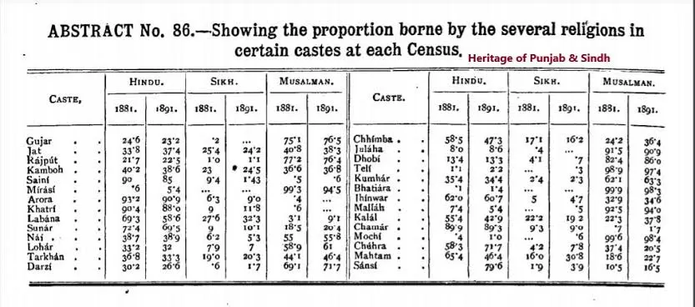
To efficiently collect revenue, map demographics, and police the population, the colonial state needed every Indian to fit into a neat, unchangeable box. Through the weaponization of the national census—most notably beginning with the 1872 exercise—and the introduction of Western land registries, the British forced a standardized naming grid onto the subcontinent.
This created a fundamental clash between subcontinental customs and colonial replacements. Where local traditions relied on shifting occupational markers and spiritual lineages, the colonial administration demanded a rigid, hereditary grid. In fact, the very word they used to define Indian society was a foreign imposition. “Caste” does not exist in any indigenous Indian language; it is derived entirely from the Portuguese word casta (meaning “breed” or “lineage”). When the Portuguese arrived in the 16th century, heavily influenced by the Iberian Inquisition’s obsession with limpieza de sangre (purity of blood), they projected their own anxieties regarding racial purity onto the Indian occupational guilds (Jatis).
The British simply inherited this mistranslation, taking localized Jati identities or administrative titles—such as Joshi, Kulkarni, or Mudaliar—and fixing them into permanent, legal surnames. What was once a dynamic, evolving social ecosystem was legally fossilized, transforming Jati from a fluid social practice into an immutable, bureaucratic barcode.
Colonial Classification and the Census Battles
The colonial project did not merely record Indian names; it actively manufactured categories of privilege and criminality. When the British began executing the national census exercises, they introduced an administrative concept that sent shockwaves through Indian society: ranking castes by social precedence. This reached its zenith during the 1901 Census under Commissioner Herbert Hope Risley.
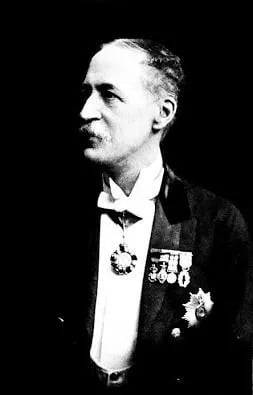
Deeply influenced by European pseudo-sciences like phrenology (the racist practice of measuring skull shapes and bumps to supposedly determine human intelligence and character) and scientific racism (the Social Darwinist weaponization of ‘survival of the fittest’ to justify imperial and racial supremacy), Risley attempted to map, measure, and rank every Indian community into a definitive, legalized racial hierarchy. He notoriously weaponized the “nasal index,” mathematically claiming that a community’s social status varied inversely with the physical width of their noses. Through this grotesque colonial arithmetic, Risley sought to force thousands of fluid Jatis into the fabricated racial binary of the Aryan Invasion Theory.
For centuries, social identity in India operated as a fluid, horizontal ecosystem rather than a vertical ladder. A community’s occupational roles could shift organically over generations—just as the weavers of Dashapura seamlessly transitioned into soldiers, administrators, and ascetics without one role being deemed inherently superior to another.
To acknowledge this fluidity is not to romanticize ancient Bharat as a flawless utopia. At times, the subcontinent witnessed the organic formation of social stratifications, exploitative chieftains and priests, and localized social rigidities. However, within the indigenous framework, any such tyranny was universally recognized as Adharma—a corruption of the normative ideal. The philosophical and administrative baseline of the civilization, encoded in Rājadharma, remained the welfare and protection of the public. When a king or chieftain oppressed his subjects, it was recognized as a failure of his Dharmic duty. Oppression was a deviation from the system. In the Islamic & European feudal and colonial models, however, the extraction of labor and the ownership of human lineages was the system.
But Risley’s census erased this normative nuance entirely. It invented a rigid, vertical racial hierarchy and locked it into permanent government ledgers.
This turned the census into a frantic battleground for survival. It is crucial to understand that this was a society already reeling from the psychological trauma of centuries of Islamic rule, which had violently introduced the Ashraf hierarchy of foreign blood purity and deeply destabilized indigenous social networks. When the British arrived with their own pseudo-scientific grid, the native population was forced into a corner.
The colonial state had begun mapping thousands of fluid Jatis into a rigid, distorted four-tier vertical Varna system with Brahmins and Kshatriyas at the top and Shudras at the bottom, directly tying a community’s official census ranking to their legal survival. If the British classified your community poorly on paper, the consequences were devastating. Through legislation like the Land Alienation Acts and strict “Martial Races” recruitment bans, lower-ranked groups were legally barred from buying agricultural land and restricted from government employment. Simultaneously, colonial courts administered entirely different, disadvantageous inheritance and property laws to anyone they officially labeled as a ‘Shudra.’
By petitioning the census, Indian communities were not conceding to or validating an inherent native notion of social supremacy. Rather, they were engaged in a desperate act of bureaucratic self-defense. They learned to hack the colonial grid, using the colonizer’s own language of “lineage” and “precedence” to avoid being legislated into permanent poverty. To survive this colonial sorting mechanism, dozens of communities launched coordinated movements to legally change their names and invent elite historical lineages.
In Tamil Nadu, the Shanars—a community restricted to the socio-economically marginalized occupation of toddy-tapping—successfully organized and petitioned the colonial state to drop their pejorative markers, legally adopting the royal surname Nadar (”lord” or “ruler”) to match their rising economic power. Meanwhile, across Bihar and Uttar Pradesh, pastoral herding groups organized a massive pan-Indian movement to shed localized surnames, adopting Yadav to claim a direct Kshatriya descent from the legendary Yadu dynasty of Sri Krishna.
Simultaneously, the Bhumihars of Bihar, historically classified as a farming group, waged a fierce bureaucratic war to be officially classified as “Bhumihar Brahmins,” leveraging the census to protect their social and economic standing within the new British legal framework. The Kayasthas, serving as traditional scribes and administrators, fought intense legal battles across the courts of North India to ensure they were categorized as Kshatriyas rather than Shudras, securing their bureaucratic monopoly under British rule by preserving their ‘high-caste’ surnames on British paper.
The Criminal Tribes Act of 1871: The Ultimate Essentialization
While some communities successfully negotiated upward mobility, others were completely destroyed by the stroke of a colonial pen. In 1871, the British enacted the Criminal Tribes Act (CTA), a piece of legislation that represented the ultimate, darkest manifestation of the Western obsession with rigid categorization.
The British administrative mind, heavily influenced by flawed pseudo-scientific theories of phrenology and hereditary criminality, came to believe that certain Indian communities were “born criminals.” The colonial logic was brutally simple: just as a carpenter’s son becomes a carpenter, a thief’s son must inevitably become a thief.
The designation of a “Criminal Tribe” was rarely about actual crime; it was deeply political. Following the 1857 Uprising, the British sought to permanently dismantle the nomadic, pastoral, and forest-dwelling communities that had provided vital logistics, espionage, and guerrilla support to the rebel forces. Communities like the Gujjars, the Ranghars, and various pastoralist groups were deliberately targeted. Entire groups like the Sansis, Pardhis, Chitrakars, and Lodhas were branded as inherently criminal as a form of multi-generational state punishment for their historic resistance.
Once a community was notified under the Act, every single member—man, woman, and child—was stripped of their civil liberties. They were forced to live in guarded, barbed-wire “settlement camps” run by regional police or missionary groups, and were banned from leaving without official written passes.
This systemic branding locked these communities into an agonizing, multi-generational trap. Because their community names were registered in police stations and publicized across villages, they faced absolute ostracization. With their traditional nomadic trade routes cut off and their access to forests criminalized by British environmental laws, their legal livelihood options completely vanished, forcing many into petty crime simply to survive starvation. Over nearly a century of being hunted by the state, a tragic internalization occurred. Deprived of any alternate path to dignity, elements within these communities began to accept the state’s definition of them, passing down a profound sense of generational trauma.
Resisting the Caste Barcode
The response to this bureaucratic branding split the subcontinent along deep ideological fault lines, creating two entirely different strategies of grassroots resistance—one rooted in strategic circumvention, the other in neutralization.
In Southern India, particularly Tamil Nadu, citizens neutralized the rigid Western surname by adopting a system of initials representing their father’s name or native village, before their given name. This stripped the name of vertical hierarchy, returning to a contextual, relational identity that successfully dismantled the colonial “caste barcode” on paper. However, the political vehicle driving this shift—the mid-20th century Dravidian movement—operated from a fundamentally Adharmic premise. Rather than restoring a holistic indigenous identity, its leaders weaponized the colonizer’s fabricated Aryan-Dravidian racial binary and aggressive anti-theism to fracture Hindu society for political gain. Yet, despite this divisive hijacking at the top, ordinary citizens successfully reclaimed their agency at the grassroots.
North India took a different path: instead of erasing the last name, they neutralized it. This strategy of flattening the social grid through a unifying identifier had a historical precedent. In 1699, to forge a united, egalitarian brotherhood capable of resisting Mughal tyranny, Guru Gobind Singh established the Khalsa. While the title Singh (Lion) had long been used by warrior elites, the Tenth Guru mandated that all male Sikhs adopt Singh, and all females adopt Kaur (Princess)—thus fusing them into a single, un-stratified martial community.
Centuries later, the early 20th-century Arya Samaj movement took a similarly restorative, Dharmic approach. Contrasting sharply with the Dravidian movement’s reliance on colonial racial theories, the Arya Samaj championed the adoption of Arya (”noble”) to replace hereditary caste markers with a universal Vedic identity.
Following Independence, this cultural egalitarianism accelerated organically. India was now nominally physically sovereign, but it remained deeply mentally colonized. The rigid pseudo-science and prejudices of the British Empire could not be erased overnight, primarily because the institutions of the new republic were inherited by a Macaulayite, Anglophone elite. But this mental colonization extended far beyond the top echelons of the state. As schools, universities, and job markets expanded across the Hindi heartland between the 1950s and 1970s, millions of families from marginalized communities faced systemic bias. Their traditional surnames triggered the prejudices not just of the bureaucracy, but of a broader society and middle-class institutional gatekeepers who had thoroughly internalized the colonial hierarchy.
To protect their children from a state and social machinery that was still running on a colonial operating system, parents executed a massive, bottom-up subversion. They universally adopted neutral, caste-blind surnames like Kumar, Kumari, Bharti, Prakash, Anand, Kishore, Ranjan, Suman. By making their caste invisible on paper, they hacked the lingering colonial grid using its own tools.
The Myth of the Flat World & The Irony of Modern India
The conventional Western narrative suggests that modern, developed democracies have evolved past feudalism into pure meritocracies. The reality of surnames proves otherwise. Class and feudal consciousness remain deeply entrenched in the socio-political and linguistic fabric of the Global North.
In Europe, the “nobiliary particle”—such as the French de or the German von—remains a powerful, legal broadcast of bloodline and historical land ownership. In the United Kingdom, double-barrelled surnames (like Mountbatten-Windsor or Parker-Bowles) or names tied to ancient aristocratic estates (like Baskerville, Montgomery) continue to map almost perfectly onto concentrations of generational wealth, political influence, and elite institutional access.
To this day, the British state actively sustains this feudal architecture through its Honours system, dispensing titles like Earl, Baron, and the prefix ‘Sir’ as rewards for political patronage and “service to the Crown”—a colonial hierarchy that even deracinated subcontinentals still tragically crave. Even more astonishingly, the UK’s upper house of Parliament, the House of Lords, constitutionally reserves exactly 92 seats exclusively for “hereditary peers.” These are ‘aristocrats’ whose legal authority to write and pass national legislation is quite literally inherited through their bloodlines. That the Anglosphere maintains an institutionalized caste of hereditary rulers while routinely lecturing the developing world on egalitarianism is a staggering feat of historical amnesia.
If Western nations preserved feudalism through the persistence of privilege and elite lineages, modern India presents an entirely different paradox. The adoption of names like Kumar or the erasure of surnames in the South were genuine, grassroots attempts to render caste invisible and destroy its power. However, the trajectory of India’s democratic multi-party system has actively reversed this progress.
Instead of allowing caste identities to dissolve into a citizenry united by the ethos of Dharma—the recognition that the divine spark exists equally in all—India’s modern political machinery realized that Jati identity aka ‘caste’ was the ultimate currency for electoral mobilization. Through the mechanics of votebank politics, political parties began mapping constituencies not by economic class or regional development, but by precise caste demographics. To win elections, parties distribute tickets based on caste calculations, promise targeted welfare schemes to specific sub-castes, and weaponize historical grievances, real or imagined. The state, which once sought to standardize names for surveillance, now counts and categorizes caste lineages to distribute political power.
Consequently, the very identities that millions of Indians sought to delete or dissolve through caste-neutral names have been forcefully re-entrenched. In modern India, some surnames may be masked, but the political system ensures that the caste behind it remains louder than ever. Meanwhile, the legacy of colonial classification endures: though the Criminal Tribes Act was officially repealed in 1952, its targets—reclassified as Denotified Tribes (DNTs)—still carry the invisible psychological and social barcodes stamped onto their lineages over 150 years ago.
Today, the colonial grid has been thoroughly internalized. Indians increasingly view themselves almost exclusively through the prism of identitarian politics, caste identities and rigid constitutional acronyms—SC (Scheduled Caste), ST (Scheduled Tribe), OBC (Other Backward Class), OBC-CL (Creamy Layer), MBC (Most Backward Class), EBC (Extremely Backward Class), GC/UR (General Category / Unreserved). The bureaucratic state has successfully replaced the fluid, relational ecosystem of ancient Bharat with permanent electoral silos. Even the terminology of marginalization is profoundly modern; categories like ‘Dalit’ (meaning broken or oppressed) are 20th-century political formulations. Yet, a major chunk of modern political discourse is now centered around weaponizing these modern labels, retroactively projecting them backward across millennia, while the actual havoc wreaked on India’s indigenous society by a millennium of foreign subjugation and colonialism is systematically obscured.
The political machinery treats the retrospective idea—that a massive, static underclass of millions was uniformly oppressed for thousands of years—as unquestionable historical truth. In doing so, it entirely erases the localized, dynamic reality of pre-colonial India and actively profits from the very colonial distortions we should be dismantling.
Conclusion: Liberating the Name in the Digital Age
If the surname was fundamentally engineered as a tool for colonial taxation, religious policing, and caste essentialization, where does that leave the modern citizen?
One cannot simply romanticize the past and demand a return to the purely fluid, oral networks of ancient Bharat. A modern nation-state of 1.4 billion people, integrated into a globalized economy, requires administrative legibility. Land registries, passports, and taxation systems are undeniable realities of modern governance.
However, we must recognize the surname for what it actually is: a primitive, 19th-century technology of the paper-based state.
Today, that paper state is dead. In the 21st century, the bureaucratic necessity of the surname has been entirely superseded by digital infrastructure. The modern Indian state does not need a caste-signaling surname to track a citizen’s taxes, distribute welfare, or register property. It utilizes biometric markers, digital public infrastructure, and unique identification numbers like Aadhaar. The state has its barcode; it no longer needs our names to serve that function.
This technological reality offers a profound opportunity for decolonization. Because the surname is no longer administratively strictly necessary for identification, it is finally liberated. We are free to strip it of its colonial and feudal baggage.
What does a decolonized naming system look like? It does not mean the state should mandate a utopian, universal naming convention—enforcing a new grid would simply repeat the sins of the colonial census. Rather, true decolonization lies in restoring the fluidity and agency that the British and Islamic empires violently erased.
It looks like the continuing Tamil model of utilizing patronymic or geographic initials. It looks like the Arya Samaj model of adopting neutral, egalitarian identifiers that refuse to broadcast caste. Or, for those who wish to honor their roots, it looks like reclaiming localized village, or ecological markers without the vertical baggage of inherited social categorization.
Critics may argue that dropping a traditional surname or adopting a neutral marker like Kumar is a defensive retreat that dishonors one’s ancestry. But this critique ignores the reality of how the modern, hyper-politicized public sphere operates. Maybe a day will come when hearing surnames like Dwivedi, Jatav, Agarwal, or Thakur will not trigger something deep within conditioned minds. But until it does, stepping away from these markers is not an erasure of heritage—it is an assertion of agency, a pragmatic measure to assist the mind in seeing the Other through the lens of Dharma, and not that of a zero-sum political game.
To reverse the gaze is to recognize that our identities were never meant to be static property deeds or permanent political votebanks. For centuries, the West forced the world to wear its trauma, freezing dynamic living cultures into rigid, legible hierarchies. By reclaiming the true meaning of our names and shedding these imposed notions of status, we do more than reject a colonial administrative relic; we reject the very premise that our worth, our occupations, and our social destinies are locked at birth. Ultimately, liberating our names might be the crucial first step in healing the deepening fractures and social tensions inflamed by modern electoral politics—allowing us to finally step off the colonial grid and overcome the artificial notions that divide us.
References
- Balagangadhara, S.N. (1994). The Heathen in His Blindness: Asia, the West and the Dynamic of Religion. E.J. Brill.
- Dirks, Nicholas B. (2001). Castes of Mind: Colonialism and the Making of Modern India. Princeton University Press.
- Fleet, J.F. (1888). Corpus Inscriptionum Indicarum, Vol. III: Inscriptions of the Early Gupta Kings and their Successors. (For translations and analysis of the Mandasor Stone Inscription of Kumaragupta I and Bandhuvarman).
- Scott, James C. (1998). Seeing Like a State: How Certain Schemes to Improve the Human Condition Have Failed. Yale University Press.
- Jain, Meenakshi. (2011). The India They Saw: Foreign Accounts. Ocean Books.
- Carroll, Lucy. (1978). “Colonial Perceptions of Indian Society and the Emergence of Caste(s) Associations.” The Journal of Asian Studies, vol. 37, no. 2, pp. 233–250.
- Hardgrave, Robert L. (1969). The Nadars of Tamilnad: The Political Culture of a Community in Change. University of California Press.
- Pinch, William R. (1996). Peasants and Monks in British India. University of California Press.
- Rao, M.S.A. (1979). Social Movements and Social Transformation: A Study of Two Backward Classes Movements in India. Macmillan.
- Vigyananand, Swami (2025). The Hindu Manifesto.
(This article was first published at Reverse The Gaze – If you believe in breaking away from Western lenses and building an authentic, homegrown understanding of our world, please subscribe to the substack and support this work)
