


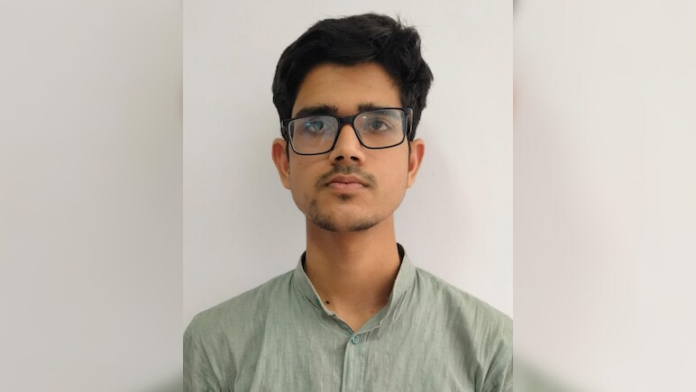
A 19-year-old Bachelor of Dental Surgery (BDS) student from Uttar Pradesh has been arrested by the state Anti-Terrorism Squad (ATS) for allegedly operating in an online ISIS-linked ecosystem—curating propaganda, recruiting sympathisers, and plotting attacks under the guidance of overseas handlers.
Who is the arrested student?
The accused has been identified as Haarish (also reported as Haris/Haarish) Ali, a second-year BDS student originally from Saharanpur district in Uttar Pradesh. He was pursuing dentistry at a college in Moradabad, where he was picked up by the ATS during a coordinated operation on Sunday, 15 March 2026.
According to officials, Ali was seen as a promising student in a professional course, which makes his alleged drift into radical networks particularly alarming for security agencies. He lived away from home for his studies, a period during which investigators believe his online radicalisation intensified through prolonged exposure to extremist content.
How the ISIS online module operated
The arrest emerged from a broader ATS probe into online groups that were quietly building an ISIS-supporting ecosystem across Uttar Pradesh and other parts of Bharat. Intelligence inputs had flagged that anonymous users were creating digital communities to propagate ISIS ideology, glorify jihad, and advocate a Sharia-based caliphate in place of Bharat’s democratic system.
Investigators say these groups functioned across multiple platforms—open social media channels for initial contact and encrypted apps for deeper indoctrination and operational discussions. The emphasis, according to ATS statements, was on recruitment and ideological hardening rather than just passive consumption of content.
Allegations against Haarish Ali
The ATS alleges that Ali was not just a passive member but an active node in this online network. Officials claim he:
- Connected with ISIS handlers and sympathisers, including those based abroad, through platforms like Instagram and encrypted apps such as Session and Discord.
- Created and moderated multiple online groups using pseudonyms and Virtual Private Networks (VPNs) to conceal his identity and location.
- Shared ISIS propaganda materials, extremist literature, and operational instructions within these groups.
- Ran or contributed to a media-oriented group called “Al Ittihad Media Foundation”, allegedly dedicated to amplifying ISIS-linked narratives in Bharat.
According to a UP ATS spokesperson quoted in reports, Ali and his associates “sought to overthrow the democratically elected government and establish Sharia law under a Caliphate system,” framing Bharat’s constitutional order as an enemy structure to be dismantled. Investigators also allege that he incited like-minded individuals to be prepared for “fidayeen-type” or suicide-style attacks, though any concrete operational plots are still under verification.
Legal case, charges and investigation
A case has been registered at the ATS police station in Lucknow under provisions of the Unlawful Activities (Prevention) Act (UAPA) and relevant sections of the Bharatiya Nyaya Sanhita (BNS), Bharat’s new criminal code. These sections cover terrorism-related offences, conspiracy, and participation in banned organisations or their propaganda arms.
Following his arrest in Moradabad, Ali was brought to Lucknow for custodial interrogation after being produced before a competent court. ATS teams are now examining:
- His phones, laptops and storage devices for chat logs, videos, and contact lists.
- Money trails, if any, to establish whether foreign funds supported the online module.
- Links to other suspects already under watch in Uttar Pradesh and beyond.
Authorities say the arrest is part of an ongoing pan-Bharat effort to map ISIS’s digital recruitment chains rather than an isolated case.
The larger pattern: radicalisation in professional streams
The case has triggered concern about how young Muslim professionals and students in high-skill courses are being targeted by extremist networks. Security officials point out that dentistry, engineering and medicine students bring technical skills, social credibility, and mobility—making them valuable assets for terror outfits if radicalised.
Bharat has seen earlier instances where students or professionals in medicine and dentistry were linked to ISIS-inspired cases, including a Bengaluru-based dentist arrested by the NIA in 2021 for allegedly facilitating youth travel to Syria. Agencies see these as part of a continuum in which global jihadist entities increasingly rely on online ecosystems, encrypted tools and dispersed small cells rather than large, visible organisations.
Experts also highlight that the “online-first” model of ISIS recruitment allows radicalisation to occur in hostels, rented rooms and private spaces without any obvious change in offline behaviour until law enforcement intervenes. This makes family, peers and institutions crucial in detecting early warning signs—sudden changes in online habits, secretive behaviour, or obsessive engagement with conflict and extremist themes.
What lies ahead
For now, Ali’s guilt or innocence will be tested in court, and the evidence presented will determine how far the allegations of operational involvement stand beyond ideological sympathy. If investigators succeed in extracting chat histories and tracing handler networks, his arrest could become a key node in unravelling a larger digital module linked to ISIS.
At the same time, the case underlines a deeper challenge for Bharat’s security and education systems: how to safeguard young, educated citizens from recruitment into extremist ecosystems that exist almost entirely on screens, behind usernames and encryption. The arrest of the 19-year-old dental student is thus not just a law-and-order story, but a warning about the vulnerabilities of a hyper-connected generation in the digital landscape.
