spot_img

HinduPost is the voice of Hindus. Support us. Protect Dharma

Will you help us hit our goal?

spot_img
Hindu Post is the voice of Hindus. Support us. Protect Dharma
25.4 C
Sringeri
Thursday, April 2, 2026
Home Blog Page 817

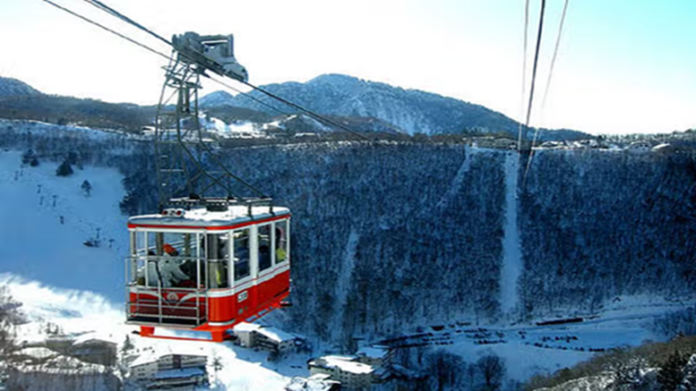
From Amarnath to Sabarimala: Centre to develop 18 Major Ropeway Projects for easier Pilgrimage, Tourism

0
(Image Source : Swarajyamag)

“From Amarnath to Sabarimala: Centre to develop 18 Major Ropeway Projects for easier Pilgrimage, Tourism”, Swarajyamag January 29, 2025:

“Pilgrims and tourists across Bharat may soon have a smoother journey to some of the nation’s most revered religious and scenic destinations, as the central government embarks on an ambitious plan to develop 18 major ropeway projects.

Among the most significant proposals is an 11.6-km ropeway from Baltal to the Amarnath shrine in Jammu and Kashmir, a project that could transform the arduous pilgrimage by providing a safer, cheaper, and more accessible alternative to the current trekking and helicopter routes, reported News18.

The shrine, nestled in the Himalayas, attracts lakhs of devotees annually during the Amarnath Yatra, but the journey is physically demanding……”

Read the full article at Swarajyamag.com

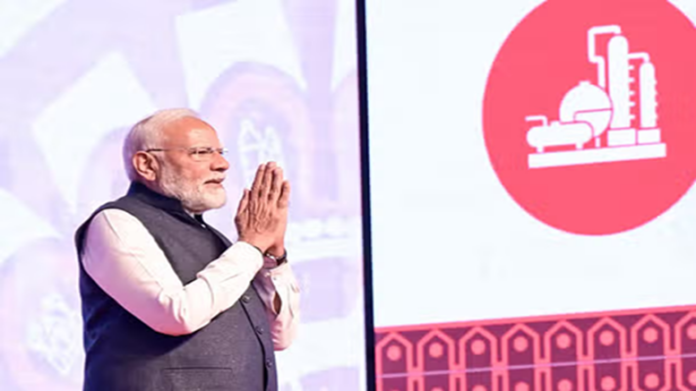
‘Don’t export raw materials to import finished goods, add value in Bharat’: PM Modi stress Infrastructure at Utkarsh Odisha Conclave

0
(Image Source : Swarajyamag)

“‘Don’t export raw materials to import finished goods, add value in Bharat’: PM Modi stress Infrastructure at Utkarsh Odisha Conclave”, Swarajyamag, January 28, 2025:

“Prime Minister Narendra Modi expressed his disapproval of the current trade situation where raw materials are being exported from the country, only for finished products to be imported back. He emphasised that the process of adding value to these materials should occur within the country itself.

At the opening of the ‘Utkarsh Odisha, Make in Odisha Conclave’ held at Janata Maidan in Bhubaneswar on Tuesday (28 January), Modi expressed his belief that eastern India serves as the nation’s growth engine, with the state of Odisha playing a significant part in this.

“The country’s development is not possible only by exporting raw materials. Therefore, we are changing the entire ecosystem and working with a new vision,” the PM was quoted as saying by The Hindu……”

Read the full article at Swarajyamag.com

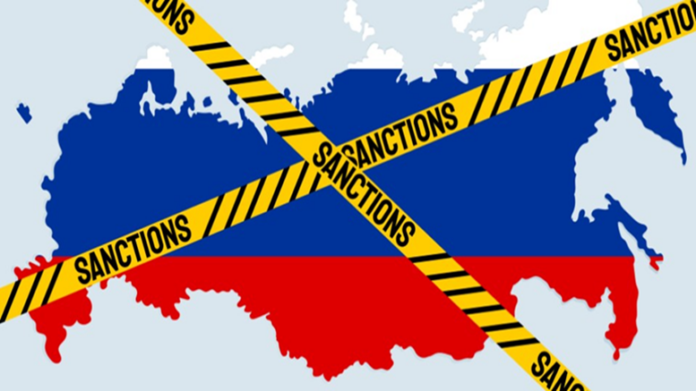
Why Western sanctions on Russia has boomeranged

0
(Image Source : X)
(Image Source : X)

The imposition of Western sanctions on Russia has been one of the most significant geopolitical developments in recent years. Initially aimed at crippling Russia’s economy and deterring its military operations, these sanctions have instead produced unintended consequences. Rather than isolating Russia, they have accelerated its economic realignment with non-Western powers, challenging the dominance of Western financial systems.

While the world became aware of the unjustified sanctions imposed on Russia by Western nations only after Moscow began its Special Military Operation in February 2022, such measures actually began as early as 2008, immediately following the conflict between Russia and Georgia.

Western nations have long relied on sanctions as a primary tool to pressure targeted countries into submission, compelling them to align with the West’s interests and policies. These measures range from individual restrictions on Russian leaders and businesses to comprehensive bans on key sectors such as Russian oil and natural gas. The intent behind these sanctions has been to impose significant economic costs that would weaken Russia’s war effort and, indirectly, push Moscow to end its military campaign.

However, experts continue to debate their effectiveness. Some argue that the sweeping sanctions – especially those targeting Russia’s oil and gas revenues – are crippling the country’s economy and, by extension, its military capabilities. Others acknowledge that while sanctions may not outright end the war, they serve as a relatively low-risk means to slow Russian advances and signal opposition to the invasion. And yet, nearly three years later, the war persists, Russia’s economy has rebounded, and domestic support for President Vladimir Putin and the Kremlin remains at an all-time high.

Critics further argue that the prevailing economic discourse surrounding sanctions fails to address their counterproductive consequences. Not only have these sanctions failed to end the war in Ukraine or significantly weaken Russia’s financial resilience, but they have also backfired by solidifying Moscow’s hardline stance, limiting the effectiveness of alternative diplomatic strategies, and strengthening the Kremlin against future international pressure. Consequently, the assumption that sanctions are at least better than no action at all overlooks their long-term repercussions for regional stability and global geopolitics.

The sanctions imposed on Russia following the launch of its Special Military Operation in Ukraine have encompassed a broad range of restrictions, including economic measures and information controls. They have expanded to include bans on industrial and technological exports, asset freezes on Russian banks, restrictions against state-owned media outlets, and targeted sanctions on high-profile individuals and entities, including President Vladimir Putin. The most consequential measure, however, has been the international ban on Russian oil and gas exports, which account for 60 percent of Russia’s total exports and nearly 40 percent of its federal budget.

Western policymakers initially anticipated that these extensive sanctions would trigger an economic collapse in Russia, ultimately leading to Putin’s ouster. However, the reality has been starkly different. By 2023, Russia had become less vulnerable to Western economic pressure than it was in 2022. Moscow’s trade with China doubled between 2021 and 2023, while its exports to India surged tenfold. Instead of curbing Russia’s war effort, the sanctions have accelerated the formation of economic and political alliances with Bharat, China, Iran, and North Korea, signaling a major geopolitical shift. This emerging network of partnerships is poised to be more resistant to Western sanctions and increasingly critical of Western hegemony.

Commenting on the Western sanctions, American billionaire and Bridgewater Associates executive Ray Dalio told German newspaper Der Spiegel that Washington’s punitive measures against Moscow are prompting other countries to divest from the US for fear of becoming future targets.

He argued that while the sanctions have failed to significantly weaken Russia’s ability to wage war in Ukraine, they are also harming the US economy.

“I can already tell you with certainty that the West is also suffering from the sanctions. Other countries are increasingly shedding US government bonds because they fear that they could end up like Russia. This is shifting the balance of power around the world”, Dalio stated.

Ironically, President Vladimir Putin is the most sanctioned politician in the world, a leader whom Western nations initially expected to be isolated on the global stage. Since February 2022, he and Russia have been subjected to a staggering 19,535 sanctions by the US and its allies. Russian assets worth billions of dollars have been frozen abroad, with the aim of crippling the country’s economy and war machine. Western officials hoped that these measures would not only make Russia’s military campaign unsustainable but also spark domestic unrest against Putin. However, those predictions have largely failed to materialize.

After more than three years of Western-imposed sanctions, it has become evident that they have failed to achieve their objectives. Instead of isolating Russia, these sanctions have facilitated the country’s economic diversification and strengthened its alliances with major non-Western powers. By shifting away from a Western-dominated financial system, Russia and its partners in the Global South have taken significant steps toward reducing their reliance on the US dollar, making future sanctions increasingly ineffective.

Moreover, the victory of Donald Trump in the 2024 US presidential election has been marked a turning point in America’s approach to foreign policy. If Trump follows through with his “America First” doctrine, he may seek to resolve the Russia-Ukraine conflict through diplomacy rather than economic warfare. This would likely include lifting sanctions on Russia and normalizing relations, a move that could put European nations in a difficult position, given their ongoing financial commitment to Ukraine.

In the end, Western sanctions on Russia have not only failed in their intended purpose but have also exposed the limitations of economic coercion as a tool of geopolitical influence. As Russia continues to adapt and strengthen its global position, it is becoming increasingly clear that sanctions, once considered a potent weapon, have turned into a double-edged sword.

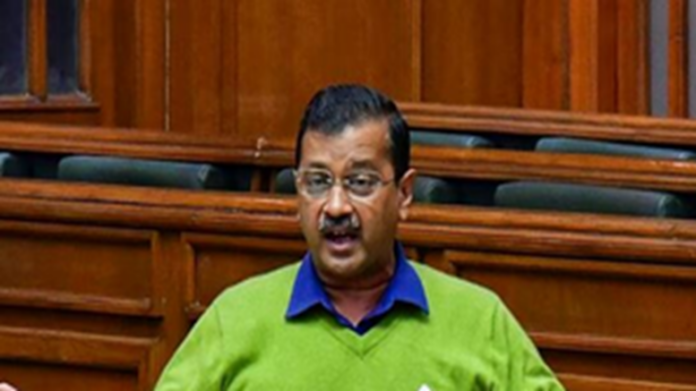
No factual, legal matrix with evidence provided: ECI to Kejriwal on Yamuna ‘poison’ issue

0
kejriwal
(Image Source : IANS)

The Election Commission of India (ECI) on Thursday expressed dissatisfaction over AAP convenor Arvind Kejriwal’s reply on the Yamuna ‘poison’ issue, saying that “no factual, legal matrix with evidence has been provided to support his statement.

The ECI said this in its letter dated January 30 after Kejriwal submitted his reply to the question asked by the Commission. The ECI had sought a reply from Kejriwal following a complaint by Bharatiya Janata Party and Sandeep Dixit of the Congress.

The ECI had called upon the former Delhi Chief Minister, Kejriwal to furnish his response through the Commission’s letter No. 437/ DL-LA/2025-NS-II dated January 28, on his statement. The ECI has referred to Kejriwal’s statement which is also posted on his X handle, especially “on the factual and legal matrix along with evidentiary support thereof, by 20:00 hours on 29th January 2025”.

“The Commission has received your reply on the complaints vide your communication No Nil dated 29th January 2025. Whereas, on examination, the Commission finds that your response is entirely silent on your public and widely circulated, during the campaign statement of “poising of river Yamuna by the Government of Haryana with intention to cause genocide in Delhi, equating it with an act of war between Nations and the fact that same was not only timely detected by the engineers of Delhi Jal Board but also stopped poisonous water at the border of Delhi,” the ECI’s letter reads.

“Needless to add that no factual and legal matrix with evidence has been provided to support your statement. Whereas, instead of clarifying factual and legal matrix of your statement you have chosen to justify your statement under question on high ammonia content in the river Yamuna in Delhi,” said the ECI letter.

The ECI said that it was clearly stated in Commission’s letter dated 28.1.2025 that it was in receipt of a joint letter from Chief Minister Delhi and Chief Minister, Punjab dated 27.01.2025 and 28.01.2025 alleging “deliberate acts of water terrorism by sudden and sharp increase in the Ammonia content in the water being released by Haryana into Yamuna rendering the water untreatable” and that the same is being dealt separately after considering inputs received from the state government of Haryana.

“Whereas, the Commission agrees with the contention that availability of sufficient and clean water is a governance issue and that all concerned governments at all times should engage in securing this for all the people. Commission finds no reason for anyone to dispute this noble position,” the ECI\s letter states.

The ECI has left this important matter to the “competence and good discretion of the governments and the agencies without arbitering, during the short timeframe of the election period, in the water sharing or water pollution issues having a long past and also long term implications for the future and where agreement on sharing of water, directions of the Hon’ble Supreme Court and National Green Tribunal are in play”.

(This article has been published via a syndicated feed)

Manufacturing as a great place to work in Bharat rises to 87 pc

0

Mumbai, Jan 30 (IANS) Manufacturing sector employees at the best workplaces in India are 2.7 times more likely to stay in psychologically healthy environments, and the overall view of manufacturing as a great place to work has risen to 87 per cent in 2025, according to a report on Thursday.

As India’s manufacturing industry advances toward Industry 5.0, the need for companies to prioritise not just technological innovation, but also the well-being of their workforce, has never been more critical, said the report by Great Place To Work.

“As the industry advances toward Industry 5.0, the focus isn’t just on smarter machines but on fostering workplaces that prioritise employee well-being. To combat employee burnout, organisations are taking steps to improve work-life balance, make leaders more approachable, and enhance employee engagement,” said Balbir Singh, CEO, Great Place To Work, India.

“Leading organisations are building a culture of trust and psychological safety, and when employees feel valued, they are 2.7 times more likely to stay. To overcome challenges, organisations need to continuously listen and empower their employees, to shape the industry’s future,” he added.

The report showed that even as companies continue to foster positive and inclusive cultures, challenges remain. The voice of employees consistently highlights the need for more action around psychological safety, care, and equitable growth.

Best Workplaces have responded by implementing mechanisms for regular feedback, ensuring fair task allocation, and introducing flexible shifts to accommodate the needs of their workforce.

For their business and corporate employees, these companies have adopted flexible work models, extended paid leave, and created opportunities for career growth and leadership development.

These have also expanded benefits packages to include wellness programmes, zero-interest loans, bonuses, and a broader range of support systems to meet the diverse needs of their teams, the report said.

Some of the best workplaces for manufacturing recognised for their exceptional culture and employee satisfaction, listed in the report include Apollo Tyres, Orient Cement, Tata Steel India, Amara Raja Power Systems, Sula Vineyards, and Bajaj Energy.

“These companies are not just focused on producing goods — they are committed to producing an environment where employees thrive, grow, and feel valued,” the report said.

(This article has been published via a syndicated feed)

धर्म परिवर्तन कर हिंदू बने युवक का अपहरण:पत्नी का आरोप- दो दिन पहले हुई थी शादी, परिवार ने पीटा, धमकाया

0

“धर्म परिवर्तन कर हिंदू बने युवक का अपहरण:पत्नी का आरोप- दो दिन पहले हुई थी शादी, परिवार ने पीटा, धमकाया”, दैनिक भास्कर, जनवरी 29, 2025

“बस्ती में एक चौंकाने वाला मामला सामने आया है, जहां धर्म परिवर्तन कर हिंदू बने एक मुस्लिम युवक को उसके परिवार वालों ने अगवा कर लिया। पीड़िता अन्नू सोनी ने बताया कि सद्दाम उर्फ शिवशंकर ने 19 जनवरी 2025 को नगर थाने में हिंदू रीति-रिवाज से उससे विवाह किया। अगले दिन 20 जनवरी को दोनों ने अमहट घाट पर हिंदू संगठन के सदस्यों की मौजूदगी में पुनः विवाह किया।

शादी से नाराज परिवार ने 21 जनवरी को पीड़िता के घर पहुंचकर उसके पति की पिटाई की और उसे जबरन अपने साथ ले गए। तब से शिवशंकर का कोई पता नहीं चल पा रहा है। पीड़िता का आरोप है कि मुस्लिम परिवार ने उसके पति के खिलाफ फतवा जारी कर दिया है और उसे भी जान से मारने की धमकी दे रहे हैं।

मामले में पहले से ही थाने में मुकदमा दर्ज है। पीड़िता ने बताया कि सोशल मीडिया पर सद्दाम से शिवशंकर बनने की खबर वायरल होने के कारण परिवार वाले बेहद नाराज हैं और वे उसे भी अकेला पाकर जान से मारना चाहते हैं। पीड़िता ने प्रशासन से सुरक्षा और अपने पति की तलाश की गुहार लगाई है। प्रकरण को लेकर सीओ स्वर्णिमा सिंह ने कहा कि मामले में कार्रवाई की जा रही है……”

पूरा लेख दैनिक भास्कर पर पढ़ें

Naga, Kuki organisations oppose border fencing along Indo-Myanmar border and the suspension of the Free Movement Regime: Read what they want

0
(Image Source : Opindia)

“Naga, Kuki organisations oppose border fencing along Indo-Myanmar border and the suspension of the Free Movement Regime: Read what they want”, Opindia, January 29, 2025:

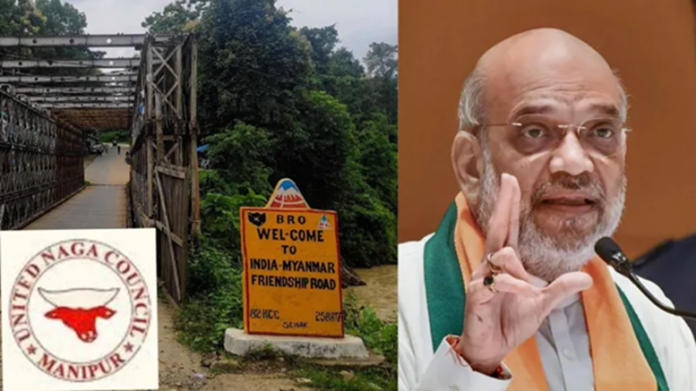
“Reiterating its strong opposition to the India-Myanmar border fencing, the United Naga Council (UNC) directed its units to ‘initiate stringent steps’ to stop the project in their areas. The UNC reportedly issued a directive on January 27, 2025, asking the Naga population, particularly those under the jurisdiction of the Chandel Naga People’s Organisation (CNPO), to abide by the directive and stop any activities related to the fencing project.

As per reports, preceding the recent directive, a resolution was passed during the UNC Presidential Council meeting on 7th November last year opposing the proposed fencing project on the Indo-Myanmar border. The UNC President Ng. Lorho termed the Indo-Myanmar border fencing project as a ‘sinister design’ by the government of Bharat to alienate the Naga people from their ancestral lands by imposing artificial boundaries.

The UNC has instructed its subordinate bodies and local units in the affected areas to take strong steps to stop the fencing project in their respective jurisdictions. The council also issued a warning to individuals and organisations against cooperating with the agencies in fencing stating that non-compliance would attract serious consequences as per the council resolution. …..”

Read the full article at Opindia.com

PEC urges Myanmar Junta to release all detained scribes

0
(Image Source : Indiatodayne)

Expressing annoyance over the continued detention of over 40 journalists in Myanmar, the global media safety and rights body Press Emblem Campaign (PEC) urges the military regime in Naypietaw to release all media persons with no condition and delay. The PEC appreciated the Independent Press Council Myanmar (IPCM) for documenting the media casualty and detentions under the current junta that grabbed power on 1 February 2021 from the democratically elected NLD government led by Nobel peace laureate Daw Aung San Suu Kyi.

According to the IPCM, at least seven journalists were killed and 200 others arrested by the Min Aung Hlaing-led junta since the 2021 coup, where journalists are still under detention with 11 scribes to serve long-term prison terms. The forum admitted that there may be more journalists under detention, which has not come to the light. It added that the military dictators unjustly arrested media workers under the brutal laws like Unlawful Associations Act, Counter-Terrorism Law, Telecommunications Law, Explosive Substances Act, Natural Disaster Management Law, Immigration Act, etc.

“We condemn the Myanmar military authorities for persecuting the media persons with various inhuman laws. Many media outlets have been restricted in carrying out their normal activities. A large number of media workers have left the country to escape the military atrocities. The military regime must release all detainees including journalists and political prisoners as early as possible,” said PEC president Blaise Lempen, adding that the military dictators should also offer due financial compensations to the bereaved families of seven victim scribes.

PEC’s southeast Asia representative Nava Thakuria informed that since the Feb 21 coup the Land of Pagodas lost journalists namely Ko Myat Thu Tun (Democratic Voice of Burma), Htet Myat Thu (Voice of Thanbyuzayat), Win Htut Oo (DVB), Pu Tui Dim (Khonumthung Media Group), Sai Win Aung (Federal News Journal), Aye Kyaw and Ko Soe Naing (both freelancers) to military atrocities. Along with IPCM (which was established in Chiang Mai of Thailand in 2023), the PEC has also recorded their cases in its official website.

BSF Mahila Constable thwarts major infiltration bid along Indo-Bangladesh Border

0
(Image Source : IANS)

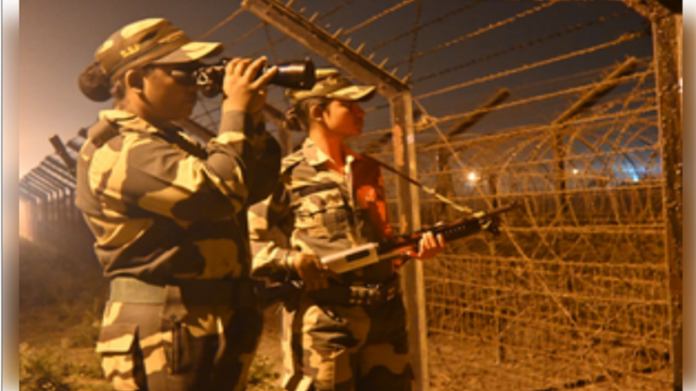
The Border Security Force (BSF) has claimed that a woman constable of the Malda Sector succeeded in thwarting a major infiltration bid by Bangladeshi nationals close to the Kutadah Border Outpost on Wednesday.

A group of five to six armed Bangladeshi nationals were approaching the border fence near Aradhpur, in West Bengal’s Malda district when the constable from the 88 Bn BSF challenged them single-handedly.

“She displayed exemplary courage and did not hesitate to rush forward even after realising that the Bangladeshi nationals were carrying deadly weapons. It could not be ascertained whether they were smugglers, but they had entered Indian territory illegally and were approaching the border fence – 150 yards from the zero line – with the intent to breach it,” said N K Pandey, DIG and spokesperson, South Bengal Frontier, BSF.

DIG Pandey said that the Mahila Constable was on duty during the second shift when she spotted the miscreants moving towards the fence.

“She immediately shouted out a warning and alerted her colleagues over the radio. Even after being warned, the Bangladeshis assumed an aggressive posture and kept on moving forward,” he said.

DIG Pandey claimed that caring little for her personal safety, the brave Mahila Constable rushed towards the group.

“By then, they had got close to the fence and would have started damaging it had she not fired a shot from her service rifle. On hearing the noise and realising her resolve, the criminals ran helter-skelter, taking advantage of the thick fog. The possibility of any of the miscreants being injured in the firing cannot be ruled out,” the DIG said.

Speaking about the performance of Mahila Constables on active duty along the notorious and crime-prone Indo-Bangladesh Border, he said: “Their capability, dedication and bravery are second to none and they are fully capable of curbing any type of criminal activity and securing the borders of the country.”

(This article has been published via a syndicated feed)

Maharashtra: Minister Nitesh Rane demands ban on burqa in 10th and 12th board exams, writes to State Education Minister

0
(Image Source : Opindia)

“Maharashtra: Minister Nitesh Rane demands ban on burqa in 10th and 12th board exams, writes to state Education Minister”, Opindia, January 29, 2025:

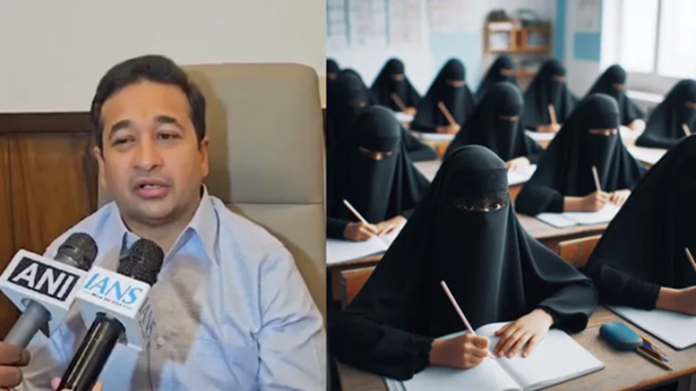
“Maharashtra Minister Nitesh Rane wrote a letter to state Education Minister Dada Bhuse on Wednesday, requesting a ban on wearing burqas at examination centres for the 10th and 12th board exams, citing concerns about potential cheating incidents.

Advocating for uniformity in rules for Hindu and Muslim students, he stated that the Mahayuti government in Maharashtra, which follows the Hindutva ideology, will not tolerate the politics of appeasement. He added that those who wish to wear the hijab or burqa can do so at home, but not at examination centres.

“Our government, which follows Hindutva ideology, will not tolerate the politics of appeasement. The rules that are applicable to Hindu students, the same should apply to Muslim students as well. Those who want to wear a burqa or hijab can wear it at their homes but at the examination centres, they should write their exams like other students,” Rane, who is the Minister for Fisheries and Ports in Maharashtra government, told ANI……..”

Read the full article at Opindia.com