


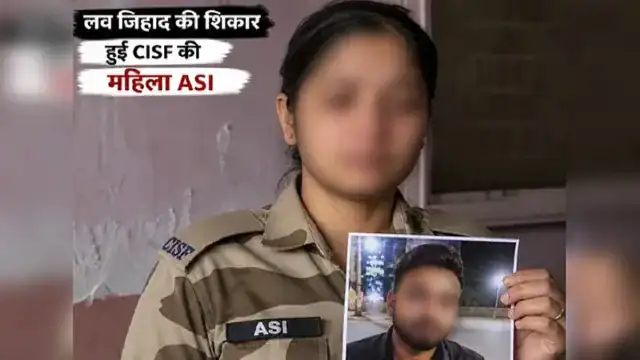
Bokaro has become the centre of a disturbing case in which an international woman athlete has allegedly accused a man of trapping her in a relationship, blackmailing her with nude photos, forcing her into marriage, and later pressuring her over religious conversion. The allegation, reported by Jagran on May 5, 2026, has drawn attention because it involves a Hindu woman who was already known as an athlete and later joined the Central Industrial Security Force (CISF), making the case a matter of both personal safety and institutional concern.
According to the report, the relationship began as a love affair, but the situation reportedly changed after the woman secured employment in the CISF. The accused allegedly used private images to threaten and control her, eventually forcing marriage under pressure and conversion to Islam. Such claims, if proven, would point to a pattern of coercion that goes beyond a domestic dispute and raises questions about digital blackmail, consent, and the misuse of personal photographs as instruments of intimidation.
The case has gained further sensitivity because the woman is described as an international-level athlete. That detail matters because elite sportspersons often face intense public scrutiny, reputational pressure, and dependence on stable employment after their competitive careers or alongside them. In such situations, allegations of exploitation can carry consequences that affect not only the individual survivor but also her sporting and professional future.
What the allegations say
The central allegation is that the woman was blackmailed using nude photographs and then forced into marriage. The reports also indicate that pressure related to conversion to Islam formed part of the complaint, suggesting that the dispute was not limited to a personal relationship breakdown but involved alleged coercion on religious grounds as well. These claims are serious because they combine multiple possible offences, including blackmail, intimidation, sexual exploitation, and unlawful pressure in the context of marriage and religion.
Related recent cases from other states show that police have increasingly treated such complaints as layered criminal matters involving extortion, rape allegations, threats, and conversion pressure. In one Haryana case, for example, police registered offences after a woman alleged repeated sexual assault, blackmail using obscene videos, extortion of money, and pressure to convert before marriage. While each case must be judged on its own facts, the pattern of allegations across cases reflects how intimate-image abuse and coercion can be used to control victims over long periods.
Why the case matters
This case stands out because it intersects three highly sensitive areas: Hindu women’s safety, digital abuse, and religious coercion by Islamists. Blackmail involving intimate images has become a major concern in Bharat’s cities and smaller towns alike, with multiple recent complaints showing how victims are threatened with circulation of private content unless they comply with demands for marriage, money, or silence. When such allegations involve a government employee or a woman from a sports background, public interest intensifies because the case can affect both personal dignity and institutional trust.
The reported presence of a CISF-linked career angle also gives the story wider relevance. A security-force job is often seen as a symbol of stability and independence, and any allegation that this was followed by coercion into marriage and religious pressure naturally triggers concern about whether the survivor’s vulnerability was exploited after she gained employment. That makes the case important not just as a criminal complaint, but also as a social story about control, manipulation, and the dangers of using private relationships for coercive ends.
Wider legal backdrop
Cases involving blackmail, forced marriage, and conversion pressure have appeared repeatedly in Bharatiya reporting in recent years. In the 2026 Haryana case, police said a woman accused a man of rape, blackmail, and forcing her to convert as a condition for marriage; she also alleged repeated sexual assault and extortion of around Rs 1 lakh. In another 2026 case from Uttar Pradesh, a constable alleged prolonged coercion and harassment linked to forced conversion and marriage. These cases show that investigators are increasingly confronting complaints where private relationships, criminal intimidation, and religious pressure overlap.
From a Hindu viewpoint, marriage must rest on dharma, dignity, and free consent, so any act of blackmail, coercion, or forced conversion is morally wrong and against the values of respect for womanhood.
