


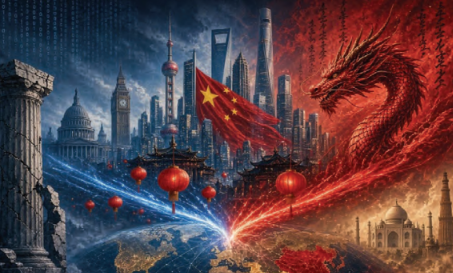
“The new challenge of China”, SundayGuardianLive, 04 Oct 2026.
“Many people do not understand what the fundamental challenge thrown by China at its geopolitical rivals today is. It is not merely economic or military—it is a fundamental dispute over the very definition of legitimate governance. For decades, the global consensus—anchored by the West and championed by India—defined democracy through a strictly procedural lens: regular multi-party elections, freedom of expression, independent judicial checks, and the protection of civil liberties. Today, the Chinese Communist Party (CCP) is actively attempting to dismantle this consensus, proposing a radical, alternative political framework. In the Chinese model, democracy is stripped of its traditional electoral mechanics and redefined almost entirely around state capacity, socio-economic outcomes, and performance. The ultimate test of a democratic system, Beijing argues, is not whether citizens can cast a ballot or openly criticise their leaders, but whether the state effectively and consistently delivers material goods, public services, and upward mobility to its population.
This ideological pivot was formally codified and aggressively projected outward in the Chinese government’s 2021 white paper, “China: Democracy That Works”. The document details what President Xi Jinping has termed “Whole Process People’s Democracy”. To the external observer in New Delhi, London, or Washington, attaching the word “democracy” to a rigid one-party state characterised by strict censorship and limited space for dissent appears entirely contradictory. Yet, the CCP treats this not merely as defensive propaganda, but as a genuine, competing political philosophy designed to challenge Western hegemony over global political norms. Chinese leadership explicitly contrasts “procedural democracy”—the mechanics of voting—with “substantive democracy,” which focuses on tangible socio-economic achievements and the realisation of national will. Under this framework, political pluralism and individual liberties are viewed as secondary, or even actively detrimental, to collective well-being and national development………”
Read the full article at SundayGuardianLive.
