


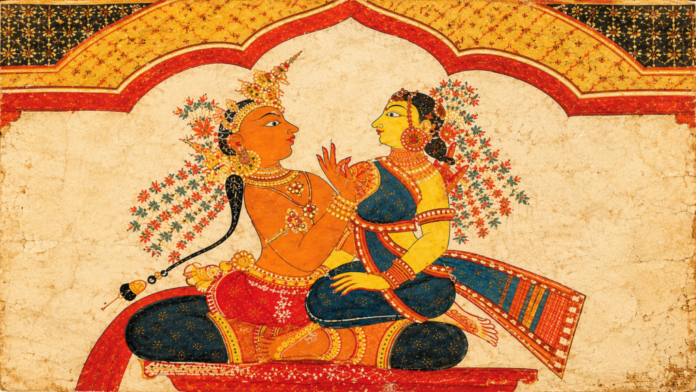
Summary: In a paper for Indica Today, Sibansu Mukherjee brings rasa theory into dialogue with Nyaya, Buddhist and Samkhya thought to argue that shringara, the rasa of love long called rasaraja, is a form of duhkha, in union as much as in separation. Starting from sarvam paravasham duhkham (Manusmriti 4.160), 'whatever depends on another is sorrow', he shows Abhinavagupta's sadharanikarana supporting the thesis, traces it through the shantarasa debate and Gaudiya Vaishnava prema-vaichittya, tests it against Levinas, and offers acintya-bhedabheda as a third position.
Why it matters: Bharatiya thought does not flatter pleasure; it asks what depends on another and therefore binds. In an age that sells romance as liberation, the Dharmic traditions examine even the king of rasas with a rigour Western frameworks seldom attempt.
Source: “The Sorrow Inside Delight: Shringara, Duhkha and the Problem of the Other in Indian Thought”, Indica Today · 20 Nov 2026
Shringara, the rasa of love, is called the king of the rasas. Poets have said so for more than a thousand years, and the theatre, the temple and the songs of Bengal have agreed with them. I want to propose something that sounds, at first, like an insult to that king. Shringara is sorrow. Not only the shringara of separation, which everyone already admits is painful, but the shringara of union too, the play of longing and approach in which two people turn towards each other. It is sorrow in literature and it is sorrow in life.
The reason can be stated in one line of Sanskrit, and the rest of this paper is an attempt to show that the line is not a cynic's slogan but a conclusion that several schools of Indian thought reached by different roads…
Read the full article at Indica Today →
