


Competitive examinations are the gateway to opportunity for millions of young Indians. Any compromise in their integrity strikes at the very foundation of meritocracy and public trust. In 2024, allegations surrounding the NEET examination triggered nationwide outrage, massive political mobilization, and protests led by opposition parties. Congress and the CPI(M) were among the loudest voices demanding accountability from the Union Government.
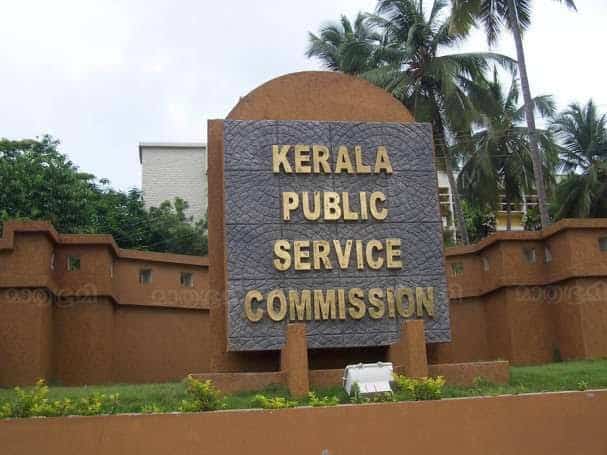
Yet, as Kerala witnesses a series of disturbing controversies involving the Kerala Public Service Commission (KPSC), university examinations, and recruitment processes, the same political parties remain conspicuously silent. The contrast raises an uncomfortable question: Should examination scandals evoke outrage only when they occur elsewhere, or should justice be demanded irrespective of who governs?
The recent controversies surrounding the Kerala PSC are not isolated incidents. They form part of a disturbing pattern stretching back more than a decade, raising serious concerns about transparency, accountability, and the future of nearly 2.5 million unemployed youth waiting for government jobs in the state.
In recent months, Kerala has witnessed one controversy after another involving the PSC and university examinations.
Unevaluated Answers, Yet Rank List Published
Perhaps the most shocking revelation emerged from the State Planning Board recruitment examination. Following an RTI application, it came to light that answers carrying 58 marks out of a total 100—covering ten descriptive questions—for 228 candidates were allegedly left unevaluated before the rank list was prepared.
Despite this glaring lapse, appointments reportedly proceeded, prompting allegations of a grave procedural failure. A Crime Branch-led Special Investigation Team (SIT) is now probing the valuation software and the entire evaluation process.
Separate allegations have surfaced regarding manipulation in answer-sheet valuation, interview marks, and preparation of rank lists. Following complaints of irregularities and possible mark tampering, the matter has reportedly been handed over to the Vigilance Department for investigation, placing the PSC leadership under considerable scrutiny.
Alappuzha Examination Cancelled
Administrative lapses have also come under the spotlight. The Kerala Public Service Commission (PSC) was compelled to cancel the 10th Preliminary Examination (Stage II) conducted for recruitment to Last Grade Servants (LGS) and other SSLC-level posts in various government-owned Companies and Corporations after candidates at an examination centre in Alappuzha were mistakenly supplied with the wrong question paper. The incident exposed serious procedural shortcomings and raised fresh concerns over the conduct of PSC examinations.
Kerala University’s Embarrassing Question Paper Error
The credibility crisis has extended beyond the PSC. Kerala University recently ordered an internal inquiry after identical questions appeared repeatedly in the same MA History examination paper, raising fresh concerns over academic quality control.
High-Tech Cheating Makes a Comeback
Technology-enabled examination fraud has resurfaced dramatically. In the recent Forest Beat Officer examination, police arrested candidates allegedly using Bluetooth-enabled electronic communication devices to receive answers during the test. Earlier reports have also documented cases involving hidden cameras, Wi-Fi-enabled gadgets, and sophisticated electronic equipment designed to facilitate cheating during recruitment examinations.
A Long History of Recruitment Scandals
The current controversies are not unprecedented. One of Kerala’s biggest recruitment scandals erupted in 2019 when several top-ranking candidates, including individuals allegedly linked to SFI, were accused of using SMS networks and smartwatches to cheat during the Armed Police Constable examination. The Kerala High Court subsequently ordered a wider investigation into the network behind the malpractice.
The discovery of question papers from the residence of an accused in another criminal case and the subsequent cancellation of the SI rank list remain vivid reminders of the vulnerabilities in the recruitment system.
The Wayanad Fake Appointment Order Scam
An earlier scandal exposed how forged PSC appointment orders were allegedly issued through corrupt revenue officials in exchange for bribes, enabling fraudulent backdoor appointments into government service.
Allegations Beyond Examination Errors
Several other controversies have periodically surfaced over the past decade:
- Allegations that certain rank lists disproportionately favoured candidates allegedly associated with Left-affiliated organisations.
- Complaints regarding alleged favouritism and irregularities in the preparation of the DIET Lecturer rank list.
- Allegations that the KERAFED recruitment rank list was manipulated.
- Complaints relating to interview marks and evaluation procedures in various recruitment processes.
While investigations are at different stages and not all allegations have been judicially established, together they have significantly eroded public confidence in Kerala’s recruitment system.
The Forgotten Protest of 2021
Perhaps the most painful chapter was witnessed in 2021. During the COVID-19 period, recruitment slowed dramatically and 493 PSC rank lists expired without extension. Thousands of candidates who had spent years preparing for examinations found their hopes shattered. Many staged an indefinite protest before the Kerala Secretariat. Some crawled on the scorching road. Others shaved their heads in symbolic protest. Reports also linked severe unemployment stress to tragic instances of candidate suicides. Yet these protests failed to evoke the nationwide solidarity or political mobilisation seen during the NEET controversy.
The anguish of PSC aspirants has continued to manifest in increasingly desperate forms of protest. In a recent demonstration before the Kerala State Secretariat in Thiruvananthapuram, members of the All Kerala LPST Rank Holders’ Association staged a dramatic symbolic protest by eating soil served on plantain leaves to highlight the prolonged delay in government appointments despite valid rank lists remaining in force. The protesters said that candidates in several districts had not received appointment orders even while the rank lists remained active. Along with the symbolic act of eating soil, some aspirants also crawled on their knees to convey their sense of despair and hopelessness over the government’s continued inaction.
The Stakes Are Enormous
The comparison between NEET and PSC controversies deserves careful reflection. Approximately 2.4 million students appeared for NEET nationally. In Kerala, however, nearly 2.5 million young people remain registered with Employment Exchanges awaiting government employment. For many families, a PSC appointment represents financial security and social mobility. Kerala also continues to face one of India’s highest unemployment rates. In such circumstances, any irregularity in recruitment examinations has devastating consequences for an entire generation of educated youth.
Salary Hikes Amid Controversy
Ironically, even as questions were being raised about recruitment processes, PSC office-bearers continued to enjoy generous salaries and benefits. In 2024, despite Kerala’s financial constraints, the LDF Government approved substantial revisions in the salaries and pensions of PSC members. The revised structure reportedly included:
| Position | Revised Monthly Salary |
| Chairman | ₹3.81 lakh (approximately ₹4.5 lakh including allowances) |
| Member | ₹3.73 lakh plus ₹35,000 HRA and ₹10,000 vehicle allowance |
Pension benefits were also significantly enhanced:
- Former Chairman: ₹1.25 lakh to ₹2.5 lakh per month.
- Former Members: ₹1.20 lakh to ₹2.25 lakh per month.
PSC members also continue to receive benefits comparable to those of the Chief Secretary, including free medical treatment for family members. The annual additional financial burden on the state exchequer has been estimated at around ₹4.5 crore.
Critics pointed out that these revised emoluments exceeded those of several constitutional functionaries, including the Prime Minister and judges of the Supreme Court. Kerala also has the highest number of PSC members among Indian states, with 20 members currently serving.
A Constitutional Body or a Haven for Political Patronage?
Kerala presents a striking paradox. With an area of about 38,863 sq. km, a population of roughly 3.6 crore, 14 districts, 20 Lok Sabha constituencies, and 140 MLAs, the State Public Service Commission consists of a Chairman and 20 Members (21 in all). By contrast, Uttar Pradesh—India’s largest state, with an area of about 240,928 sq. km, a population exceeding 24 crore, 75 districts, 80 Lok Sabha constituencies, and 403 MLAs—has a much smaller Uttar Pradesh Public Service Commission with only a Chairman and six Members. This glaring disparity has long fuelled criticism that the KPSC has been transformed into a convenient sanctuary for political patronage rather than remaining a lean, merit-driven constitutional institution. Critics allege that successive governments—whether led by the LDF or the UDF—have routinely used PSC memberships to placate coalition partners, reward loyal party functionaries, and accommodate leaders from various constituent parties after elections or at the end of their political careers. Such appointments create the public perception that these highly paid constitutional offices have become political rehabilitation centres instead of positions reserved for individuals of exceptional integrity, administrative experience, and professional excellence. In a state grappling with severe unemployment and repeated recruitment controversies, the continued expansion and politicisation of the Commission only deepen public distrust and raises serious questions about whether constitutional offices are being used primarily to serve unemployed youth or to satisfy coalition compulsions.
The Politics of Selective Outrage
The NEET controversy witnessed demonstrations in New Delhi. Congress leaders, CPI(M) leaders, student organisations, writers, filmmakers, artists, and activists actively participated in protests, demanding accountability. However, despite a succession of serious allegations involving Kerala’s recruitment system, comparable public mobilisation has been largely absent.
While the Congress and CPI(M) supported and took credit for the success of the CJP’s Delhi agitation against the NEET controversy, they have remained strikingly silent on the scandals rocking KPSC and state examination system.
The contrast has fuelled accusations of selective outrage—raising one’s voice against examination irregularities elsewhere while overlooking similar or even more consequential controversies within one’s own political sphere.
The issue is larger than politics. Whether it is NEET, the Kerala PSC, or any other public examination, the principle must remain the same: every deserving candidate has the right to a transparent, fair, and merit-based selection process. Millions of young Indians invest years of hard work, family savings, and emotional resilience in preparing for competitive examinations. Every cancelled examination, manipulated rank list, evaluation lapse, or recruitment scandal chips away at public faith in institutions. If the integrity of examinations is worth defending in Delhi, it is equally worth defending in Thiruvananthapuram.
Justice cannot wear different political colours. Merit cannot depend on geography. And the future of Kerala’s unemployed youth deserves no less attention than the future of students anywhere else in Bharat.
