


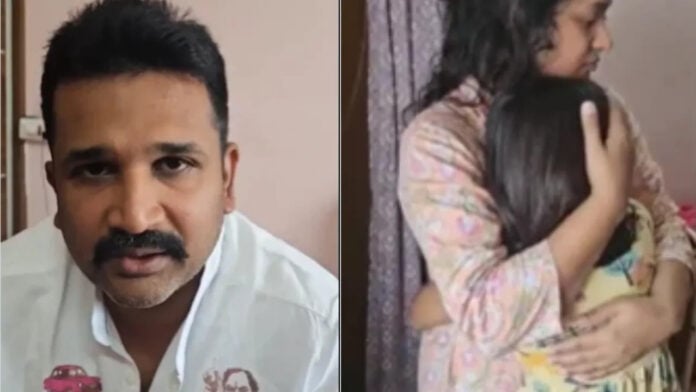
A major political controversy has erupted in Telangana after the arrest of Bharat Rashtra Samithi (BRS) leader and social media convener Manne Krishank, with the episode quickly escalating into a wider debate over free speech, police powers, and the treatment of opposition leaders under the Congress-led state government. The controversy intensified further when a Hyderabad court declined to remand Krishank to judicial custody, citing legal safeguards and Supreme Court guidelines concerning arrests in cases involving offences carrying lesser punishments.
The arrest took place on September 18 after police personnel forcibly entered Krishank’s residence in Hyderabad during an early morning operation. Visuals circulated by the BRS and widely reported by news outlets showed police breaking open the lock of the property’s outer grill and entering the premises before taking the leader into custody.
Dawn Raid Sparks Public Outrage
According to multiple reports, police teams arrived at Krishank’s residence at approximately 5 a.m. and attempted to gain access to the house. Krishank had reportedly refused to come outside, prompting officers to force entry after repeated requests. Footage shared by the BRS showed police using tools to break the lock and enter the residence, leading to dramatic scenes that quickly gained traction on social media platforms.
Krishank later questioned the deployment of such a large police contingent for what he described as a routine social media post. He claimed that nearly 50 to 100 police personnel were involved in the operation and asked why authorities had treated him “like a criminal” when he was neither absconding nor resisting legal procedures.
The images that generated the strongest public reaction were those showing Krishank’s young daughter crying during the operation. Reports indicated that the seven-year-old child was deeply distressed by the police action and was unable to attend a scheduled examination that morning.
What Triggered the Arrest?
The case against Krishank stems from a social media post concerning an alleged incident at the Saifabad Police Station. The controversy traces back to events on September 14 involving aides of BRS Working President K.T. Rama Rao (KTR).
According to allegations made by BRS leaders, KTR’s Public Relations Officer Manikya Mahesh and personal assistant Mahender Reddy were attacked by a group of masked individuals while they were present at the police station for questioning in a separate case. Krishank subsequently posted comments online questioning the incident and asking who the masked individuals were.
In statements made before his detention, Krishank claimed that between 25 and 30 masked men had entered the police station. He further argued that the matter was already before the courts and noted that the Telangana High Court had directed authorities to preserve CCTV footage connected to the case. The state government has reportedly disputed the allegations made by the BRS regarding the incident.
Court Refuses Police Remand
The most significant legal development came later on September 18 when the Nampally Court rejected the police request to remand Krishank to judicial custody.
Court proceedings reportedly focused on Supreme Court guidelines governing arrests and remand procedures, particularly in cases involving offences punishable by less than three years of imprisonment. Senior advocate Gannamaneni Kiran Kumar, representing Krishank, argued against remand, and the court ultimately declined the police plea.
The court’s decision was widely viewed as a major setback for the prosecution and a significant legal victory for the BRS leader. Reports indicate that the magistrate found insufficient grounds to justify judicial custody under the circumstances presented by investigating authorities.
High Court Intervention Adds New Twist
Simultaneously, the matter reached the Telangana High Court, where Justice T. Madhavi Devi reportedly directed police not to arrest Krishank without following statutory safeguards laid down under Section 35(3) of the Bharatiya Nagarik Suraksha Sanhita (BNSS). The court emphasized that due process must be observed and that notices should be issued where legally required.
During the hearing, legal representatives for Krishank disputed assertions regarding his arrest status and argued that the offences invoked in the FIR carried punishments of less than three years. The High Court directed that the investigation may continue but only in accordance with prescribed procedures.
KTR Launches Fierce Attack on Congress and Rahul Gandhi
The arrest immediately triggered a sharp political reaction from BRS leadership. KTR accused the Telangana government of suppressing dissent and violating democratic norms. In a strongly worded message addressed to Congress leader Rahul Gandhi, he questioned the contrast between Congress’ public advocacy of constitutional rights and the actions of the Telangana administration.
KTR alleged that police had broken into the residence of a political opponent over a social media post criticizing the government. He further claimed that the arrest violated judicial precedents concerning social media-related cases and asked whether criticism of the government had become a criminal offence in Telangana.
The BRS also highlighted the emotional impact of the operation on Krishank’s family, particularly the distress caused to his daughter, arguing that the incident reflected excessive use of state power against opposition voices.
Growing Political Tensions in Telangana
The Krishank episode comes amid heightened confrontation between the ruling Congress government and the opposition BRS. Earlier in the week, tensions escalated outside the Telangana Legislative Assembly during the Monsoon Session after BRS legislators staged protests criticizing the government. Several leaders, including KTR and senior BRS figures, were reportedly detained during confrontations with police.
Additionally, two BRS MLCs, T. Madhusudhan Rao and N. Naveen Kumar Reddy, were arrested in separate cases relating to alleged remarks against Assembly Speaker Gaddam Prasad Kumar, further intensifying allegations from the opposition that dissenting voices are being targeted.
A Test Case for Free Speech and Due Process
The arrest and subsequent court developments have transformed what began as a dispute over a social media post into a broader debate about civil liberties, lawful arrest procedures, and the rights of political opposition figures. Legal experts and political observers are now closely watching the case, particularly in light of judicial observations that authorities must adhere to established Supreme Court guidelines before making arrests for offences involving limited punishment.
With the Nampally Court rejecting remand, the High Court emphasizing procedural safeguards, and political rhetoric escalating between the Congress and BRS, the Krishank case is likely to remain a significant flashpoint in Telangana politics in the weeks ahead.
