


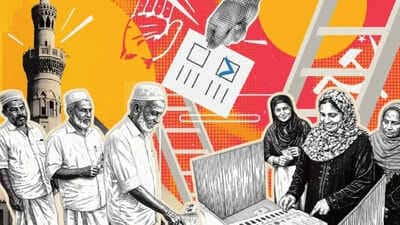
Kerala is often celebrated as “God’s Own Country”—a land of high literacy, social development and religious diversity. For decades, it has been projected as a model of communal coexistence where Hindus, Muslims and Christians lived together with remarkable harmony. Yet beneath this carefully nurtured image lies a more complex historical reality. The tensions that periodically erupt in contemporary Kerala did not emerge overnight. They are rooted in centuries of political upheaval, religious competition, demographic change and ideological contestation.
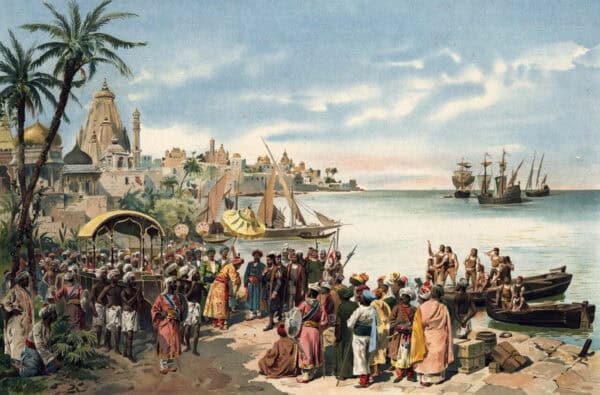
The story begins in 1498 when Vasco da Gama landed on the Malabar Coast, opening a new chapter in Kerala’s history. The arrival of the Portuguese fundamentally altered the balance of power that had existed for centuries between local rulers and Arab traders who dominated the lucrative spice trade. What began as commercial competition soon acquired religious overtones. The Portuguese Crown viewed trade, territorial expansion and missionary activity as interconnected objectives, creating new fault lines in Kerala’s social landscape.
The sixteenth century witnessed another significant demographic and cultural development. The Goa Inquisition, established under Portuguese rule, prompted the migration of several Hindu communities, including large numbers of Gaud Saraswat Brahmins, from Goa into various parts of coastal Karnataka and Kerala. These migrations reshaped local society and contributed to the evolving religious and cultural mosaic of the region.
If Portuguese intervention introduced one phase of religious contestation, the invasions of Hyder Ali and Tipu Sultan during the period between 1766 and 1790 represented another. Their military campaigns across Malabar remain a subject of intense historical debate. While communist historians emphasise political and military objectives, many Hindu accounts continue to recall widespread displacement, destruction of temples and forced conversions during this turbulent period. The memories of these invasions have endured in Kerala’s collective consciousness and continue to influence contemporary political narratives.
The Shadow of 1921
No discussion of communal relations in Kerala can overlook the events of 1921. The Moplah Rebellion, which began in August that year, remains among the most contentious episodes in the state’s history. While Left historians with an eye on the Muslim vote bank often describe it as an agrarian revolt, independent historians view it as a violent outbreak of religious fanaticism directed against the Hindu population of Malabar.
This rebellion left a profound and lasting impact. Thousands of Hindus were killed, displaced and forcibly converted. Entire families were driven from their ancestral homes. The memories of killings, forced conversions and destruction became deeply embedded within the Hindu psyche of Malabar and continue to influence debates over communal politics even a century later.
The years leading to Independence witnessed further tensions. The killing of nationalist leader Ramasimhan in 1947 became another reference point showing that ideological and communal violence had begun to cast a shadow over Kerala’s political life even before the birth of the Republic.
Independence and New Fault Lines
Independent India inherited many of the unresolved tensions of the colonial period. Kerala was no exception. One of the earliest controversies after Independence was the 1950 Sabarimala arson incident, in which the famous hill shrine suffered extensive damage. The episode shocked Hindu society and generated widespread concern regarding the vulnerability of sacred institutions. The incident also contributed to the emergence of organised Hindu mobilisation in Kerala.
The same period witnessed the formation of organisations such as the Hindu Mahamandalam, which sought to articulate Hindu concerns in an increasingly competitive political environment. Supporters viewed these organisations as necessary platforms for protecting Hindu interests, while critics accused them of encouraging communal consolidation.
Meanwhile, Kerala’s electoral politics began taking a distinctive shape. Unlike most other Indian states, Kerala developed a political system dominated by coalition fronts. Over time, the Congress-led United Democratic Front (UDF) and the CPI(M)-led Left Democratic Front (LDF) emerged as the principal centres of political power.
From the very beginning, community-based political calculations became an integral component of electoral strategy. The Indian Union Muslim League (IUML), which retained significant influence among sections of Kerala’s Muslim population after Partition, became an indispensable ally in coalition politics. Successive governments increasingly depended upon carefully calibrated social alliances that balanced caste, community and regional interests.
This process gradually transformed religious communities into organised vote banks and political expediency often replaced principled governance, creating conditions in which religious organisations acquired disproportionate influence over public policy.
Symbolism and Political Transformation
Few developments illustrate this transformation more clearly than the creation of Malappuram district in 1969. The Marxist government, headed by E.M.S Namboodirpad presented the move as an administrative necessity. But beneath that justification lay a calculated political strategy: the creation of a separate district in a region where Muslims constituted the majority was also a shrewd attempt to consolidate Muslim support and strengthen the Left’s electoral base. It marked a significant turning point in Kerala’s politics, signalling how demographic realities could be converted into electoral advantage. The formation of Malappuram was therefore an unmistakable manifestation of the institutionalisation of identity-based electoral calculations in Kerala.
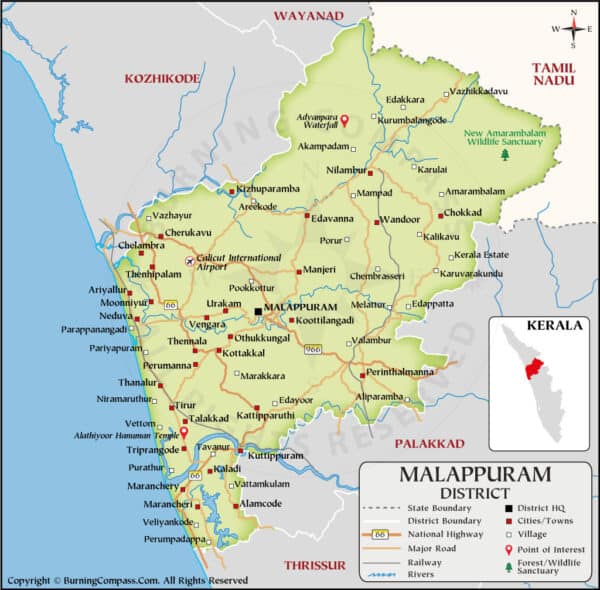
Thus, the creation of Malappuram marked a decisive turning point in Kerala’s political trajectory, institutionalising the use of religious demographics as an electoral instrument. In the decades that followed, Muslim appeasement increasingly became a defining feature of Kerala’s politics. The Congress-led UDF and the Marxist-led LDF, despite their ideological differences, increasingly competed to cultivate communal constituencies, Muslim and Christian, and secure their electoral support. In the process, mainstream political parties repeatedly compromised their professed ideological positions, subordinating political principle to the demands of community-based electoral arithmetic. What began as calculated electoral accommodation gradually evolved into a pattern of political dependence, giving organised communal interests increasing leverage over public policy and political discourse.
As new organisations emerged and older communal tensions resurfaced, these political compromises became increasingly pronounced. Religious identity moved steadily from the margins to the centre of Kerala’s electoral politics, while the willingness of mainstream parties to confront communal and fundamentalist forces diminished in proportion to their dependence on minority vote banks. The consequences of this trajectory would become increasingly visible in the decades that followed.
The post-Independence decades witnessed several incidents that contributed to a growing sense of unease among different communities.
The Thali Temple Agitation
The Thali Temple agitation at Angadipuram in Malappuram in 1968 became another important flashpoint in Kerala’s post-Independence religious history. The issue was not simply about constructing a new temple. The remains of an old Shiva temple, including a Shiva lingam, had been found on government land at the site, and local Hindus sought to restore the neglected place of worship and resume their right to offer prayers. The move encountered opposition from sections of the local Muslim community as well as the Communist government, particularly because a Muslim place of worship stood nearby.
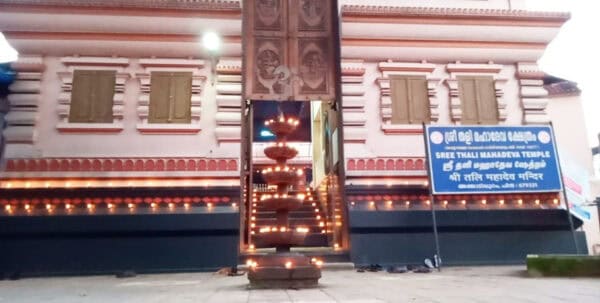
For Hindus, the issue was therefore one of temple restoration, preservation of religious heritage and the basic freedom to worship at a sacred site. K. Kelappan, the veteran leader popularly known as Kerala Gandhi, took up the cause and led a sustained satyagraha demanding that the authorities permit the restoration of the temple and protect the devotees’ right to worship. The agitation eventually succeeded, and the Thali Sree Mahadeva Temple was rebuilt at Angadipuram
The significance of the agitation extended beyond the temple itself. It became an early post-Independence mobilisation around the protection of Hindu religious institutions in Malabar and strengthened the emerging temple-protection movement in Kerala. The episode also exposed what Hindu activists regarded as the growing reluctance of the Communist establishment to accommodate legitimate Hindu religious demands, particularly in a region where communal and electoral considerations were already becoming increasingly intertwined.
The Thalassery riots of December 1971 were another grim indication of how rapidly Kerala’s communal equilibrium could be disturbed. What began amid growing political and communal tensions in Thalassery soon spiralled into four days of violence, with hundreds of incidents of attack, looting, arson and destruction. Mosques, madrasas and temples were attacked, while homes and business establishments belonging to both communities were targeted.
The riots exposed the dangerous consequences of allowing communal and electoral politics to feed upon each other. The presence of the Muslim League in the ruling coalition had already generated fear among sections of the Hindu population. Instead of being an isolated outbreak, Thalassery became an early warning that Kerala’s celebrated reputation for communal harmony could not withstand the combined pressures of competitive communal mobilisation, political appeasement and administrative failure.
A decade later, the Nilakkal agitation of 1983 triggered another major confrontation over the sanctity of Sabarimala and its surrounding sacred landscape. The controversy erupted after a cross was erected on the Nilakkal–Sabarimala pilgrimage route, which was an attempt to appropriate a site traditionally associated with the Sabarimala pilgrimage. The development provoked widespread protests across Kerala, with Hindus demanding the removal of the cross and protection of the sanctity of the historic pilgrimage route. What followed was a powerful statewide mobilisation that brought the question of Hindu religious rights and the preservation of sacred spaces to the centre of public debate. Faced with the intensity of the agitation and growing public opposition, the powerful Church establishment was eventually compelled to retreat and withdraw the disputed claim. For Hindu society, the Nilakkal struggle became a defining assertion that the sacred geography surrounding Sabarimala could not be altered or appropriated through unilateral religious intervention.
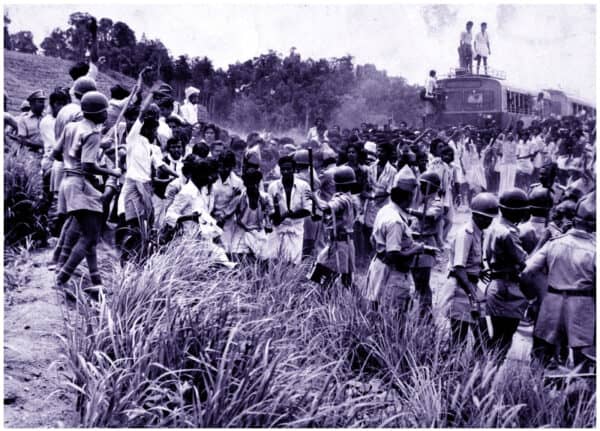
By the end of the 1980s, Kerala’s political and social landscape had undergone a profound transformation. The emergence of new religious organisations, increasing ideological assertiveness and the rise of identity-based mobilisation were beginning to reshape the state’s public discourse. The stage was now set for a more organised and confrontational phase of religious politics—one that would dominate Kerala’s headlines in the decades to come and fundamentally alter debates about secularism, extremism and communal coexistence.
Radical Networks and the Politics of Silence
If the decades following Independence witnessed the gradual consolidation of identity-based politics, the late 1980s and early 1990s marked the emergence of a more organised phase of Islamist mobilisation in Kerala.
The rise of Abdul Nasser Madani became one of the defining developments of this period. In 1989, he founded the Islamic Sevak Sangh (ISS), an organisation that projected itself as a defender of Muslim interests. Critics, however, accused it of promoting sectarian politics and deepening communal polarisation. The organisation was eventually banned, but Madani’s influence on Kerala’s political discourse remained significant.
What made the Madani phenomenon particularly controversial was not merely the organisation itself but the support he continued to receive from sections of the political establishment. Over the years, both Left and Congress-led formations were accused by opponents of courting him and his followers for electoral considerations. His continued relevance in coalition politics became, for many observers, an example of how vote-bank calculations often overrode concerns regarding radicalisation.
The Poonthura Riots
The Poonthura riots of 1992 marked another disturbing turning point in Kerala’s communal history. The coastal neighbourhood of Poonthura in Thiruvananthapuram witnessed intense communal violence, with clashes between sections of the Hindu and Muslim communities resulting in deaths, injuries, arson and widespread destruction of property. The violence brought home the uncomfortable reality that Kerala was by no means insulated from the communal tensions that had engulfed other parts of the country. A state that prided itself on its tradition of social harmony suddenly found one of its densely populated coastal settlements transformed into a battleground of communal confrontation.
More disturbing was the political lesson that followed. For successive governments, Poonthura reinforced the perception that the so called secular political parties were reluctant to confront radical and communal elements firmly at it would jeopardise established vote banks. Instead of treating communal mobilisation as a threat to be confronted impartially, political calculations often appeared to dictate the intensity and direction of the response. Poonthura thus became another warning that the combination of organised communal mobilisation and electoral expediency could steadily erode Kerala’s much-vaunted social cohesion.
The Ideological Groundwork for a Radical Ecosystem
During the 1990s and early 2000s, growing attention turned to the activities of the Students Islamic Movement of India (SIMI), particularly its expanding presence in Kerala. What had initially presented itself as a student organisation increasingly came under the scrutiny of intelligence and security agencies, which viewed SIMI as a vehicle for Islamist ideological mobilisation and radicalisation.
Kerala became one of the important centres of this activity. Security agencies and investigators began examining the networks through which SIMI’s ideology was propagated, particularly among sections of educated Muslim youth. The concern was not simply about the existence of an organisation, but about the ideological ecosystem that it was helping to create—one in which religious identity, political Islam and opposition to the secular democratic order could increasingly intersect.
The subsequent emergence of organisations such as the National Development Front (NDF) and, later, the Popular Front of India (PFI) inevitably revived questions about SIMI’s legacy. Several individuals subsequently associated with extremist activities were reported to have had links with, or passed through, SIMI networks. For critics, this suggested that the organisation’s influence did not disappear with its eventual banning but continued to flow into newer organisational structures.
To be clear, the overwhelming majority of Kerala’s Muslims have neither supported nor participated in extremist activities. The concern was always about a relatively small but ideologically committed section capable of exploiting religious identity, community networks and political grievances for radical purposes. What began as an apparently limited ideological current was gradually evolving into a wider ecosystem of organisations, recruiters and sympathisers—one that would acquire far greater visibility and, eventually, a much more troubling record in the years that followed.
The Disappearance of Chekannoor Maulavi
One of Kerala’s most enduring mysteries concerns the disappearance of Chekannoor Maulavi. A reformist Islamic scholar known for questioning orthodox interpretations and advocating independent thinking, Maulavi vanished under mysterious circumstances in 1993.
Despite decades of investigations and speculation, till this day the case remains unresolved. His supporters believe he was targeted because of his reformist views and criticism of religious orthodoxy. The unresolved nature of the case has ensured that it continues to occupy a significant place in discussions about dissent, reform and intolerance within sections of Kerala’s Muslim society.
The Evolution of Organised Islamism
The formation of the National Development Front (NDF) in the 1990s marked another important milestone. Though the organisation projected itself as a social movement working for minority empowerment, it functioned as a vehicle for Islamist mobilisation. Security agencies periodically expressed concern regarding its activities and organisational methods.
The NDF would eventually become one of the principal constituents of the Popular Front of India (PFI), formed in 2006 through the merger of several organisations operating across South India. The PFI rapidly emerged as one of the most controversial organisations in contemporary India. Supporters described it as a movement dedicated to social justice and minority rights. Critics, including various security agencies, accused it of fostering extremism, communal polarisation and militant mobilisation.
The Government of India eventually banned the organisation in 2022 under the Unlawful Activities (Prevention) Act, citing alleged links to extremist activities and threats to national security. Independent observers are of the view that the ban addressed only the organisational structure and not the underlying ideological ecosystem that had developed over decades.
When Radicalisation Became a Public Reality
Few incidents exposed the deepening communal fault lines in Kerala more starkly than the Marad massacres of 2002 and 2003. The coastal village of Marad in Kozhikode district witnessed two successive episodes of communal violence, culminating in the brutal killing of Eight Hindu fishermen and leaving behind a legacy of fear, bitterness and deep mistrust between the communities.
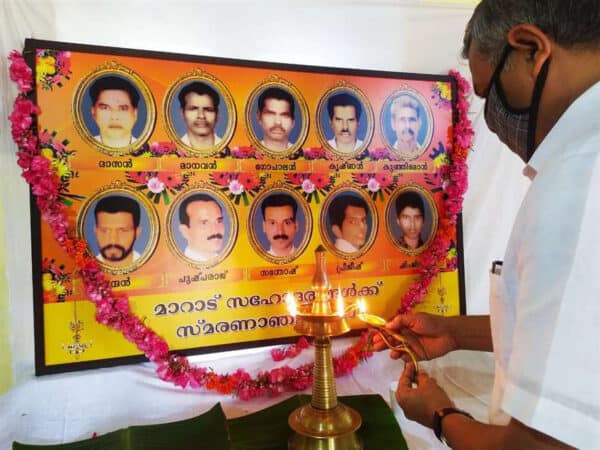
What made Marad particularly disturbing was that the violence was not merely the spontaneous outcome of a local quarrel but was the result of an organised communal mobilisation. The judicial commission that subsequently examined the violence pointed to the involvement of organised elements and raised serious concerns about the influence of fundamentalist forces. Its findings gave added weight to the growing apprehension that a determined extremist network was attempting to establish itself within Kerala’s social and political landscape.
Marad therefore became far more than the name of a coastal village. It became a symbol of a new and disturbing phase in Kerala’s communal history. Until then, warnings about radicalisation could still be dismissed as exaggerated claims by intelligence agencies, political opponents or Hindu organisations. Marad made such complacency increasingly difficult to sustain.
The impact of the massacres extended well beyond the immediate victims and the locality. They left a deep psychological scar on Kerala’s Hindu community and intensified apprehensions about organised Islamist mobilisation. In the years that followed, Marad became a recurring reference point in every serious discussion about religious extremism, political appeasement, communal violence and the failure of the state to confront radical networks with firmness and consistency.
When Radical Ideology Turned into Brutal Violence
If Marad exposed the deadly consequences of organised communal mobilisation, the July 2010 attack on Professor T.J. Joseph revealed with terrifying clarity what happens when religious extremism translates into targeted violence. Joseph, a professor at Newman College, Thodupuzha, became the victim of a meticulously planned assault after a question in an examination paper was deemed blasphemous by radical Islamists because in a question paper he had mentioned the name ‘Muhammed.’ In broad daylight, a group of Muslim extremists intercepted him and chopped off his right hand—an act of barbarity intended not merely to punish an individual but to send a chilling message to an entire society.
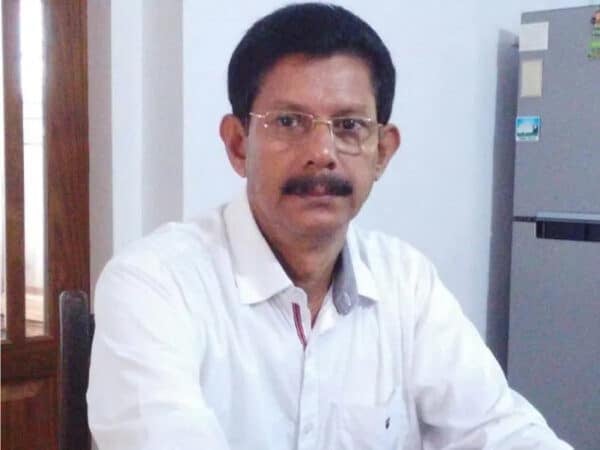
The attack sent shock waves across Kerala and the country. It was not a spontaneous act of anger; it was a calculated exercise in intimidation, driven by the conviction that an individual could be physically mutilated for allegedly offending religious sentiment. Investigating agencies subsequently described the incident as a manifestation of violent extremism, and several PFI-linked operatives were convicted in connection with the crime.
The Joseph case shattered any lingering illusion that radicalisation in Kerala was merely an ideological or political phenomenon. Here was an extremist mindset translated into organised, physical violence against an academic for the contents of an examination paper. It exposed the terrifying consequences of allowing religious intolerance to acquire an organised political and militant infrastructure.
For Kerala, which proudly projects itself as a secular society, the image of a college professor being dragged from his vehicle and having his hand severed by extremists remains a profoundly disturbing indictment. The T.J. Joseph case became one of the most chilling examples of how ideological radicalisation, when left unchecked, can move from propaganda and intimidation to outright terror.
Training Camps, Explosives and Security Concerns
The years that followed witnessed a series of incidents that intensified security concerns. Investigations into alleged training camps at locations such as Narath in Kannur district, Kanakamala in Kottayam district and gatherings in Vagamon generated widespread attention. Security agencies alleged that these events involved physical training, ideological indoctrination and organisational networking.
Similarly, periodic recoveries of pipe bombs and explosive materials in different parts of Kerala heightened public anxiety. Though each case had its own legal and factual complexities, collectively they contributed to a perception that radical networks were attempting to create a more structured presence within the state.
The existence of a nexus involving sections of political actors, local administrators and radical organisations. These allegations remain highly contested, but they have repeatedly surfaced in public debate whenever major extremist-related investigations are conducted.
Kashmir Connections and the ISIS Challenge
Perhaps the most alarming development was the emergence of reports of young people from Kerala joining extremist organisations abroad. Security agencies documented cases of recruitment to the Islamic State and travel to conflict zones in Afghanistan and Syria. Several families reportedly found their members missing, only to discover later their alleged links to ISIS networks.
The phenomenon stunned a state long regarded as one of India’s most educated and socially advanced. Investigators pointed to a combination of online radicalisation, transnational ideological influences and local recruitment networks. At the same time, concerns grew over the alleged recruitment of Kerala youth into extremist networks operating in Kashmir. Kerala was increasingly being viewed not merely as a state witnessing isolated cases of radicalisation, but as an important arena in the country’s wider national-security challenge.
The SDPI Factor
Even after the ban on the PFI, questions continued to surround the role of the Social Democratic Party of India (SDPI), widely regarded as the political affiliate of the banned organisation. The SDPI presents itself as a democratic political platform championing the rights of marginalised communities. Its critics, however, argue that it continues to propagate many of the themes and grievances that earlier characterised the PFI’s political mobilisation.
The controversy over the SDPI therefore goes beyond the fortunes of a single political party. Its growing political presence has fuelled a larger debate over whether the ideological influence associated with the banned PFI has merely found alternative organisational and political channels. For its supporters, the SDPI is a legitimate participant in democratic politics; for its critics, its emergence represents the continuation of an ideological current that the PFI ban was intended to dismantle.
Against this backdrop, a more uncomfortable question has increasingly confronted Kerala’s political establishment: are the state’s so- called secular political parties willing to confront radicalism with the same firmness regardless of its electoral consequences, or does vote-bank politics encourage selective silence? That question lies at the heart of Kerala’s continuing struggle with radicalisation, identity politics and the future of its much-vaunted social model.
Kerala at a Crossroads
By the second decade of the twenty-first century, debates surrounding Islamist radicalisation in Kerala had expanded beyond questions of terrorism, security and organised extremism. They increasingly entered the realms of culture, education, gender relations and everyday social life.
Among the most contentious of these debates has been the issue popularly described as “Love Jihad.” There were organised efforts to target non-Muslim women through relationships and marriage with the objective of religious conversion. In fact, several high-profile cases transformed the issue into a major public controversy.
The religious conversion of noted writer Kamala Das (Madhavikutty) generated intense discussion across Kerala. Years later, the Hadiya (Akhila Ashokan) case became a national issue when questions were raised regarding conversion, marriage and individual choice. Similar controversies involving women such as Nimisha, Athira and Anuja were repeatedly cited by organisations warning about alleged conversion networks operating within the state.
The debate acquired added significance because it intersected with concerns regarding radicalisation, online recruitment and the activities of extremist organisations. These cases represented evidence of a larger ideological project. The controversy deepened communal polarisation and ensured that questions of identity, faith and conversion remained at the centre of Kerala’s public discourse.
Jamaat-e-Islami, Solidarity and the New Activism
Alongside these debates, organisations associated with Jamaat-e-Islami Hind expanded their visibility in public life.
The Welfare Party of India, regarded as the political arm of Jamaat-e-Islami, and the Solidarity Youth Movement increasingly positioned themselves as advocates of minority rights, social justice and democratic participation. The ideological foundations of these organisations are influenced by Islamist thinkers such as Syed Abul A’la Maududi and therefore contribute to a gradual process of religious assertiveness and identity consolidation. They argue that what is presented as rights-based activism often serves as a vehicle for advancing a more exclusivist political vision.
Christian Anxiety and Emerging Alliances
An important development in recent years has been the growing concern expressed by sections of Kerala’s Christian community regarding Islamist radicalisation.
Traditionally, Christian organisations in Kerala maintained a cautious distance from debates concerning Islamist extremism. However, a number of Church leaders and Christian groups have increasingly raised concerns regarding alleged conversion activities, demographic shifts, narcotics networks and religious radicalisation. The emergence of terms such as “Love Jihad” and “Narcotics Jihad” in public discourse reflected these anxieties.
Several Church leaders publicly argued that radical elements posed challenges not only to Hindus but also to Christians. Their interventions significantly altered Kerala’s political conversation because concerns about radicalisation were no longer being articulated exclusively by Hindu organisations. This convergence of concerns among sections of Hindu and Christian society created a new dimension in Kerala’s communal and political landscape.
The Waqf Debate and Identity Politics
The controversy surrounding the Waqf Amendment Act reignited debates concerning religious autonomy, constitutional rights and political mobilisation. The Kerala Waqf Board and several Muslim organisations strongly opposed the legislation, arguing that it represented excessive state intervention in religious affairs. Supporters of the amendment countered that greater transparency and accountability were necessary in the administration of religious properties.
The dispute soon transcended legal questions and evolved into a larger debate concerning minority rights, state authority and identity politics. As with many issues in Kerala, political parties quickly aligned themselves according to electoral calculations and community sensitivities, reinforcing the perception that religion had become deeply intertwined with governance.
The Question of Political Appeasement
Perhaps no issue generates more controversy than the allegation that Kerala’s mainstream political parties have consistently accommodated religious fundamentalism for electoral gain. Both the Congress-led UDF and the CPI(M)-led LDF have, at different times, pursued strategies designed to secure support from influential religious organisations rather than confront extremist tendencies directly.
The UDF’s longstanding alliance with the Indian Union Muslim League has frequently been cited by opponents as evidence of community-based political bargaining. At the same time, critics accuse the CPI(M) of maintaining a selective silence regarding Islamist radicalisation in districts where Muslim votes play a decisive role.
The persistence of these allegations reveals a deeper concern. Many observers believe that Kerala’s political class has become increasingly dependent on organised community blocs, making it difficult to address sensitive issues with honesty and consistency. Some critics argue that both major fronts have become captive to competing forms of communal politics involving not only Muslim organisations but also influential Christian pressure groups. According to this view, ideological commitments have gradually yielded to electoral arithmetic.
Voices of Dissent Within the Muslim Community
One of the most significant developments in recent years has been the emergence of Muslim and ex-Muslim intellectuals willing to challenge orthodoxy and religious extremism. Figures such as E.A. Jabbar, Dr. Arif Hussain Theruvath and Jamida Teacher have drawn attention to questions of freedom, reform, gender equality and the misuse of religion for political purposes.
Their interventions are important because they demonstrate that criticism of extremism is not confined to outsiders. It also exists within sections of the Muslim community itself. These voices argue that reform, introspection and open debate are essential if Kerala’s Muslim society is to resist the influence of radical ideologies.
When Vote-Bank Politics Trumps National Pride
The controversy over Vande Mataram has provided perhaps the clearest illustration of Kerala’s political double standards on national symbols. After the Union Government issued guidelines in February 2026 providing for the full six-stanza version of the National Song when it is performed alongside the National Anthem, Muslim bodies, including the IUML, objected to the measure on religious grounds. Instead of firmly asserting that a national song born out of India’s freedom struggle deserves respect irrespective of community identity, Kerala’s so-called secular parties hastened to accommodate the objections. The newly elected UDF Government itself chose to play only two stanzas at the Governor’s address, while Chief Minister V.D. Satheesan maintained that the full rendition was not mandatory; CPI(M) leaders went further in opposing the full version. This is the very essence of vote-bank politics: a national symbol is readily diluted when a particular community objects, while the political establishment calls such accommodation “secularism.” If singing Vande Mataram becomes negotiable merely because sections of a religious community threaten political displeasure, what remains of the claim that Kerala’s secularism is founded on equal citizenship rather than electoral appeasement?
Kerala at a Crossroads
By the second decade of the twenty-first century, the debate over Islamist radicalisation in Kerala had moved well beyond terrorism and organised extremist networks. It had begun to permeate the wider social fabric—culture, education, gender relations, personal relationships and everyday life. Among the most contentious manifestations was the phenomenon popularly described as “Love Jihad”: organised efforts, according to critics, to target non-Muslim women through relationships and marriage with the objective of religious conversion.
A series of high-profile cases brought the issue into the public consciousness. The conversion of the celebrated writer Kamala Das, popularly known as Madhavikutty, generated intense discussion across Kerala. Years later, the Akhila Ashokan–Hadiya case became a national controversy, raising questions about conversion, marriage and individual choice. Cases involving Nimisha, Athira and Anuja were likewise cited by organisations and activists who warned of organised conversion networks operating in the state.
The controversy assumed greater significance because it intersected with the wider concerns over radicalisation, online indoctrination, recruitment networks and the activities of extremist organisations. To those who raised the alarm, these were not merely isolated personal episodes but indications of a larger ideological project in which religious conversion could become intertwined with organised mobilisation. Whatever the differing interpretations of individual cases, the controversy undeniably sharpened communal anxieties and placed questions of faith, identity and conversion firmly at the centre of Kerala’s public discourse.
Kerala continues to take pride in its high literacy, vibrant civil society and long tradition of social reform. Yet beneath this celebrated social model, the state has witnessed the steady intensification of identity politics, religious assertion and communal mobilisation. The challenge is therefore not confined to a handful of radical organisations. It is the wider political environment that permits religious identity to become an instrument of mobilisation and electoral bargaining.
The most serious concern is the gradual normalisation of this politics. When political parties begin to view minority communities primarily as vote banks, when organised religious interests acquire disproportionate influence over public policy, and when mainstream institutions hesitate to confront extremism for fear of electoral consequences, the foundations of a genuinely secular society begin to weaken.
For decades, the Congress-led UDF and the Marxist-led LDF have competed for power while cultivating community-based political constituencies. Though they claim to profess different ideologies, independent observers see a disturbing similarity in their willingness to accommodate minority communal interests when electoral arithmetic demands it. Such politics does not merely strengthen political parties; it strengthens the bargaining power of organised communal forces.
The warning signs are already visible: the growth of ideological enclaves, increasing communal polarisation, radicalisation among sections of Muslim youth, the spread of transnational extremist ideologies and a growing distrust of institutions that were once expected to stand above religious calculations.
In this context, the emergence of Muslim reformers and ex-Muslim voices challenging religious orthodoxy and political Islam is particularly significant. These forces demonstrate that the battle against extremism need not, and must not, be portrayed as a conflict between religious communities. But complacency would be equally dangerous.
Kerala stands at an important historical juncture. The choices made by political parties, religious leaders, civil society and ordinary citizens will determine whether the state can preserve its pluralistic character or succumb further to Muslim fundamentalism. The issue is no longer whether religious identity has become a powerful force in Kerala’s public life. It plainly has.
The fundamental question is whether Kerala’s political establishment, the so-called secular parties, possesses the courage to confront Muslim extremism and communalism without applying one standard to the majority and another to minorities, and whether it can place constitutional equality above electoral arithmetic.
A society cannot remain genuinely secular if political parties are willing to compromise principle whenever a particular community’s votes are at stake. Nor can communal harmony survive indefinitely when appeasement is mistaken for secularism and silence is mistaken for tolerance. Kerala’s much propagated social model therefore faces its most serious test from the consequences of extremism, communalism and political opportunism.
The choice is stark. Kerala can reclaim a political culture founded on equal citizenship, intellectual freedom and the rule of law, or continue down a path where religious identity determines political calculations and communal bargaining becomes an accepted instrument of governance, as had happened in Kashmir.
Whether God’s Own Country remains a beacon of pluralism or becomes another Devils own State will ultimately depend on whether its political and intellectual leadership chooses principle over expediency.
