


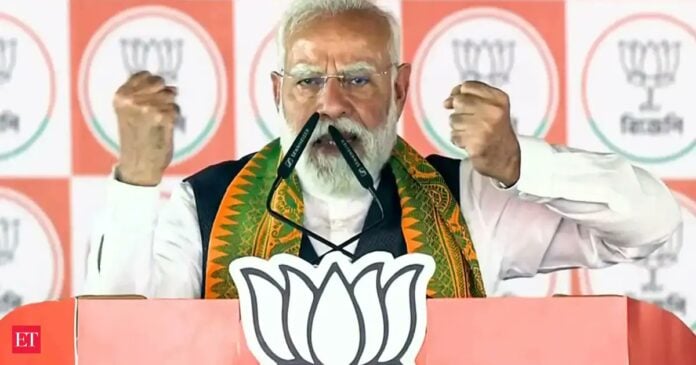
In the 2026 West Bengal Legislative Assembly elections, religion became a crucial, if contentious, factor that helped the Bharatiya Janata Party (BJP) achieve a historic consolidation of Hindu votes, which ultimately led to the defeat of the Trinamool Congress (TMC). The BJP reshaped the electoral discourse around traditional cultural identity, demographic concerns, and alleged religious placation, turning faith into a mobilizing tool that coincided with anti-incumbency grievances, while the TMC held onto power for 15 years through welfare-oriented populism and minority outreach. In order to shed light on Bengal’s changed politics, this investigation analyses religion’s complex role—not as a single reason but as a catalytic amplifier—using historical trends, campaign dynamics, regional differences, and sociopolitical ramifications.
With roots in the Bengali Renaissance and the Left Front’s (1977–2011) class-based mobilization that ignored overt religious appeals, West Bengal’s political past has long been characterized by a secular-progressive façade. Hindu-Muslim riots were uncommon, communal harmony was a state doctrine, and the Communist Party of India (Marxist)-led government prioritized industrial labour and land reforms, making religion a secondary force. Beneath this, however, were latent fault lines: Muslim-majority border regions like Murshidabad nursed anxieties of invasion, while the history of Partition (1947) uprooted millions, creating Hindu refugee identities.
By combining regionalism with inclusive welfarism, the TMC’s 2011 rise took advantage of anti-Left tiredness and won majority of Muslim voters alongside rural Hindu women. Mamata Banerjee’s public religiosity, which included organizing iftar parties and Durga Puja immersions, countered the BJP’s Hindutva gains and positioned the TMC as a “secular protector.” Through CAA-NRC protests, the BJP gained 77 seats by 2021, polarizing Muslims in favour of the TMC and igniting Hindu sub-nationalism. The 2024 Lok Sabha elections provided a sneak peek at 2026: the TMC won 29 out of 42 seats, but the BJP held Hindu-majority urban and rural areas, reducing the difference of vote share.
Religion was accentuated in the context of 2026: communal tensions following Sandeshkhali (2024), school scandals involving Muslim leaders, and voter list modifications through Special Intensive Revision (SIR) that eliminated 27 lakh names—disproportionately in Muslim areas—framed the elections as a “Hindu vs. infiltrator” binary. Under Narendra Modi’s “Bengal reclamation,” the BJP’s national Hindutva apparatus melded in perfectly with local complaints, transforming religion into a structural aligner — a tactical instrument.
By combining Hindu identity with “Bengali-Asmita” (pride), the BJP’s campaign skilfully indigenized it, depicting the TMC as “anti-Hindu syndicate raj”. Citing census data indicating Muslim expansion in the state, the BJP reported “illegal Rohingya/Bangladeshi infiltration,” undermining Hindu shares in a number of assembly constituencies. In border regions like Nandigram, where margins drastically changed in 2021, Suvendu Adhikari’s “cut-money for madrasas” speech struck a chord. Urban Hindus were inspired by promises to restore Waqf-encroached temples and safeguard Ram Navami processions, which are prohibited in TMC regions. Hindu cries of “Sabka Saath, Sabka Vikas” drew a sizable audience to Modi’s rally in Kolkata. Through the adoption of the Citizenship Amendment Act, central programs such as PM Awas were renamed “Hindu Garv Yojana,” appealing to Matua Namasudras (Hindu OBC refugees). TMC’s regionalism was neutralized by the BJP’s “adaptive Hindu identity”, which included Bengali figures like Netaji Subhas Bose as a “Hindu warrior.”
TMC’s erratic religious navigation contributed to its defeat. Banerjee’s “Kazi-Nazir” paradigm, which had long been dependent on Muslim support, crumbled under BJP pressure. SIR deletions caused the TMC to lose ground in Murshidabad, a city with a large Muslim population. Leadership was tarnished by scandals like cattle smuggling, but allegiance was maintained through Iftar optics and “Muslim quota within OBC” pledges. Banerjee proposed “Hindu pilgrimage subsidies,” fielded “pro-Hindu” defectors, and increased temple visits to Kalighat and Tarapith after the Lok Sabha election in 2024. However, these were written off as “crocodile tears,” particularly following the Sandeshkhali riots in which TMC leader Shahjahan Sheikh attacked Hindu Adivasi women. Middle-caste Hindus were alienated by the TMC’s claims against the BJP, which caused them to migrate in large numbers.
Geographically, religion played a different role, highlighting its complex electoral math. Tribal identity and religion clashed with “Bangla dominance”. BJP triumphs in Siliguri were fuelled by Gorkha-Hindu consolidation. Cooch Behar was flipped by Matua’s rage about TMC’s CAA delays. The “Muslim favouritism” of the TMC’s post-Sandeshkhali analogue was rejected by Adivasi Hindus (Santhal, Bhumij). Ram Navami processions developed became focal points for mobilization. Hindus valued “syndicate-free” temples; the TMC lost Hindu suburbs while clinging to minority pockets. Due to the BJP’s “infiltration” narrative, the Muslim TMC bloc was offset by a plurality of Hindu voters who supported the BJP. The impact was increased by SIR deletions in different constituencies. In response to the TMC’s “appeasement” in the RG Kar rape case, which resulted in the death of a Hindu doctor, upper-caste and urban Hindus turned to the BJP.
Religion exacerbated anti-incumbency; it did not function in a vacuum. TMC was portrayed by Sandeshkhali (2024) and RG Kar (2024) as “anti-Hindu goons,” while the BJP’s “Beti Bachao” resonated with women. By framing TMC assistance as “Muslim DBT,” the stagnant GSDP contrasted the BJP’s “Viksit Bengal” with promises of a temple economy. Due of unemployment, a large number of young voters adopted Hindu aspirations. High election turnout confirmed fairness despite the TMC’s claimed “ECI-BJP nexus” via SIR focusing on Muslims. Remaining members of the Left/INC condemned “fascism,” but they were unimportant. This might be described as the calm consolidation of Bengali Hinduism through welfare critique—the emergence of Bengali Hindu identity without riots. Minority dependency is unsustainable without Hindu recapture, and TMC is facing an existential crisis. At the national level, it indicates the eastern penetration of political Hindu identity and supports the BJP’s 2029 aspirations.
Although it will be too early to comment, but it can be said that Bengal is quietly moving away from “secular exceptionalism,” emphasizing religious identity in a federal democracy. However, the triumph of religion highlights vulnerability: if faith maintains power, economic delivery will be put to the test. Religion sparked a tectonic change in the defeat of the TMC by incorporating grievance amplification, strategic mobilization, and historical worries into the BJP’s platform. This complex function, which is neither incidental nor deterministic, redefines West Bengal’s politics and calls for watchful secularism in the face of cultural revival.
— Dr. Rachit Srivastava, an Assistant Professor at the Department of Arts, School of Liberal Arts and Sciences, Mody University of Science and Technology
