


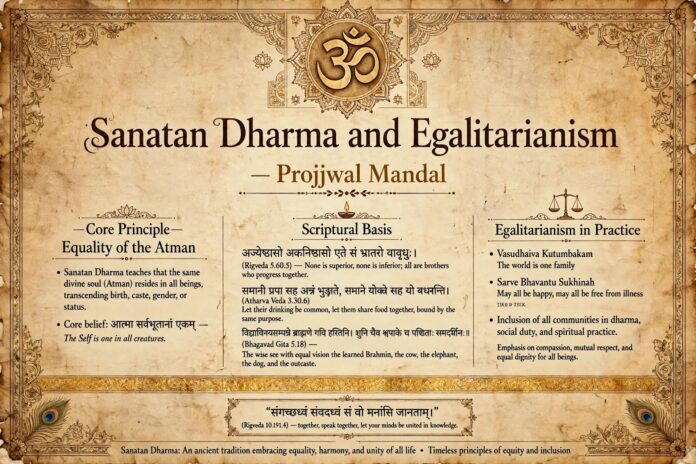
Egalitarianism is one of the beauties of Sanātan Dharma; it is not merely a concept but a living principle repeatedly reflected in the Vedas, Upavedas and Puranas. Although many hold mistaken views, Sanātan philosophy does not regard varna (class) as an unjust classification determined by birth; rather varna is determined by a person’s qualities, actions and duties. According to the implicit message of the Yajurveda, “brahmāṇasya mukhamasiddhāhu rājanyaḥ kṛtaḥ urū tadasya yadvaiśya pabhyaṃ śūdro jāyataḥ” — meaning, the person who is accomplished in Vedic knowledge, endowed with excellent qualities like self-control, knower of Brahman and who imparts knowledge to the world through speech is a brāhmaṇa; the one who is valiant and accomplishes tasks by arm is a kṣatriya; the one skilled in commerce and who sustains the world like a thigh is a vaiśya; and the one who is expert in service and laborious is a śūdra. The Śrīmad Bhagavad-gītā also states — “brāhmaṇa-kṣatriya-śūdrāṇāṃ ca paraṃtapa karmāṇi prabhavibhaktāni svabhāva-prabhavair guṇair” — (meaning: according to the qualities born of their natures, the duties of brāhmaṇas, kṣatriyas, vaiśyas and śūdras are divided) and “cātur-varṇaṃ mayā sṛṣṭaṃ guṇa-karma-vibhāgaśaḥ” — (meaning: I created the four varnas according to division of gunas and karmas). These shlokas make clear that in Sanātan thought the basis of varna is not birth but actions and qualities. Consequently, Sanātan Vedic-philosophy naturally asserts equality and justice against birth-based special privileges in society.
Sanātan Dharma speaks especially about the dignity and equality of women. The Atharvaveda verse that says — “amoḥ ahamasmi sā tvaṃ sāmā hamasmṛktvaṃ dyorahaṃ pṛthivī tvam” — translates as: as the husband is wise, the wife is equally wise; the husband has Rig mantra and likewise the wife has Sama mantra — this expresses cognitive equality between women and men. In the Bālmiki portion of the Rāmāyaṇa it is said — “nā gṛhī nā vastrāṇi nā prākāstikriyāḥ” — meaning: house, wall or clothes are not a woman’s true covering; the refinement and character obtained from the husband are her true covering. Within Vedic moral instructions the wife’s devotedness and respect toward the husband are also mentioned — “mameder satms kebalo nānyāsaṃ kīrtayāśchana” (Atharvaveda 7/38/4) — meaning: a husband’s proper attitude is to have affection toward only one wife; talking about other women is also inappropriate. Additionally, the statement in Manusmṛti — “yatra nāryastu pūjyante ramante tatra devatāḥ yatra eita na pūjyante sarvastatra phalaḥ kriyāḥ” — means: where women are honored, the gods rejoice; where they are not honored, the results of rituals and actions are spoiled. These textual statements show that Sanātan Dharma places high importance on the dignity and respect of women; a society that honors women is ritually and morally prosperous.
The beauty of egalitarianism in Sanātan philosophy is not confined only to humans; it establishes a theoretical foundation of compassion and equality toward all living beings. The varied mantras of the Ṛgveda reflect a sense of unity, consensus and collective consciousness. For example, the Ṛgvedic mantra “saṃgacchadhaṃ saṃvadadhvaṃ saṃ vo manāṃsi jānatām devābhāgaṃ yathāpūrvam saṃjānāna upāsate” (Ṛgveda 10/191/2) in translation directs: O people! Walk together, speak together, deliberate together with united minds; let your minds be well-cultured; as the wise men of old performed their duties and actions, do you likewise. In the same sequence the next mantra says — “samāno mantraḥ samitiḥ samānī samānaṃ manaḥ saha cittameṣām samānaṃ mantra-mabhi mantraye vaḥ samānena bohabhiṣā juhomi” (Ṛgveda 10/191/3) — meaning: let your judgments be the same, your gains and activities be the same; let your minds agree; I have joined you all in one mantra, let there be one prayer, one worship and one action among you. In continuity the third mantra — “samānīb ākuti samānā hṛdayāni baḥ samānamastu bo mano yatbaḥ su sahāsati” (Ṛgveda 10/191/4) — translates: let all your aims be equal, let hearts be equal, let minds be equal; thus may your strength increase. These shlokas expand the essence of equality into social coordination, unity and cooperation, from which social strength and moral stability can be drawn.
Ancient scriptures also promote a compassionate outlook toward the relationship between humans and animals. The Yajurveda mantra “mitrasya cakṣuṣā samīkṣamahe” teaches us to regard the whole world with the eye of a friend. And the Yajurvedic injunction “paśuṃ pāhi | paśuṃ strāyethāṃ” (Yajurveda 1/1, 6/11) indicates that we have a duty to protect and nurture animals. In the Mahābhārata it is said with great respect — “paryastaṃ pṛthivīṃ sarvaṃ sāśvāṃ sathakuñjarām yomo chayeṇmṛtyu-pāśāt prāpnuyād dharmamuta” — meaning, one who protects life, even the lives of animals and birds, as if freeing the entire earth from death’s snare, attains great honor. These citations make clear that Sanātan Dharma emphasizes compassion and responsibility toward all life beyond human limits. The notion of egalitarianism is not only human morality; it also functions as an ethical basis for respect, conservation and coexistence with biodiversity.
Often, due to socio-historical contexts and misuse of power, the original message of Sanātan Dharma has been distorted. Misinterpretations of varnashrama, degradation of women and animal abuse have sometimes entered society under a religious guise; but direct analysis of the primary texts and mantras shows these malpractices are contrary to the intrinsic teachings of the religion. The principles described in the Vedas morally elevate the individual and society, teach social responsibility, and establish respect toward all beings — which unequivocally establishes the ideal of equality. These principles of egalitarianism are highly relevant in the modern world: they provide merit-based opportunities in social restructuring, offer cultural and moral support for gender equality, and strengthen the ethical rationale for environmental conservation and coexistence with animal life.
Sanātan philosophy gives highest importance to personal development; religious conduct is not limited to rites and rituals — it truly awakens humanity through character refinement, pursuit of knowledge and responsible action. The Vedas invite — every varna, every gender and every living being should have equal worth; let society be built on principles of respect, compassion and equality. By following these principles both the individual and society will be morally enriched and able to stand with tolerant and coordinated responses against global challenges. Egalitarianism is an inseparable part of Sanātan Dharma; it is not merely religious commentary but a discipline of life — which truly grants human dignity and awakens responsibility toward all beings.
