


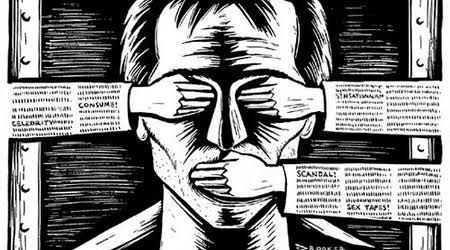
On September 7, 2026, Kochi City Cyber Police registered an FIR against Malayalam television journalist Aparna Kurup under Sections 192 and 299 of the Bharatiya Nyaya Sanhita (BNS) after a complaint over remarks she made during a debate on controversial comments by Sunni scholar Kanthapuram A.P. Aboobacker Musliar on Muslim women’s public participation. The case is the latest in a string of actions—FIRs, arrests, and police harassment—documented between 2020 and 2026 against journalists and social media voices in states governed by the Congress party, raising sharp questions about press freedom and the party’s own rhetoric on democratic rights.
Why this report matters now
The timing is not incidental. The Kurup FIR came just as national attention returned to Bharat’s press-freedom ranking and the Congress’s frequent criticism of the government over media suppression. Yet a compiled tally of 25 incidents from 2020 to 2026 shows that Congress-ruled states—Karnataka, Telangana, Chhattisgarh, Rajasthan, Kerala, West Bengal, and Maharashtra—have repeatedly used criminal law to target critical reporting, satire, and social-media commentary. The pattern stands in tension with the party’s public stance, especially as Bharat was placed 157th out of 180 countries in the 2026 World Press Freedom Index, a metric Congress leaders often cite against the Union government.
The Aparna Kurup case: a flashpoint in Kerala
The Kurup episode began with a television debate on BIG TV about Kanthapuram’s assertion that women should be confined to homes and not share public platforms with unrelated men, a position he linked to Islamic teachings on purdah. During her introductory remarks, Kurup referenced individuals who, in her view, treat acts such as cannabis use, drug-related arrests, or sexual misconduct as permissible under religious interpretation—a comment that triggered outrage among sections of the Muslim community.
A Kasaragod resident, Abdul Hakeem B.M., filed a complaint alleging that her words were intended to outrage religious feelings and could provoke communal tension. The Kochi City Cyber Police registered an FIR under BNS Sections 192 (provocation to riot), 299 (outraging religious feelings), 302 (wounding religious feelings), and 353(2) (promoting enmity), along with provisions of the Kerala Police Act. The case has drawn criticism from free-speech advocates, who argue that criminalising a journalist’s introductory remarks in a debate on gender and religion sets a chilling precedent.
Notably, Kurup herself had approached police days earlier after receiving death threats and sustained cyberbullying over the same debate; the Kerala High Court later directed police protection for her. The dual trajectory—threats against the anchor, followed by a criminal case against her—has become emblematic of how religious-insult laws and political pressure can silence debate without formal censorship.
A six-year pattern: 25 incidents across seven states
Between 2020 and 2026, at least 25 documented incidents involved FIRs, arrests, or police action by Congress-ruled governments against 16 journalists and nine social-media influencers. These cases span a wide range of expression: critical reporting on governance, satirical columns, social-media posts on civic issues, and commentary on political leaders.
In Karnataka alone, multiple FIRs were lodged against national and regional voices. In May 2025, the Congress filed an FIR in Bengaluru against Republic TV editor-in-chief Arnab Goswami and BJP IT cell chief Amit Malviya under BNS Sections 192 and 352 for allegedly spreading misinformation against the party. Days earlier, Karnataka Congress leader CM Dhananjaya complained against Doordarshan journalists Ashok Shrivastava and Prakhar Shrivastava for a programme that portrayed Congress president Mallikarjun Kharge as a “traitor” during heightened Bharat–Pakistan tensions. In September 2023, TV anchor Sudhir Chaudhary was booked in Bengaluru over a show discussing a minority subsidy scheme, with police citing “conspiracy to disrupt communal harmony” and misinformation.

Telangana saw some of the most aggressive legal actions. In March 2025, Hyderabad police arrested Pulse News journalists Revathi Pogadadanda and Tanvi Yadav over an allegedly “offensive” video about Chief Minister A. Revanth Reddy; a court later granted bail and ruled that organised-crime provisions could not apply. In June 2024, journalist Revathi was booked simply for raising a civic issue—complaining about a power failure in Hyderabad—after a state official alleged defamation and false propaganda. By September 2025, Telangana police were directed to open “history sheets” against social-media users accused of cyber offences even without conviction, treating them as habitual offenders under BNS Section 111. In April 2026, independent journalist TeluguScribe faced a case invoking UAPA-like provisions and defamation charges for posts critical of the Congress government’s policies.

Chhattisgarh’s record is particularly stark. In March 2022, journalist Nilesh Sharma was arrested in Raipur over a satirical column mocking the tussle between then Chief Minister Bhupesh Baghel and Health Minister T.S. Singh Deo; he was booked under IPC Sections 504 and 505 for intentional insult and spreading rumours. In October 2021, journalist Madhukar Dubey and technical assistant Avinash Palliwar were arrested after Congress MLAs complained about a sting operation report critical of the chief minister. In September 2020, journalist Kamal Shukla alleged he was attacked by Congress leaders in Kanker over reporting on illegal sand mining, with police reportedly failing to intervene. And despite repeated assurances, the proposed Chhattisgarh Protection of Mediapersons Bill—drafted in 2020 to shield journalists from harassment and violence—remained unenacted through 2022.
Rajasthan, Maharashtra, and West Bengal also feature prominently. In July 2022, Congress activists in Jaipur filed a complaint against Zee Hindustan anchor Rohit Ranjan over a segment on Rahul Gandhi’s Wayanad remarks, even after the channel withdrew the content and apologised. In April 2020, more than 100 FIRs were filed against Arnab Goswami across the country after he questioned Congress president Sonia Gandhi’s silence on the Palghar sadhu lynchings; Goswami also alleged that he and his wife were attacked by Congress workers in Mumbai. In December 2020, West Bengal Congress lodged an FIR against social-media influencer Rishi Bagree for a tweet on the farmers’ protest, accusing him of inciting the public and insulting Sonia Gandhi.
Social media and influencers: a expanding target
Nine of the 25 incidents specifically targeted social-media influencers and independent commentators, reflecting a broader trend of treating online speech as a public-order threat. In December 2024, Karnataka police arrested influencer Mohit Narasimhamurthy for using abusive language against Chief Minister Siddaramaiah and other ministers in a video. In May 2024, Vinit Naik, who runs the ‘Bhiku Mhatre’ X account, was arrested in Goa and brought to Bengaluru over posts alleging that the Congress wanted to transfer Hindu wealth to Muslims. In July 2024, Hyderabad cyber police registered an FIR against influencer Raushan Sinha for allegedly spreading “fake news” linked to Rahul Gandhi’s parliamentary speech.
Telangana’s actions stand out for their legal severity. In December 2025, the state’s BJP social-media team members were arrested over posters criticising Chief Minister Revanth Reddy’s two-year record, following a complaint by a GHMC employee. In April 2024, the Indian Youth Congress filed a complaint in Hyderabad against three pro-BJP influencers—Rishi Bagree, Arun Pudur, and Ajeet Bharti—over an allegedly morphed video of Rahul Gandhi’s speech. And in January 2024, Bengaluru police registered a case against two Instagram account holders for posting a morphed picture of Siddaramaiah with abusive captions.
The contradiction: rhetoric versus record
Congress leaders have frequently criticised the Union government over press freedom, pointing to Bharat’s low ranking in global indices and alleging a climate of intimidation against critical media. Yet the 25-incident record from Congress-ruled states suggests a different reality on the ground: criminal complaints, arrests, and police surveillance deployed against journalists and online voices who question governance, mock political rivalries, or highlight civic failures.
The contrast is starkest in Chhattisgarh, where a journalist-protection bill was drafted but never enacted, even as reporters faced arrests, transfers, and alleged physical attacks. In Telangana, the use of history sheets and UAPA-like provisions against social-media commentators signals a shift from case-by-case FIRs to systematic monitoring of dissent. In Kerala, the Kurup case shows how religious-insult provisions can be weaponised in a state that prides itself on progressive politics and high literacy.
What these cases reveal about free speech under Congress
Taken together, these incidents point to three recurring features:
- Criminalisation of speech: Rather than relying on civil remedies for defamation or misinformation, Congress-ruled states have often invoked criminal provisions—IPC and BNS sections on promoting enmity, outraging religious feelings, and intentional insult—to target journalists and influencers.
- Civic criticism treated as defamation: Reporting on power failures, sand mining, ration distribution, or infrastructure gaps has been framed as “false propaganda” or defamation of the state, inviting FIRs and police action.
- Satire and commentary as public-order threats: Satirical columns, social-media memes, and political commentary have been treated not as protected expression but as potential triggers for riots or communal tension, justifying arrests and surveillance.
For a party that positions itself as the defender of democratic institutions, this record creates a difficult contradiction: criticising the Centre for media suppression while presiding over states where journalists and online voices face criminal cases for doing their work.
The broader implication for Bharatiya media
The 2020–2026 pattern in Congress-ruled states does not exist in isolation. It forms part of a larger Bharatiya landscape where religious-insult laws, public-order provisions, and cyber-crime statutes are increasingly used to manage political dissent and media criticism. The Kurup case, with its mix of cyber threats, political protests, and criminal charges, illustrates how quickly a debate on gender and religion can become a free-speech flashpoint.
If press freedom is to improve in Bharat, the standard cannot be selective: it must apply equally to Union and state governments, regardless of party. The 25 incidents documented here suggest that Congress-ruled states have a pressing need to reconcile their rhetoric on democratic rights with their own record on policing speech. Until that happens, the party’s criticism of national press-freedom rankings will remain vulnerable to the charge of hypocrisy—and journalists and influencers in these states will continue to work under the shadow of FIRs, arrests, and legal intimidation.
Reference: 25 Incidents: FIRs, Arrests, and Crackdown on Free Speech in Congress-Ruled States (2020-2026)
