


Bharat is under attack in the information domain, and too many people in power are still treating it like a nuisance instead of a strategic threat. The screenshots attached to this story, as published by X account, Acyuta (@AgniVesa_07), do not look like random trolling or isolated bad-faith posting. They show a coordinated pattern: Telegram groups seeding narratives, instructions to repost with algorithm-friendly keywords, and deliberate attempts to manufacture hate against Bharatiyas and Hindus across platforms. That is not chaos. That is information warfare.


What makes this more alarming is the sophistication of the ecosystem. The material suggests a structured network where content is not merely posted, but packaged, optimized, and amplified through multiple accounts and groups. The goal is not just to insult Bharat; it is to shape perception, poison discourse, and normalize a hostile image of Bharatiyas and Hindu identity online. Once that machinery gets moving, the lie travels faster than any correction ever can.
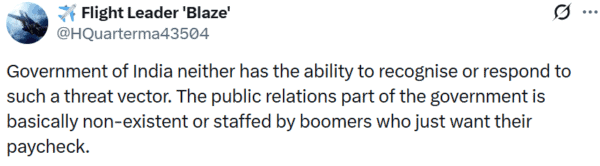
This is where the Bharatiya state’s failure becomes impossible to ignore. The world now operates in a hybrid battlefield where memes, fake screenshots, cropped videos, and mass-reposted slurs can do real strategic damage. Yet Bharat’s public communication response remains painfully weak, slow, and reactive. Ministries issue statements after the damage is done, spokespersons often do not speak the language of platform warfare, and the national conversation still treats digital influence as a side issue when it is plainly a frontline.
Other governments have understood this better than Bharat. Singapore ordered YouTube, Facebook and X to block 14 posts targeting its Bharatiya community, saying the content threatened racial harmony and appeared to have come from an overseas source, showing how a state can use legal powers and public messaging together when communal targeting appears online. Germany has taken a more interventionist route through its NetzDG framework, which requires large platforms to remove clearly illegal hate speech and other unlawful content quickly, while the European Union has increasingly folded online hate-speech enforcement into broader platform-governance rules under the Digital Services Act.
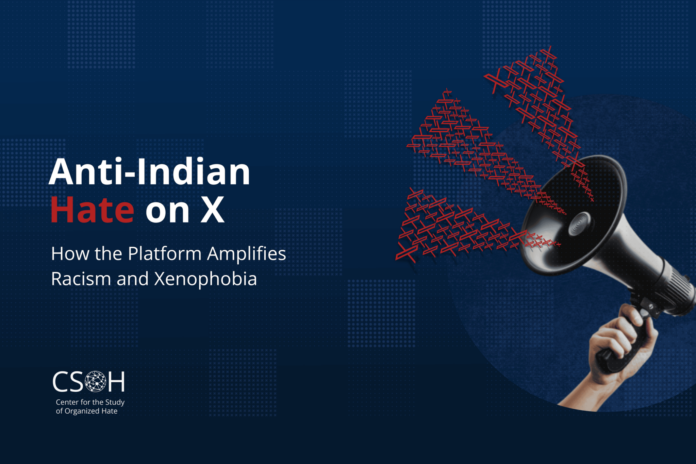
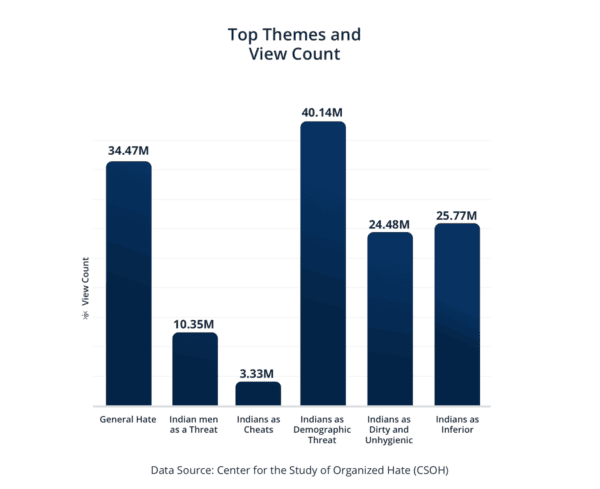
Independent research has also documented that anti-Bharatiya racism online is not anecdotal. A CSOHate report published in early 2025 described a surge in anti-Bharatiya racism and xenophobia on X, reinforcing the point that this is not a fringe problem but a recurring platform-scale pattern. That matters because hostile networks thrive when platforms let repeated slurs, dehumanizing narratives, and algorithmic amplification operate at scale without meaningful friction.
The problem is not merely that hostile actors exist. Hostile actors exist in every age. The problem is that they now have cheap, scalable, and globally connected tools to manipulate public opinion at industrial speed, while Bharat’s response remains fragmented. Social media platforms reward outrage, repetition, and emotionally loaded keywords, and if an organized group learns how to game those incentives, it can punch far above its weight. The screenshots suggest exactly that kind of playbook: coordinated captioning, repeated reposts, identity-targeted provocation, and cross-platform distribution designed to look organic.

The cost is not abstract. It damages Bharat’s credibility abroad, fuels hostility toward Bharatiya communities, and corrodes trust at home. It also weakens Bharat’s soft power, which remains one of the country’s most underused strategic assets. A civilization-state of this scale should not allow outsiders, anonymous operators, or foreign-linked networks to dominate narratives about its people, culture, and politics.
There is also a deeper ideological problem inside the country. Every time anti-Bharat propaganda spreads, it finds convenient amplifiers. Some do it out of reflex, some out of politics, and some because they enjoy being contrarian in the most reckless possible way. The result is the same: foreign narratives gain domestic traction, and Bharat’s internal information ecosystem ends up laundering narratives originally designed to humiliate or demonize Bharatiyas.
Bharat cannot rely on occasional outrage threads, passive fact-checking, or generic public relations. It needs a real information-security doctrine: rapid-response digital teams, multilingual narrative monitoring, platform engagement units, forensic capability for identifying coordinated behavior, and a strategy for counter-messaging that is faster than the campaign it is trying to blunt. Other governments at least recognize that online incitement and disinformation can be a public-order problem; Bharat still too often behaves as though this is merely an irritation of the online class.
The present failure is especially embarrassing because the threat is not subtle. The screenshots show people openly instructing others on how to phrase posts, how to target Hindu Bharatiyas, how to push content to the algorithm, and how to intensify reach through coordinated engagement. If that is not enough to trigger a serious institutional response, then the problem is not lack of evidence. It is lack of will and competence.
Bharat does not need performative nationalism here. It needs competence. It needs intelligence, discipline, and a modern communications state that can respond with speed and precision. In the information age, sovereignty is not only protected at the border; it is protected in the feed.
