


The aim of this article is to elaborate on the following themes :
- The conflation of ritual purity/eligibility in non-Christian traditions (āśauca, kegare, tumah, miasma) with moral impurity is a specifically post-Christian interpretive error
- The temple-as-residence-of-deity is architecturally, theologically, and legally distinct from the congregation-hall model of Christian and Islamic worship spaces
- The priest-as-servant-of-deity is structurally distinct from the pastor/imam/rabbi as servant-of-congregation
- Hereditary priesthood as a covenant between lineage and deity, not a caste privilege separately extractable away from its ritual context
- These distinctions have legal implications and deserve legal protection in pluralist democracies
A more detailed version of this article is published on my substack page which can be read at : https://open.substack.com/pub/ramaseshanchandrasekaran/p/the-sacred-grammar-that-modernity?utm_campaign=post-expanded-share&utm_medium=web
The Grammar of Ritual : Purity as a Technical Category
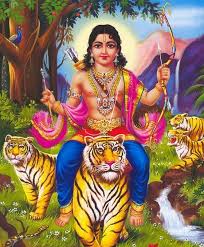
I once saw a Hindu post a question in social media “If a rapist can enter a temple, why not a menstruating woman?”. Recently, Anirudh Kanisetti, in his article to The Print, called Ayappan as a controversial god because he would not let women of menstruating age inside a temple where he resides. Why should not a woman who is otherwise virtuous but who just happens to be of mensturating age not be allowed while immoral men are allowed? These questions might seem natural to many in the modern world and any answer to justify this restriction might even sound regressive and arbitrary but when we take away the emotional clout and the political controverseis away, this question silently imports Christian theological grammar into a non-Christian framework. The two categories being conflated are :
- Moral impurity / Moral eligibility : pertains to ethical transgression, culpability, sin, guilt. A rapist has moral impurity.
- Ritual impurity / Ritual eligibility (āśauca/adhikāra) : pertains to a technical qualification or the lack of thereof to enter a sacred field, perform a ritual, handle a sacred object. Independent of moral character.
These two are orthogonal axes, not a single spectrum. Ritual purity or ritual eligibility is orthogonal and completely independent from both moral purity and hygiene. It is a technical state, like being qualified to perform a specific function, enter a particular space, or handle a sacred object. It has nothing to do with whether someone is a good person, whether they are “dirty” in the modern hygienic sense, or whether they deserve divine love. A sinful person can be ritually eligible; a ritually ineligible person can be morally blameless. In the same way a rapist or a terrorist is technically eligible to operate on someone’s body because he has a medical degree while a morally perfect person without a medical degree becomes technically ineligible to perform a surgery. This ritual based categorical distinction is seen across all ancient traditions of the world including Judaism. The Sabarimala Ayyappan temple restricts entry to women of menstruating age not because of hygiene concerns or moral judgment, but because of the deity’s specific vrata and the ritual field it creates. This specific ritual taboo against menstruation and women can be seen across all ancient traditions which proves that there is a common sacred grammar to all these ritual laws that the Christian and the secular worldview is not able to or refuses to recognise.
Notions of ritual purity exist across all ancient religions except Christianity. Some examples are :
- Miasma (Greek)
- Nefas (Latin)
- Geis (Celtic religion)
- Kegare (Shintoism)
- Jinji (Chinese)
- Tumah (Judaism)
- Tahara (Islam)
This convergence need not be coincidental but can reflect a shared human grammar of the sacred : a grammar that treats proximity with divine power as requiring a certain kind of technical preparation, initiation, and/or eligibility, one that is orthogonal to the question of whether a person is good or bad (rather than privilege, as it is framed in social justice discussions regarding such issues). I contend that this grammar did not need to be invented independently by each culture; it appears to be a recurrent feature of human religious imagination in its indigenous expressions. Many premodern religious traditions distinguish ritual status from moral guilt, structure sacred space around divine presence rather than equal-access assembly, and regulate physical proximal access to sacred spaces through a combination of lineage, initiation, office, and purity. Modern post-Christian (especially post-Reformation) theological viewpoints and the legal intuitions resulting from them often fail to parse these categories and serve as the great exception ; programmatically has been dismantling this grammar and replacing it with a purely moral-relational framework. Understanding this Christian exception, and tracing how it came to be universalized as a secular default, is the central task of this article. But before that argument can be made, the evidence must be assembled. What follows is that evidence.
Hinduism: Āśauca, Adhikāra, and Ālaya
Let us deal specifically with Hinduism not only because it is the primary subject of the article’s legal argument (though it is), but because the Sanskrit vocabulary and the familiarity available to us with this tradition allow the concepts to be articulated with a clarity that illuminates all the other traditions that follow.
The Sanskrit term āśauca refers to a condition of ritual impurity that arises from specific natural events that include :
- birth (both for the mother and for the family)
- death
- menstruation
- contact with ritually impure objects (blood, semen, etc..)
- contact with other ritually impure persons
It is a temporary and technically defined state. Its duration is precisely prescribed (varying from one to thirty days depending on the proximity of relationship to the event) and it is resolved by the passage of time, by ritual bathing, and/or by the performance of prescribed rites. Nowhere in the classical Dharmaśāstra literature is āśauca treated as a moral failing. The authoritative treatment in P.V. Kane’s monumental work History of Dharmaśāstra (Vol. II, Part 1, Bhandarkar Oriental Research Institute, 1941) makes unmistakably clear that āśauca is a technical condition rather than an ethical one. Kane traces its systematic exposition in the Gṛhyasūtras, the Dharmasūtras, and the later Smṛtis, all of which handle it through chapters regarding the science of rites and rituals (rather than making them a part of any discourse on moral character and ethics).
A second key concept is adhikāra, best translated as “ritual eligibility” or “ritual qualification.” The term derives from the verbal root adhi-kṛ, meaning to have authority over, to be entitled to perform. In the Mīmāṃsā school of philosophy, which is the tradition most concerned with the precise interpretation of Vedic ritual injunctions, adhikāra is the subject of an elaborate philosophical analysis. The Pūrva Mīmāṃsā Sūtras of Jaimini develop a comprehensive theory of who is eligible (adhikārin) to perform which ritual acts. The framework is explicitly technical: eligibility is determined by a combination of birth, ritual initiation (dīkṣā), the person’s relationship to a particular deity, ritual context, and their current ritual state. Notably, the Mīmāṃsā analysis is entirely separate from any discussion of the person’s virtue or moral character. A highly virtuous person who lacks the appropriate adhikāra for a particular rite is not eligible to perform it; a person of ordinary character who possesses the relevant initiation and is in the correct ritual state is fully eligible. The two axes do not intersect. The system operates as a logic of duties where the “causal efficacy” of a ritual act is derived from the the proper performance according to the prescribed codes in the Vedic injunctions themselves, rather than focusing exclusively on the actor’s character. This is not to say that ethics is not the focus at all in Hindu religion but ethics is a part of discussions related to salvation and spiritual progress (which are available for all regardless of their ritual qualifications) rather than influencing ritual rites; and even in ritual context, ethical failure and incompetence in skillset can lead to loss of ritual privilege (in other words, ethics and competence are necessary conditions rather than a sufficient conditions).
The relationship between the temple and the deity in Hindu theology as well is transparent from within the tradition. The Sanskrit terms for a Hindu temple which include mandira (dwelling), devālaya (house of the god), devasthāna (place of the deity), kṣetra (field) elegantly convey the required points. The Āgama texts, which are the manuals governing temple construction, installation, and worship, are explicit: the rite of prāṇapratiṣṭhā (literally “the establishment of life-breath”) is the ceremony through which the deity’s presence is invited into and permanently installed into the mūrti(sacred image). After this ceremony, the deity is not represented by the mūrti; the deity is present in the mūrti and by extension, housed in the temple as a whole. The temple becomes, in the precise technical sense, the deity’s residence.
The consequences of this theology for the structure of the priesthood are immediate. The arcaka or pūjārin is not a minister to the congregation ; there is no congregational model in classical Hindu temple worship. Rather, the arcaka is the deity’s household servant, performing the same services one would render to a distinguished royal householder: waking the deity at dawn with hymns, bathing the deity, clothing the deity in fresh garments, offering food at prescribed times, entertaining the deity with music and flowers, and finally putting the deity to rest at night with appropriate ceremonies. The Encyclopædia Britannica’s entry on Hindu temples notes this directly (click here):
“Unlike in places of worship in many Western religions, attendance at a Hindu temple is not a ritual obligation for Hindus, nor is it a congregational experience.”
The temple is the residence of the deity and his/her ritual life served by his priest is the central focus of the temple and this function continues whether or not any devotee enters, because it is the deity’s daily household routine, not a service arranged for the benefit of congregants.
The devotee’s relationship to the temple in this framework is that of a visitor to a royal household. Interestingly, the Tamil word for temple is kōyil which actually means a palace : kō [king] + il [place] = kōyil [king’s place]. Even in Sanskrit, one of the words for temple is prāsāda which actually means palace, and the food given to the devotees from the temple is called by the etymologically related word prasāda. Entry to the palace is a privilege and not a right for everyone. This immediately does not mean that the king is a tyrant and his servants (priests) restricting access to him are evil ; a king being fair, graceful and treating all his subjects equally does not entail that he should allow everyone into his bedchamber ; in the same way, a deity or priesthood or tradition is not unequal automatically just because everyone does not have equal intimate access to the deity at all times. A random person does not enter the garbhagṛha (literal meaning: the womb-chamber) housing the primary mūrti ; as a right, in the same way a random visitor would not enter into the king’s or queen’s bedchamber as a matter of right. Instead, the devotee receives darśana at a distance, the auspicious gift of sight of the deity, from the maṇḍapa (hall) outside, like all subjects recieve the sight of a king physically from a distance. This architecture of graduated access, with only the arcaka permitted in the innermost chamber, is not incidental but structurally expressive of the theological reality:
Proximity to the resident divine requires progressively greater ritual qualification and eligiblity, which has got nothing to do with the moral character of the person.
The restriction at Sabarimala temple in Kerala fits precisely within this framework. The deity Ayyappan is worshipped at this installation in the specific form of a naiṣṭhika brahmacārin : a permanent, unbroken celibate, one who has taken the vow of lifelong renunciation of sexual life and would not see any menstruating woman . This is not merely a characterization of the deity’s personality; in the tantric and āgamic understanding of the temple as a living ritual field, the deity’s vrata (sacred vow) generates a specific energetic environment throughout the kshetra. The presence within this field of persons in a state of active reproductive biology (i.e. women of menstruating age) is held by the tradition to create an incompatibility with the vrata-field that is created by the deity. This is not in any way, a statement about those women’s moral character. It is a statement about the ritual metaphysics, so to speak, of this particular installation. The distinction is demonstrated by the fact that women below and above menstruating age are welcomed at Sabarimala, and that women of all ages worship freely at Ayyappa temples elsewhere across India. The restriction is specific to this one installation’s specific divine character, not to women as a category or to menstruation as a moral failing.
To know more about equivalent concepts in other religious traditions, refer my detailed article in Substack (Link : https://open.substack.com/pub/ramaseshanchandrasekaran/p/the-sacred-grammar-that-modernity?utm_campaign=post-expanded-share&utm_medium=web)
Synthesis: A Universal Grammar and Its One Exception
Surveying these traditions spanning five millennia, six continents, and an extraordinary diversity of cultural forms, one conclusion imposes itself with unmistakable force: the distinction between ritual eligibility and moral character, and the conception of the temple as the deity’s residence rather than the believers’ assembly hall, are not peculiarities of any single tradition. They are the common grammar of human religious experience in its indigenous and pre-Christian forms. Every tradition surveyed here maintains the distinction between the technical ritual state of a person and their moral quality. Every tradition surveyed here understands its primary sacred space as in some sense the dwelling of a divine presence, not merely a space for community gathering. And every tradition surveyed here regulates access to that sacred space through technical eligibility requirements; ritual preparation, initiation, lineage, or state of purity; rather than through the moral calculus of the person seeking access.
The striking outlier in this survey is not any of the pagan traditions; the striking outlier is Christianity. And the outlier status of Christianity in this respect is not accidental or incidental; it is the deliberate consequence of a theological revolution that explicitly set out to abolish the ritual purity framework. The New Testament’s abolition of Jewish dietary laws, Paul’s declaration that the Law has been “nailed to the Cross” (Colossians 2:14), the letter to the Hebrews’ conclusion that the Jewish Temple’s sacrificial system has been “set aside because of its weakness and uselessness” (Hebrews 7:18), Stephen’s declaration that “God does not dwell in temples made by hands” (Acts 7:48) ; these are not peripheral developments but central theological moves that define Christianity precisely in its departure from the pre-Christian grammar of the sacred.
Post-Christian default assumptions (place of worship = public assembly hall; any differential access = suspect discrimination; only moral character matters) are not neutral; they are culturally specific.
Post-Christian secular modernity did not inherit a neutral default position on these questions. It inherited a specifically Christian (and more specifically Protestant-Christian) default position where:
- all distinctions of ritual access are suspect as potential moral discrimination
- sacred spaces are understood as congregational assembly halls for believers to which equal access is a right
- the moral state of the person is the only spiritually relevant consideration.
When this inherited default is applied to traditions that never made this theological revolution and that still operate within the pre-Christian grammar of the sacred, the result is a profound and systematic misunderstanding. The argument of this article is that this misunderstanding has profound consequences, not only for the intellectual integrity of comparative religion but for the legal and constitutional frameworks through which pluralist democracies attempt to govern relations between the modern state and ancient religious traditions.
What is more striking is that minor vestiges of this are present even in the Christian tradition that is explained in the next section. The Catholic and the Orthodox Churches incorporated many pagan structures, concepts, and rituals by Christening them by reinterpreting them in the light of Christian saints rather than local divinities. One such example is given below that paralles the Sabarimala example.
Mt Athos Monastery in Greece
Mount Athos, an autonomous monastic region in Greece, enforces a strict Avaton (prohibition) that bans women and even female animals (except cats to curb mice, lol) from entering the entire peninsula. This rule has been in place for over 1,000 years to maintain monastic celibacy and honor the Virgin Mary. Violating this law can result in legal penalties, including imprisonment. Access is restricted to men with a specific permit. The prohibition extends 500 meters (approx. 1,640 feet) from the coastline. Even tourist boats are restricted to maintaining this distance.
The ban is upheld by the Greek Parliament and is recognized within the European Union for spiritual and religious reasons. Attempting to enter can lead to a prison sentence of two months to one year. Mount Athos is part of the European Union and, for the most part, subject to EU law. A declaration attached to Greece’s accession treaty to the Schengen Agreement states that Mount Athos’s “special status” should be taken into account in the application of the Schengen visa rules. According to Orthodox tradition, the peninsula is dedicated to the Virgin Mary (“The Garden of the Theotokos”), who is considered the only woman allowed on the mountain. The legal defense is that the closure of Mount Athos to women is based on the constitutionally confirmed personal right to freedom of religion (art. 13 of the constitution).
One of the traditions that has been handed down regarding this is that the Virgin Mary was supposedly blown off course when she was trying to sail to Cyprus and landed on Mount Athos. And she liked it so much that she prayed to her son that she should be given it as her own and he agreed. It is still called ‘the garden of the mother of God’, dedicated to her glory, and she alone represents her sex on Mount Athos. Another tradition has it that centuries ago, after several monks reported visions of the Virgin Mary, following whom it was decided that the Athos monks should devote themselves only to her, and that no other woman should be allowed lest they may outshine her.
A European Parliament Resolution in 2003 condemned the ban as a violation of sexual equality and citizens’ freedom of movement. They did not succeed. Mt Athos managed to remain probably the largest area on the planet where women are forbidden. HuffPost. The irony is that the same liberal European order that pressures Hindu temples on women’s entry has failed to change a Christian monastic institution with identical logic. If Anirudh Kanisetti wishes to write about “controversial deities” based on access restrictions, the Virgin Mary has a much more formal and legally-enshrined case. The avaton on Mt Athos is not found to violate any constitutional provisions. The rule of equality does not exclude different legislative regulations for cases occurring under different or special circumstances. Differential treatment is justified by particular and differentiated reasons: social, economic, religious ; provided that this different treatment is objective and based on general and impersonal criteria Athos Guide. Mount Athos is upheld within the EU framework under religious freedom protections. The Greek state’s position is that this is not a violation of equality because
[the monastery] is a specific type of sacred space with a specific identity, not a public facility.
The EU recognized this provision through the Joint Declaration of 1979 when Greece joined what was the precursor to the EU.
Concluding Remarks
Modern Jews worship in synagogues, which are similar to churches and mosques but very different from temples. In the ancient world, a temple was where a god was housed. In the Bible, Solomon’s temple located in Jerusalem is also referred to, in Hebrew, by the phrase ‘the house of God’ or ‘the house of the Lord’ (e.g. Ezra 10:1). So, in all ancient religions, temples were the housing or dwellings of the god. Normally they housed the idol of the god, although this was not the case in Judaism, which prohibited having the image of God. But a church, mosque, or synagogue are not dwelling places of God. They are merely buildings for congregations of believers to gather and pray. The word synagogue is derived from a Greek word meaning place of gathering. The Greek word for church used in the New Testament is ‘ekklesia’, which means assembly in ancient Greek and was used for all kinds of assemblies in the ancient Greek world, such as political assemblies, cultic assemblies, and even fan clubs. The Arabic word masjid means place of prostration (to pray). Temples in the ancient world are functionally and conceptually very different from modern synagogues, churches, and mosques. God does not dwell in a church, mosque, or synagogue; they are simply places for people to come together for communal prayer. Whereas a temple is the dwelling place of the deity it houses. It was not just a mere gathering place for believers to pray.
Also, the argument here is not that hereditary priesthood is above criticism or reform. The distinction is between :
(a) reforming or expanding priestly eligibility through proper Āgamic channels and community consensus vs.
b) judicially overriding ritual eligibility categories by applying secular equality norms
Japan’s Shinto priesthood modernized in the 20th century. Women now serve as miko (shrine maidens) and increasingly as kannushi (priests), through internal reform. Reformed Judaism ordained women as rabbis through internal theological development. The point: communities can and do reform. The problem is external judicial imposition using borrowed frameworks. Justice Indu Malhotra’s lone dissent in the Sabarimala 2018 judgment correctly identified the constitutional issue: “What constitutes an essential religious practice has to be decided by religious communities, not by constitutional courts.”
When we project modern notions of equality as sameness of access and social justice as the elimination of every distinction onto these systems, they naturally appear unfair or discriminatory. But that is an anachronistic and external reading of Hindu metaphysics and traditions. The deeper traditional view actually contains its own form of equality: Everyone is eligible for the highest spiritual goods: mokṣa, grace, wisdom, and devotion. In the Vedic tradition, everyone can be a yajamāna of a homa, receive the blessings of the gods, study itihāsa-purāṇa, perform bhakti, or undertake tantric/sādhana paths that do not depend on Vedic ritual or chanting eligibility. The benefits are universal; only certain ritual pathways are technically constrained. To collapse ritual eligibility into moral worthiness is to misunderstand both the system and the spiritual architecture behind it.
So, the presence of a rapist in a temple does not prove that a menstruating woman should also be allowed in. The two categories simply don’t speak to each other. One concerns moral standing; the other concerns eligibility for a particular ritual context. Conflating them is a modern Christian misunderstanding of an ancient widespread religious logic.
(The article was published by Rama Seshan Chandrashekhar on August 13 and has been reproduced here)

When the likes of Anirudh Kanisetti and other anti-Hindu haters try criticize Hindu dharma and practices, they are doing so to slap Hindus hard wherever they can, because firstly, Hindus are “tolerant” and attacking them is safe, and secondly, doing something like that to Muslims would make them utterly isolated and destroy them professionally and likely personally, but attacking Hindus gets rewarded by these anti-Hindu elements.
It is laudable that HinduPost published this article by Rama Seshan Chandrashekhar on why menstruating women are not allowed in certain places of worship like Ayappan temple. All Hindus need to have proper education material to logically reason with their detractors. Thank you.