


In an era where information moves faster than ever before, independent investigative platforms have emerged as an important pillar of public accountability. Among them, TREENI has carved out a distinct identity through its focus on OSINT investigations, Islamic radical terror-linked narratives, ground reporting, and national security issues. Describing itself as an organization dedicated to ‘investigative journalism that leads to action,’ TREENI has consistently positioned itself as a platform that seeks to uncover stories it believes are overlooked or underreported by mainstream media.
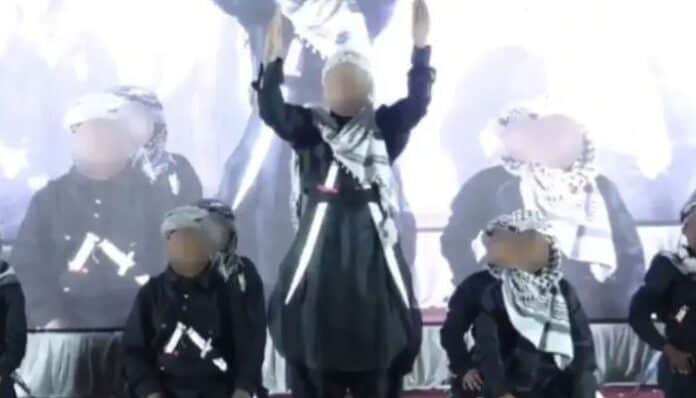
The recent Maharashtra controversy once again brought TREENI into the spotlight. According to the platform, it identified and publicized a video showing schoolchildren performing to the slogan-song “Gustakh-e-Nabi Ki Ek Saja, Sar Tan Se Juda” during an annual day program, with an image of Pakistani terrorist Mumtaz Qadri reportedly displayed in the background. The platform in ‘X’ urged authorities to investigate the matter and sought intervention from relevant agencies. Within hours of drawing attention to the incident, reports emerged that a cyber notice had been issued concerning TREENI’s social media post. The development raises concerns about whether independent journalists and investigators are being subjected to pressure for highlighting matters of public interest.
The role of TREENI: Investigative journalism that raises difficult questions
TREENI is an independent investigative media platform focused on OSINT (Open Source Intelligence), terror networks, ground reporting, and public-interest journalism. The organization states that its mission is to conduct investigative journalism that leads to action and accountability.
Over the years, platforms like TREENI have emerged to fill gaps often left by traditional media by tracking developments through open-source evidence, local reporting, and social media investigations. Their supporters argue that such platforms perform an important public service by drawing attention to issues that might otherwise remain unnoticed. In this case, TREENI’s report quickly gained traction online and generated widespread discussion. The platform tagged relevant authorities, including law enforcement agencies and child protection bodies, seeking an investigation into the matter.
Platforms such as TREENI are an important voice for Hindus in Bharat. Issues such as Islamic radicalization, coercive conversions, communal violence, targeted killings, Jihad, blackmail, and crimes affecting Hindu communities often do not receive sustained attention in sections of the mainstream media. Platforms like TREENI seek to bring such incidents into public discussion through investigative reporting, open-source intelligence, and ground-level documentation. These efforts help educate the Hindu public, raise awareness among large sections of Hindu society, and draw attention to challenges and concerns that are insufficiently represented in mainstream discourse.
Mumtaz Qadri: A convicted assassin, a terrorist, not a role model for children!
As per the Organiser reports, the display of Mumtaz Qadri’s image at the Kids World English School, Partur, Jalna, function has become one of the most disturbing aspects of the controversy. Qadri was not an educator, social reformer, freedom fighter, or national hero. He was a Pakistani police commando, a terrorist who assassinated Punjab Governor Salman Taseer in 2011 for publicly supporting Asia Bibi, a Christian woman accused under Pakistan’s blasphemy laws. Qadri was arrested, tried, convicted, and ultimately executed by the Pakistani state in 2016. Yet, despite his conviction, he continues to be glorified by certain radical Islamic elements in Pakistan as a symbol of religious vigilantism.
This raises a fundamental question: what place does the image of a convicted assassin, a terrorist, have at a school’s annual day program? Schools are meant to inspire children with the lives of great teachers, scientists, freedom fighters, soldiers, and nation-builders- not individuals remembered for political murder. Bharat’s educational institutions must cultivate values of dharma, constitutional order, respect for life, and peaceful coexistence. Any attempt to normalize or celebrate figures associated with violence and terrorism sends a deeply troubling message and deserves serious scrutiny from educators, parents, and authorities alike.
Gustakh-e-Nabi Ki Ek Saja, Sar Tan Se Juda’
The controversy extends beyond a single school performance.
The phrase “Sar Tan Se Juda” has become internationally controversial because it has frequently been associated with radical Islamic threats, vigilantism, terrorist organizations, and violent rhetoric in various contexts. Likewise, Mumtaz Qadri remains a polarizing figure due to his assassination of Punjab Governor Salman Taseer in Pakistan.
The phrase “Gustakh-e-Nabi Ki Ek Saja, Sar Tan Se Juda” literally translates to “The punishment for insulting the Prophet is beheading.” Regardless of religious or political context, it is a slogan that has become widely associated with threats, vigilantism, and the justification of violence against individuals accused of blasphemy. In a democratic and constitutional nation like Bharat, disputes and disagreements are meant to be addressed through dialogue, law, and due process- not through slogans that invoke violence or celebrate extrajudicial punishment.
The non-believers referred to in such slogans would include the vast majority of Bharatiyas who follow faiths other than Islam, particularly Hindus. What kind of message does this send to schoolchildren? Are educational institutions meant to nurture knowledge, patriotism, and mutual respect, or to expose young minds to slogans that many associate with religious vigilantism, terrorism, and violence? If such content is indeed being presented in schools, it raises serious concerns about the values being imparted to children. Even more troubling is that when such incidents are reported and brought into the public domain, those exposing the issue face notices and pressure instead of authorities addressing the underlying concerns. Such developments raise serious questions about whether some Congress-backed politicians are genuinely committed to protecting the nation’s interests or are more concerned with shielding those facing legitimate public scrutiny.
Cyber notice to TREENI raises questions on press freedom
Shortly after publicizing the issue, TREENI reported receiving a cyber notice concerning its post.This development has generated another debate, whether independent journalists and investigative platforms should face institutional pressure when highlighting matters of public interest.
If a media organization shares publicly available material and seeks lawful investigation by competent authorities, the response should be fact-finding rather than attempts to silence discussion. A democracy thrives when journalists, researchers, and citizens are free to raise questions, present evidence, and seek accountability. Freedom of expression does not exist merely to protect popular opinions; it exists to ensure that uncomfortable questions can also be asked without fear.

At the same time, the controversy raises another important question regarding the responsible use of freedom of expression. Constitutional freedoms were never intended to justify the promotion of slogans that many citizens associate with threats, religious vigilantism, or violence, especially before schoolchildren. Is it the role of teachers and educators to cultivate knowledge, scientific temper, patriotism, and mutual respect, or to normalize slogans that have become controversial because of their association with intimidation and violent rhetoric? These are serious questions that deserve answers.
Authorities must establish the facts. Who approved the performance? Who selected the song? Who authorized the backdrop imagery?
Were organizers aware of the historical significance of the symbols being displayed?
Bharat’s long struggle against extremism
Bharat has suffered from radical Islamic terrorism, separatist violence, and extremist ideologies for decades. Thousands of soldiers, police personnel, intelligence officers, and civilians have lost their lives defending the nation against forces that seek to spread fear and division.
Because of this painful history, Bharatiyas remain particularly sensitive to any symbolism that appears to celebrate individuals associated with violence or political assassination.
Are Hindu voices being silenced in Maharashtra?
Maharashtra is the land of Chhatrapati Shivaji Maharaj and Chhatrapati Sambhaji Maharaj- symbols of resistance, courage, and the defense of Dharma. It is therefore unsurprising that the controversy has sparked strong reactions among many Hindus who view the incident as part of a larger pattern. When concerns regarding radicalization, extremist symbolism, or issues affecting Hindu society are raised by platforms such as TREENI, the focus often shifts from the substance of the allegations to those who exposed them. This has led to growing questions about whether all voices are treated equally in the public sphere and whether certain viewpoints face disproportionate scrutiny.
The cyber notice issued after TREENI highlighted the controversial school event has sparked a broader debate over freedom of expression and equal treatment of media voices. How can Congress leaders and left-wing groups remain silent on the reported display of a convicted Pakistani assassin’s image, yet support issuing notices to those who exposed the incident? Do Hindu and nationalist platforms face disproportionate scrutiny when they raise concerns about issues affecting Hindu society, radicalization, or public institutions? Whether the same standards are applied uniformly across the ideological spectrum or whether certain voices are more readily targeted for investigation and legal action? In a healthy democracy, freedom of expression must protect all viewpoints equally.
