


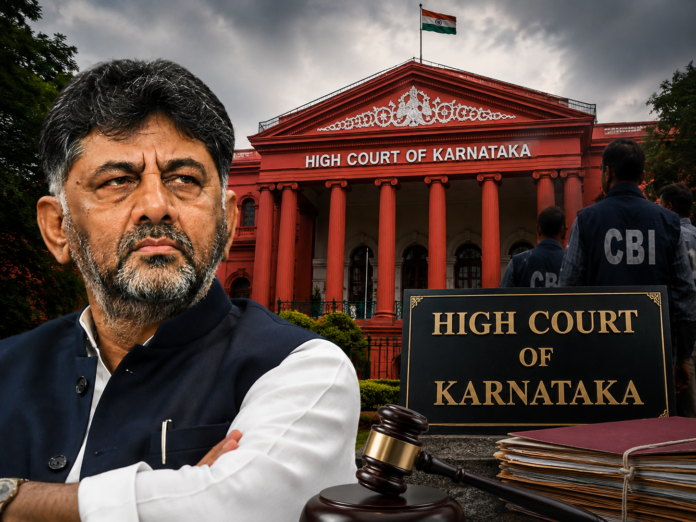
The Karnataka Public Service Commission (KPSC), an institution entrusted with safeguarding merit and ensuring fair recruitment to government positions, is facing a grave credibility crisis following explosive findings by the Enforcement Directorate (ED). An investigation into irregularities in the recruitment examination for 400 veterinary officer posts has uncovered an organized mechanism involving question-paper leaks, candidate-specific answer keys, and the manipulation of the 1:3 merit list to extract bribes from aspirants. According to the ED’s press release dated October 8, 2026, the payments ranged from ₹10 lakh to ₹50 lakh per candidate, depending on the post and the promised selection. These findings point to something far more serious than isolated examination malpractice: the conversion of a public recruitment process into a lucrative market in which money, rather than merit, could determine who secures a government job.
As per News 18 Kannada reports, the ED’s investigation states that the examination process was compromised through the leakage of confidential material and the advance supply of correct answers to selected candidates. Certain candidates were provided with answer keys just one day before the examination, held on January 8, 2026, in exchange for bribes reportedly ranging from ₹20 lakh to ₹40 lakh. The investigation further points out that leaked question papers containing correct answers were circulated to selected aspirants, enabling them to practice and memorize responses before appearing for the examination.
Thousands of candidates prepare for years, often sacrificing their savings, family resources, and personal opportunities in the hope of securing a government position through hard work. If confidential examination material is sold to a privileged few, the entire promise of equal opportunity is undermined.
The Congress government and the self-proclaimed champions of education, exams, NEET protests, and resignations remain absolutely silent about Karnataka and the recruitment and education scams under the eyes of ex-CM Siddaramaiah, CM D.K. Shivakumar, and Deputy CM Dr. G. Parameshwara. This absolute silence over one of Karnataka’s biggest recruitment and education scandals exposes how selectively Gen Z are manipulated in the name of protests, seemingly to divert attention and promote an anti-BJP, anti-Bharat, and anti-national narrative across the country.
ED alleges merit-list manipulation and names senior KPSC officials
The allegations extend beyond question-paper leaks to the manipulation of the KPSC’s 1:3 merit-list mechanism. According to the ED, certain KPSC members and officials accessed confidential candidate marks and merit-list information from the Controller of Examinations’ office. This information was used to identify candidates with a strong likelihood of final selection and approach them with promises of confirmed appointments in exchange for illegal gratification. The ED states that bribe demands varied according to the nature and level of the post, with amounts ranging from ₹10 lakh to ₹50 lakh. The exploitation of confidential merit information is particularly disturbing because it suggests that a procedure designed to shortlist eligible candidates may have been used to identify potential targets for bribery.
The ED’s press release also names several individuals in connection with the criminal conspiracy. It states that suspended KPSC Chairman B. V. Geetha and KPSC member Shivashankarappa Sahukar were arrested on October 6, 2026, following searches and the collection of evidence. The agency further points out that the former Controller of Examinations, Gyannendra Kumar Gangwar, IAS, along with his close associate Basavaraj Kannale, was involved in facilitating the irregularities.
According to the release, six candidates had been identified as securing higher scores in the final selection list, while the investigation continued to identify other candidates. The ED also reported the seizure of blank signed cheques amounting to ₹80 lakh, along with blank signed promissory notes, from one of the successful candidates.
40–50 lakh bribes, advance access to answer key in recruitment scam
The investigation has also raised questions about the movement of leaked examination material and the collection of large sums of money. According to the ED, ten successful candidates were taken to a resort or Airbnb accommodation on the outskirts of Bengaluru a day before the examination and were supplied with a question paper containing correct answers for 80 questions. The agency further alleges that Gangwar, through Kannale, collected bribes ranging from ₹40 lakh to ₹50 lakh from each of these candidates in connection with facilitating their final selection. The press release states that Gangwar was arrested on September 18, 2026, and Kannale on September 19, 2026, under the Prevention of Money Laundering Act, 2002. The agency also reported that Gangwar was remanded to its custody and subsequently to judicial custody. The advance access to examination material, if substantiated, raises urgent questions about the security of confidential papers, internal controls, and the effectiveness of safeguards meant to prevent the abuse of official authority.
This scandal demands answers from the Karnataka government, which is responsible for ensuring that public recruitment remains transparent, impartial, and free from political or administrative interference. The scandals have emerged under the Congress-led government, making accountability for the functioning of recruitment institutions a matter of serious public concern. The government must explain what safeguards were in place, whether warning signs were missed, how confidential examination material could reach selected candidates, and what measures will be taken to protect honest aspirants.
The problem is not with Dharmendra Pradhan; the problem lies within Karnataka. This issue should be resolved first before heading to Jantar Mantar to protest. The CJP has also remained silent on such a massive KPSC scam. This exposes questions about CJP’s credibility and objectives. Its selective silence raises concerns about its consistency and whether its actions are serving a broader agenda that undermines national unity and works against Bharat’s interests.
