


For decades, Kerala has projected itself as India’s beacon of literacy, culture and progressive thinking. But behind this carefully manufactured image lurks a disturbing question: has the state’s intellectual class surrendered its independence and transformed itself into an ideological arm of Marxism rather than the fearless guardian of truth it claims to be?
Kerala has long enjoyed an enviable reputation as God’s own State —a land that produced distinguished philosophers, reformers, poets, historians, artists, and public intellectuals who shaped not only Malayalam society but also contributed to India’s broader intellectual heritage. From the social renaissance of the early twentieth century to the literary flowering that followed Independence, Kerala nurtured a tradition where ideas flourished, public debate prospered, and intellectuals were expected to challenge power irrespective of political affiliation. That tradition, however, stands at a critical crossroads.
An increasing number of observers contend that the state’s intellectual ecosystem has gradually surrendered its independence to ideological conformity. What once functioned as a vibrant marketplace of competing ideas, they argue, has increasingly evolved into an echo chamber where Marxist orthodoxy enjoys overwhelming influence and alternative viewpoints struggle to find acceptance.
The concern is not that many writers, artists, academics, or filmmakers subscribe to Left ideology. Every democracy accommodates diverse political beliefs. The deeper concern is whether those who are widely projected as independent voices of conscience continue to function as impartial custodians of truth—or whether ideological loyalty has quietly replaced intellectual independence. This debate has become central to understanding contemporary Kerala.
The Image of Intellectual Independence
Kerala proudly presents itself as India’s most literate state, with a politically conscious society and an exceptionally vibrant cultural sphere. Writers, poets, filmmakers, theatre personalities, journalists, historians, and academics occupy positions of considerable influence in shaping public opinion. Their opinions often extend beyond literature and art into politics, governance, public policy, religion, education, and national affairs. Generally, the public regards these individuals as fearless truth-seekers—people who question authority without fear or favour and uphold democratic values regardless of who occupies power. However, this perception deserves closer scrutiny.
A significant section of Kerala’s influential cultural figures has, over several decades, become closely aligned with the ideological worldview of the Communist Party of India (Marxist) (CPM). While presenting themselves as neutral intellectuals committed to secularism, democracy, and social justice, they function, consciously or otherwise, within the ideological boundaries established by the Left.
The issue, therefore, is not political preference itself. Intellectuals are fully entitled to their ideological convictions. The real question is whether those convictions have compromised their willingness to apply the same moral standards to every political actor. When outrage becomes selective and silence predictable, claims of neutrality inevitably come under question.
How an Intellectual Ecosystem Was Built
The present situation did not emerge overnight. Since the 1960s, the Communist Party of India (Marxist) (CPM) steadily expanded its influence beyond electoral politics into Kerala’s cultural and educational institutions. Universities, literary organisations, film societies, cooperative institutions, writers’ associations, teachers’ unions, media establishments, and state-funded academies gradually became spaces where Left-oriented thinking acquired exceptional influence.
Over time, an extensive ecosystem took shape. Writers sympathetic to Marxist ideology enjoyed greater institutional acceptance. Appointments to advisory committees, literary academies, cultural bodies, and publicly funded organisations increasingly reflected ideological compatibility. Awards, fellowships, committee memberships, and positions of influence often appeared to favour those who comfortably fit within the accepted ideological framework. This was not merely an incidental development but the outcome of a sustained political strategy. The cumulative effect has been unmistakable: the creation of a cultural establishment in which ideological conformity frequently became the pathway to institutional legitimacy.
Within such an environment, being labelled “progressive” increasingly came to signify alignment with a particular political worldview rather than openness to competing ideas. As a consequence, genuine intellectual diversity steadily diminished.
Reinterpreting the 1921 Malabar Rebellion
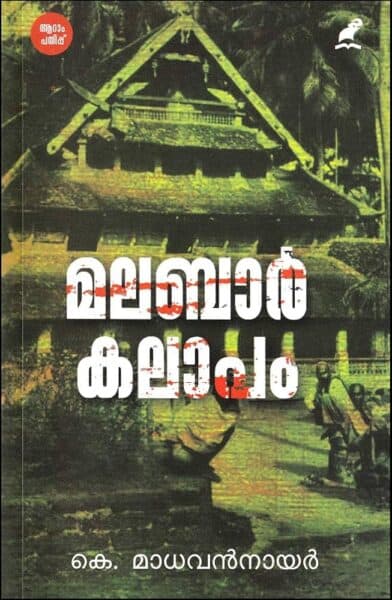
Perhaps no historical debate illustrates ideological contestation more vividly than the interpretation of the 1921 Malabar Rebellion. For decades, Marxist historians largely presented the uprising as an agrarian revolt against feudal landlords supported by the British. Critics argue that this interpretation, while acknowledging genuine agrarian grievances, often underplayed or ignored the communal violence, forced religious conversions and attacks on Hindu civilians that also formed part of the historical record. They contend that a class-struggle framework gradually overshadowed the rebellion’s religious dimensions, thereby producing an incomplete historical narrative.
Recasting Kerala’s Social Reform Movement
Kerala’s remarkable social renaissance produced towering personalities such as Sree Narayana Guru, Ayyankali, Chattampi Swamikal, Vakkom Abdul Khader Moulavi, and numerous other reformers. Sections of Marxist historiography increasingly interpreted these reform movements primarily through the lens of class struggle. In doing so, they contend, the profound spiritual, cultural and civilisational dimensions of these reformers’ work were reduced to preliminary stages in the evolution of class consciousness. This approach diminished the independent philosophical contributions of Kerala’s social renaissance.
Dalit Critiques of Marxist Scholarship
Interestingly, some of the strongest criticisms of Kerala’s Marxist intellectual tradition have emerged from Dalit scholars themselves. Thinkers such as M. Kunjaman and K. K. Kochu have argued that traditional Marxist scholarship often privileged class over caste, thereby failing to adequately address the structural discrimination experienced by Dalit communities.
They have questioned whether land reforms and Left politics truly dismantled caste hierarchies or merely redistributed power among dominant intermediate communities.
Their critiques have added a new dimension to Kerala’s intellectual debates.
The Cost of Dissent
One consequence of this ideological dominance has been the shrinking space available for dissenting voices. Intellectuals who departed from accepted Left narratives often discovered that disagreement came at a professional cost. Rather than engaging with their arguments, the cultural establishment, critics contend, frequently responded with marginalisation, ridicule, or character assassination.
Several prominent public intellectuals—including M.T. Vasudevan Nair, C. Ravichandran, M.N. Vijayan, M.G.S. Narayanan, M.K. Sanoo, S. Ramesan Nair, C. Radhakrishnan, and Advocate Jayasankar—have, at different times, expressed views that departed from prevailing Left orthodoxies. Instead of being treated as participants in a healthy democratic debate, many found themselves portrayed as ideological outliers.
Whether one agrees with their views is beside the point. Their very presence demonstrates that Kerala’s intellectual landscape has never been ideologically uniform. Yet alternative viewpoints have often struggled to secure the same institutional acceptance or media visibility enjoyed by those aligned with dominant Left narratives. The consequence has been the gradual erosion of the pluralism that once distinguished Kerala’s public discourse.
Treatment of Internal Dissent
Instances where prominent figures within the Left itself allegedly faced marginalisation after departing from party orthodoxy. The political career of K. R. Gouri Amma is frequently cited in this regard. More recently, scholars such as P. K. Pokker have publicly alleged ideological discrimination and institutional isolation following disagreements with dominant Left narratives. Such episodes suggest that ideological conformity has sometimes been expected even within the broader Left intellectual tradition.
Power, Patronage and Cultural Legitimacy


Perhaps nowhere is this alleged ideological imbalance more visible than in the functioning of Kerala’s state-supported cultural institutions. Bodies such as the Kerala Sahitya Akademi, Kerala Lalithakala Akademi, Kerala Chalachitra Akademi, and Kerala Sangeetha Nataka Akademi occupy an influential position in recognising artistic excellence, shaping cultural policy, and conferring public legitimacy.
Appointments to these institutions have frequently appeared to reflect political proximity as much as artistic merit. The appointment of filmmaker Ranjith, widely regarded as a fellow traveller of the Left, as Chairman of the Kerala Chalachitra Akademi is a case in point. He was later forced to resign following allegations of sexual misconduct. Yet his elevation attracted little visible resistance from Kerala’s cultural establishment. Had an individual openly associated with the RSS or the BJP been considered for a comparable position, many of the same cultural voices would, in all likelihood, have protested on grounds of ideological incompatibility.
Such episodes reinforce a perception widely shared among critics: that ideological affiliation often shapes public responses more than the consistent application of principle. This perceived double standard has become one of the defining features of Kerala’s contemporary cultural politics. Prestige, recognition, and institutional acceptance appear to be more readily available to those who remain within the accepted ideological fold. Those outside it often find the path considerably more difficult.
Cultural Gatekeeping through PuKaSa
The Purogamana Kala Sahitya Sangam (PuKaSa) has for decades occupied an influential position in Kerala’s literary and artistic life. The organisation gradually evolved into an intellectual gatekeeper, promoting writers and artists aligned with Left ideology while giving comparatively less space to dissenting voices. Whether entirely justified or not, this perception has persisted among many independent writers and commentators.
Silence, Selective Outrage and the Politics of Moral Authority
The credibility of any intellectual tradition ultimately rests not on the positions it takes, but on the consistency with which it applies its principles. It is precisely on this count that Kerala’s self-proclaimed progressive establishment faces its most serious test. A persistent allegation against a section of the state’s influential writers, artists, filmmakers, and academics is that their public interventions are guided less by universal ethical standards than by ideological selectivity. They speak out forcefully when events fit their political narrative, critics contend, yet remain conspicuously silent when similar—or even more serious—incidents involve those perceived to be on their own side. Over time, this pattern has steadily eroded public confidence in Kerala’s intellectual class.
Political Violence and the Culture of Silence

Few issues illustrate this accusation more starkly than Kerala’s long history of political violence. For decades, districts such as Kannur have witnessed recurring clashes involving CPM, RSS, and BJP workers, resulting in numerous deaths across political divides. Among the most chilling episodes was the brutal murder of former CPM leader T.P. Chandrasekharan in 2012, who was hacked to death after breaking away from the party and forming the Revolutionary Marxist Party (RMP). The case, which led to the conviction of several CPM workers, became a defining symbol of the ruthless intolerance allegedly shown towards political dissent within the Left’s own ranks. Together, these incidents have repeatedly attracted national attention and have come to represent one of the darkest chapters in Kerala’s political history. Yet, while Kerala’s cultural elite has seldom hesitated to condemn violence elsewhere in India—or even in distant parts of the world—their response to political violence associated with the Left within Kerala has often been strikingly muted.
When RSS or BJP workers lost their lives in politically motivated attacks, many prominent cultural personalities who routinely issued statements on national human rights issues remained largely absent from the public conversation. The same muted response was evident even in the aftermath of the brutal killing of T.P. Chandrasekharan, despite the widespread national outrage it generated. To critics, this silence raises uncomfortable questions. If human rights are truly universal, they ask, should concern not extend equally to every victim, regardless of political affiliation? The issue is not whether every intellectual should comment on every incident. Rather, it is whether the moral standards they invoke are applied consistently across ideological boundaries. For many observers, this perceived inconsistency has become increasingly difficult to ignore.
The Romanticisation of ‘Party Villages’
Several villages in northern Kerala historically associated with strong Left influence were frequently portrayed as models of disciplined political organisation and community mobilisation. This narrative often overlooked allegations of political intolerance, social surveillance and pressures faced by ideological opponents living within these areas.
According to them, the idealised portrayal rarely reflected the full complexity of local political realities.
When Corruption Meets Ideological Convenience
The criticism extends beyond political violence to the broader record of governance under the CPI(M)-led administration. During its tenure, Kerala was rocked by a series of high-profile controversies involving leaders, government institutions, and entities associated with the Left. These included allegations linked to the gold smuggling case, irregularities in several cooperative banks, controversies surrounding the Kerala Public Service Commission, and allegations that a private mining company made monthly payments to Veena Vijayan, daughter of former Chief Minister Pinarayi Vijayan.
The Opposition projected these controversies as serious issues of public accountability and institutional integrity. Yet many influential cultural voices, who routinely champion transparency, probity, and ethical governance, appeared far less vocal when the allegations touched the Marxist establishment. To critics, this silence was neither incidental nor isolated; it reinforced the perception that public activism was often shaped less by consistent ethical principles than by political convenience.
For many citizens, the contrast has been difficult to overlook. Controversies involving ideological opponents frequently trigger swift statements, opinion pieces, seminars, protests, and public campaigns. Comparable controversies involving those perceived to be within the Left’s ideological orbit often receive far less sustained attention. Whether justified or not, this perception of selective outrage has become an enduring feature of Kerala’s contemporary political discourse.
Selective Outrage and the Question of Credibility
Perhaps no criticism is levelled more frequently against Kerala’s cultural establishment than that of selective outrage. Critics argue that even relatively minor controversies involving BJP leaders often provoke swift, coordinated, and highly visible reactions from sections of the state’s writers, artists, filmmakers, academics, and public intellectuals. Statements are issued, editorials are published, protest meetings are organised, and social media campaigns gather momentum with remarkable speed. Yet when comparable—or even more serious—controversies involve those aligned with the Left, the public response often appears noticeably more restrained.
According to critics, this disparity has created a hierarchy of moral concern in which the political identity of the individual frequently determines the intensity of intellectual activism. Such perceptions, whether wholly accurate or not, inevitably undermine credibility. The moral authority of intellectuals rests on the conviction that they apply the same ethical standards to every individual and every political formation. Once that conviction begins to fade, so too does the authority to speak as the conscience of society.
Recognition, Awards and the Politics of Acceptance
The debate over ideological bias extends beyond politics into Kerala’s system of cultural recognition. Critics frequently point to instances in which artists, writers, or public figures perceived to hold nationalist or Hindu viewpoints allegedly struggled to secure the same level of institutional recognition despite their professional accomplishments. By contrast, individuals identified with Left-oriented politics have often continued to enjoy institutional patronage and public acclaim even after becoming embroiled in serious controversies.
The recognition accorded to performers such as Vedan, notwithstanding the serious allegations that subsequently surfaced against him, has likewise been cited by critics as an illustration of this perceived inconsistency. The broader charge is not that particular individuals were undeserving of recognition, but that ideological proximity has too often appeared to influence institutional responses. Whether in appointments, awards, public honours, or cultural acclaim, critics argue that political alignment has frequently functioned as an invisible qualification.
The Hamas Controversy: An Intellectual Turning Point
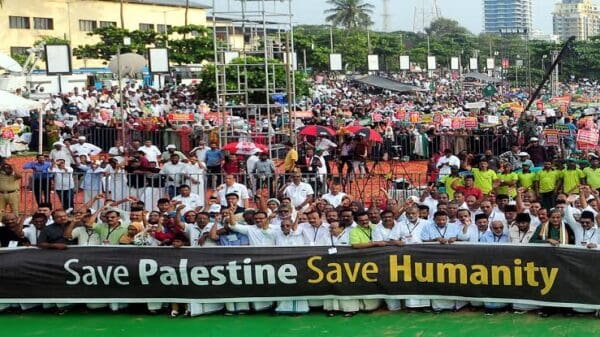
For many observers, however, the debate over ideological selectivity reached an entirely new level following the Hamas terrorist attack on Israel on 7 October 2023. As political parties identifying themselves as secular organised pro-Palestine demonstrations across Kerala, critics closely watched the response of the state’s influential intellectual community.
Their disappointment arose not from expressions of sympathy for Palestinian civilians, but from what they perceived as the near-total absence of unequivocal condemnation of Hamas’s terrorist violence. When Khaled Mashal, the former Hamas chief, addressed a public gathering in Malappuram virtually on 27 October 2023, many expected Kerala’s outspoken advocates of human rights to distance themselves clearly from the organisation and its actions. Such condemnation, however, was largely absent.
The same criticism was directed at the massive pro-Palestine rally organised by the CPM in Kozhikode on 11 November 2023, where speakers were widely reported to have praised Hamas. Likewise, a Congress-led pro-Palestine rally in Kozhikode on 23 November 2023, which was also reported to have remained silent on Hamas’s atrocities, attracted little public criticism from many of Kerala’s leading cultural personalities.
International media, including Al Jazeera, reported on Kerala’s unusually large pro-Palestine demonstrations during November 2023, highlighting the prominent participation of Left and Islamist organisations. To critics, the silence of many self-proclaimed progressive intellectuals on the actions of an organisation designated as a terrorist group by numerous countries stood in sharp contrast to their frequent public interventions on democracy, fascism, secularism, and human rights in other contexts. Whether one accepts this criticism or not, the controversy substantially intensified the debate over the political neutrality and moral consistency of Kerala’s intellectual establishment.
When Silence Becomes a Political Statement
Silence itself can become a powerful form of political communication. The choice not to speak is often as consequential as the choice to speak. When intellectuals consistently intervene on certain issues while remaining silent on others, citizens inevitably begin to discern patterns and question the motivations behind such selectivity. The consequence is that many who once commanded unquestioned moral authority increasingly find themselves viewed not as independent scholars and public intellectuals, but as ideological partisans. For Kerala—a society that has long prided itself on intellectual openness and a vibrant culture of debate—this represents a profound and deeply troubling development.
The Question of Islamic Fundamentalism
If Kerala’s intellectual establishment has been accused of maintaining a studied silence over excesses associated with Marxist politics, critics argue that its response to Islamic fundamentalism has been even more restrained. Over the past two decades, Kerala has witnessed a series of developments that attracted national concern, including reports of Malayalis joining the Islamic State (ISIS), National Investigation Agency (NIA) investigations into alleged terror-linked networks, violent activities attributed to the Popular Front of India (PFI), and the brutal murder of RSS worker Sanjith in Palakkad, among other incidents.
These developments generated extensive debate in political circles and received widespread national media attention. Yet, critics contend that many of Kerala’s prominent writers, artists, filmmakers, academics, and public intellectuals—who regularly intervene on issues of democracy, secularism, and human rights—responded with remarkable caution or remained conspicuously silent. According to critics, this reluctance was driven less by a principled commitment to communal harmony than by the political realities of Kerala’s electoral landscape. With minority communities constituting a significant electoral constituency, they argue, the Left has often been reluctant to confront Islamist radicalism directly. Critics further contend that this political caution has gradually permeated Kerala’s wider intellectual ecosystem.
Several public figures who openly criticised Islamist extremism—including T.G. Mohandas and filmmaker Ali Akbar, later known as Ramasimhan—found themselves subjected to sustained criticism and, according to their supporters, increasing isolation within Kerala’s cultural establishment. For critics, such episodes reinforce the perception that ideological acceptability often determines who is celebrated, who is ignored, and who is pushed to the margins.
Manufacturing the Image of ‘Progressive Kerala’

Kerala’s image as India’s most progressive state has become one of its most enduring political and cultural identities. High literacy, a vibrant tradition of public debate, pioneering social reform movements, comparatively strong social indicators, and an active civil society have all contributed to this reputation. Few would dispute these achievements, many of which owe their origins to the transformative work of Hindu saints and social reformers who laid the foundations of Kerala’s social renaissance.
Critics, however, argue that the Left has successfully appropriated this legitimate legacy, recasting it into an ideological narrative that presents Marxist thought as the natural—and virtually unquestionable—expression of Kerala’s progressive identity.
Through decades of influence over universities, cultural organisations, media institutions, literary circles, and public discourse, critics contend, a particular political worldview has increasingly come to define the mainstream. Within this framework, ideological labels have acquired extraordinary power. Those who question prevailing narratives are frequently branded as “communal,” “reactionary,” “right-wing,” “Sanghi,” or “bhakt,” while those aligned with the dominant Left discourse are readily celebrated as “progressive,” “liberal,” or “secular.”
Such labelling, critics argue, discourages independent thought and narrows the space for genuine intellectual debate. Instead of encouraging reasoned disagreement, it fosters an atmosphere in which individuals hesitate to express alternative viewpoints for fear of professional, institutional, or social consequences. The result is not intellectual confidence but intellectual conformity.
The Total Literacy Campaign
Kerala’s internationally acclaimed Total Literacy Campaign remains one of India’s greatest educational achievements.Organisations associated with the campaign, particularly the KSSP infused aspects of literacy material with Marxist terminology and anti-capitalist perspectives.
The Role of the Mainstream Media
No discussion of Kerala’s intellectual climate is complete without examining the role of the state’s mainstream media. Kerala possesses one of India’s most vibrant newspaper and television landscapes. Public debate remains lively, political awareness is high, and media consumption is among the highest in the country. Yet, critics argue that a substantial section of the state’s media ecosystem has gradually come to reflect the same ideological assumptions that dominate Kerala’s cultural establishment. News selection, editorial priorities, panel discussions, and political commentary frequently appear to follow a similar ideological template.
Stories that reinforce prevailing narratives often receive extensive coverage and sustained editorial attention. By contrast, issues that challenge those narratives are, critics contend, either accorded comparatively limited coverage or presented through a markedly different interpretative lens. The cumulative effect, they argue, has been a steady narrowing of ideological diversity within Kerala’s mainstream public discourse.
Against this backdrop, social media platforms, digital news portals, and independent YouTube channels have increasingly emerged as alternative forums where dissenting voices and competing perspectives find greater visibility. Their growing popularity reflects, at least in part, a widening public demand for viewpoints that many believe are underrepresented in Kerala’s traditional media.
Opposition to Private Higher Education
For many years, influential sections of Kerala’s academic community opposed the expansion of private universities and autonomous institutions, viewing them as threats to equitable education. This ideological resistance delayed educational modernisation and contributed significantly to the migration of Kerala’s students to institutions outside the state.
Cracks in the Old Order

Despite decades of intellectual dominance, many observers believe Kerala’s cultural landscape is entering a period of profound transformation. The rise of digital media has fundamentally altered the relationship between intellectuals and the public. Unlike earlier decades, when newspapers, television channels, and established literary institutions exercised considerable influence over public discourse, today’s information ecosystem is far more decentralised and difficult to control.
Independent journalists, researchers, podcasters, YouTubers, and digital commentators now reach large audiences without seeking the approval of traditional gatekeepers. This has enabled a new generation of voices to question long-entrenched assumptions and challenge established orthodoxies. Historical interpretations once treated as settled are being re-examined, while political narratives that previously escaped sustained scrutiny are increasingly being subjected to rigorous public debate.
Alternative interpretations of Kerala’s social history, cultural evolution, and political development now circulate widely across digital platforms, reaching audiences that were once beyond the reach of conventional media. Critics regard this as the first serious challenge to what they describe as the Left’s long-standing ideological dominance over Kerala’s intellectual sphere. Whether this transformation ultimately leads to a more genuinely pluralistic public discourse remains to be seen.
What is already evident, however, is that the near-monopoly over information, opinion, and intellectual legitimacy that once appeared unassailable no longer exists.
When the Red Bastion Fell
The 2026 Kerala Assembly election has further altered this landscape. Despite benefiting from a substantial consolidation of minority votes and widespread public disenchantment arising from the numerous controversies and governance failures of the LDF government led by Pinarayi Vijayan—a subject that merits a separate discussion—the CPI(M) suffered a decisive electoral setback. For many of the party’s long-time intellectual sympathisers, the defeat has been politically and psychologically disorienting, leaving them without the ideological centre of power around which they had long revolved. The erosion of what was once regarded as the CPI(M)’s last major bastion is a significant development in Kerala’s political history. While the party continues to remain a marginal political force within the state, it has, by and large, been rejected across most of India, marking a steady contraction of its national influence.
The Responsibility of the Intellectual
At its highest calling, the vocation of an intellectual is not to defend governments, political parties, or ideological movements, but to pursue truth wherever it leads. History’s most respected thinkers earned public trust not because they championed particular political causes, but because they possessed the intellectual honesty and moral courage to subject their own ideological camp to the same rigorous scrutiny they applied to their opponents.
Critics argue that this foundational principle has steadily weakened in contemporary Kerala. Instead of functioning as independent centres of moral authority, sections of the state’s cultural elite have increasingly become active participants in ideological battles. When intellectual inquiry becomes subordinate to political loyalty, society loses one of its most vital democratic safeguards. A genuine intellectual, they insist, does not merely challenge power exercised by political adversaries; he or she must display the same courage in questioning power exercised by ideological allies. That alone sustains credibility. That alone preserves moral authority.
Reclaiming Kerala’s Intellectual Freedom
The debate over Kerala’s intellectual climate is about far more than political parties or ideological preferences. At its heart lies a fundamental question about the health of democracy and the independence of those who shape public opinion. No intellectual culture can remain vibrant if one ideology becomes so dominant that dissent itself is viewed with suspicion. Equally, no democracy can flourish when writers, artists, academics, journalists, and media personalities apply moral standards selectively according to political convenience. Kerala’s rich intellectual tradition deserves better.
Its greatest minds—from social reformers and philosophers to literary giants and public intellectuals—earned their place in history not by serving political power, but by challenging it. They questioned authority, confronted prevailing orthodoxies, and defended the freedom to think independently. Critics argue that it is this legacy that now demands revival.
If Kerala is to reclaim its reputation as India’s foremost centre of intellectual inquiry, its cultural leadership must rediscover the courage to scrutinise every form of authoritarianism—political, ideological, or religious—with the same intellectual honesty and moral conviction. The future of Kerala’s public discourse depends not on replacing one ideological monopoly with another, but on restoring a genuinely pluralistic culture in which ideas succeed on the strength of evidence and reason rather than ideological conformity or political patronage.
A truly progressive society is not one in which everyone thinks alike. It is one in which every idea may be examined without fear, every institution may be questioned without prejudice, and every citizen is free to dissent without being branded an enemy. Only then can Kerala truly reclaim its place as a society of free inquiry—rather than remain an echo chamber for any single ideology.
Final Word
The central question, therefore, is not whether intellectuals should hold political convictions—they inevitably will—but whether any democracy can remain intellectually healthy when a single ideological tradition acquires overwhelming influence over its institutions of knowledge, culture, and public discourse.
Kerala’s greatest strength has always been its vibrant tradition of debate and fearless intellectual inquiry. Preserving that legacy requires a culture that welcomes dissent, encourages competing perspectives, and applies the same moral standards to every ideology, institution, and political movement. Only then can Kerala’s intellectual life genuinely embody the pluralism, openness, and independence of thought that have long been among its proudest claims.
