


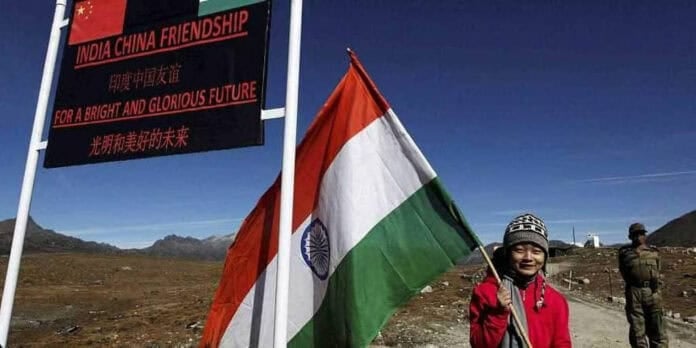
Bharat’s decision on August 7, 2026, to formally inscribe 27 strategic locations in Arunachal Pradesh on the Survey of India’s national map using their authentic Bharatiya names marked a decisive shift in New Delhi’s response to Beijing’s persistent cartographic aggression. For nearly a decade, China has pursued a deliberate “rename-and-claim” strategy—systematically assigning Chinese, Tibetan, and pinyin names to Bharatiya villages, mountains, rivers, and passes in Arunachal Pradesh, which Beijing calls “Zangnan” or “South Tibet”—and presenting these fabricated toponyms as evidence of historical sovereignty. Bharat’s August 2026 counter-move, which inscribed historically and militarily significant sites such as Longju, Maja, Thag La, Dzo La, Jaswant Garh, and the Sher-e-Thapa Memorial onto the official national map, was not merely symbolic; it was an institutional riposte by the Survey of India, under the Ministry of Home Affairs and in consultation with the Arunachal Pradesh government, asserting administrative and cartographic sovereignty over territory Bharat considers inalienable. Beijing’s predictable objection on August 10—dismissing Bharat’s action as “illegal, null and void” and reasserting its claim over “Zangnan”—was met two days later with a firm rebuttal from the Ministry of External Affairs: Arunachal Pradesh “was, is, and will always remain an integral and inalienable part of Bharat,” and no invented nomenclature can alter that reality.
The First Salvo: 2017 — Six Names After the Dalai Lama’s Tawang Visit
China’s renaming campaign began in earnest on April 14, 2017, when its Ministry of Civil Affairs announced “standardised” names for six locations in Arunachal Pradesh: Wogyainling (Urgyeling), Mila Ri, Qoidengarbo Ri, Mainquka (Mechuka), Bumo La (Bum La), and Namkapub Ri. The timing was conspicuous—the announcement came days after the Dalai Lama’s visit to Tawang, a visit Beijing had vehemently opposed. The chosen names were not arbitrary; they targeted sites of profound historical and military significance. Namkapub Ri (Namka Chu) was the site of some of the heaviest fighting during the 1962 war. Bum La, roughly 37 kilometres from Tawang along the Line of Actual Control, served as a major Chinese invasion route in 1962 and remains a sensitive border meeting point. Mainquka (Mechuka) lies deeper inside Arunachal Pradesh in West Siang district. Beijing defended the move as a routine exercise in standardising geographical names under its regulations on ethnic-minority languages, but the strategic signalling was unmistakable: by imposing Chinese nomenclature on sites tied to the 1962 conflict and Tibetan Buddhism, Beijing sought to retroactively inscribe its sovereignty claims onto the landscape. Bharat rejected the move outright. Union Minister Kiren Rijiju, himself from Arunachal Pradesh, reiterated during the Dalai Lama’s visit that the state is an “inseparable part of Bharat,” while the Ministry of External Affairs dismissed the renaming as a manoeuvre that cannot alter ground realities or legitimise Beijing’s territorial claims.
The Second Round: 2021 — Fifteen Names Amid the Ladakh Standoff
On December 29, 2021, China’s Ministry of Civil Affairs unveiled a second list of 15 “standardised” names—eight residential areas, four mountains, two rivers, and a mountain pass—complete with precise geographic coordinates. The list included Sêngkêzong, Daglungzong, Manigang, Duding, Migpain, Wamo Ri, Dêu Ri, Xênyogmo He, and Se La. This escalation came at a fraught moment: the Bharat-China military standoff in eastern Ladakh had entered its twentieth month, and China’s new Land Border Law was set to take effect on January 1, 2022, codifying Beijing’s claim that its land borders are inviolable and mandating measures to “safeguard territorial integrity.” The renaming exercise was explicitly framed by Chinese officials as an assertion of sovereign rights under that law. Bharat’s response was sharp and personal. Union Law Minister Kiren Rijiju, an Arunachal Pradesh native, dismissed the exercise as akin to “forcibly changing a person’s name”—an act that cannot alter identity or ownership. MEA spokesperson Arindam Bagchi reiterated that Arunachal Pradesh “has always been, and will always be an integral part of Bharat,” and that assigning “invented names” does not change this fact.
Cartographic Aggression Before the G20: The 2023 “Standard Map”
China escalated from renaming discrete locations to redrawing the entire map. On August 28, 2023, days before the G20 Summit in New Delhi and shortly after a Xi Jinping–Narendra Modi meeting at the BRICS Summit in Johannesburg, China’s Ministry of Natural Resources released the 2023 edition of its “standard map.” The map depicted Arunachal Pradesh and Aksai Chin as Chinese territory, incorporated Taiwan within China’s boundaries, and inscribed the expansive nine-dash line in the South China Sea. The timing was a calculated diplomatic provocation: releasing a maximalist territorial map on the eve of a major multilateral summit hosted by Bharat signalled Beijing’s refusal to compartmentalise border disputes from broader engagement. Bharat’s response was swift and categorical. The MEA rejected the map as having “no basis” and reiterated that such cartographic fabrications “do not change the reality on the ground or lend legitimacy to China’s claims.” The episode underscored that Beijing’s renaming campaign was not merely administrative housekeeping but a coordinated instrument of political signalling, calibrated to diplomatic calendars.

The Fourth List: 2024 — Thirty Names After the Sela Tunnel Inauguration
On March 30, 2024, China’s Ministry of Civil Affairs published its fourth list—30 “standardised” geographical names covering residential areas, mountains, rivers, and other features. This followed earlier lists in 2017, 2021, and 2023. The provocation was unmistakably timed: three weeks earlier, on March 9, Prime Minister Narendra Modi had inaugurated the strategically vital Sela Tunnel at 13,000 feet, providing all-weather connectivity to the Tawang sector—a development Beijing had publicly opposed. New regulations set to take effect on May 1, 2024, restricting unauthorised use or translation of foreign-language place names that could “undermine territorial claims,” accompanied the list, signalling a hardening legal framework around Beijing’s cartographic claims. Bharat’s rejection was unanimous and multi-level. MEA spokesperson Randhir Jaiswal called China’s “baseless claims” as “ludicrous.” External Affairs Minister S. Jaishankar labelled China’s claims “ludicrous,” while Arunachal Pradesh Chief Minister Pema Khandu and Union Minister Kiren Rijiju echoed the rejection, emphasising that repeated assertions cannot manufacture sovereignty.

The Fifth List: 2025 — Twenty-Seven Names Across Five Categories
On May 11–12, 2025, China released its fifth list—27 names spanning 15 mountains, five residential areas, four mountain passes, two rivers, and one lake, rendered in Chinese characters, Tibetan script, and pinyin, accompanied by coordinates and maps. By this point, the pattern was unmistakable: biennial naming exercises, each expanding in scope and cartographic precision, designed to create a cumulative veneer of administrative normalcy over contested territory. Bharat’s MEA dismissed the exercise as “vain and preposterous,” declaring that “creative naming will not alter the undeniable reality that Arunachal Pradesh was, is, and will always remain an integral and inalienable part of Bharat.” The formulation—”was, is, and will always remain”—had become a deliberate refrain, signalling doctrinal consistency across successive governments.
The Sixth Round: 2026 — Twenty-Three Names and the “Zangnan” Narrative
China’s sixth renaming exercise, announced on April 12, 2026, assigned names to 23 locations in “Zangnan.” Beijing leaned heavily on cultural-religious arguments, citing Tawang Monastery and the birthplace of the Sixth Dalai Lama as evidence of historical Tibetan Buddhist linkages to bolster its sovereignty narrative. MEA spokesperson Randhir Jaiswal characterised the move as “mischievous attempts” to assign “fictitious names” and warned that such “manufactured baseless narratives” could undermine efforts to stabilise bilateral ties. The language signalled a shift: Bharat was no longer merely rejecting the claims but explicitly linking Beijing’s cartographic provocations to the broader trajectory of the relationship, cautioning that persistent negativism would impede normalisation.
Bharat’s Institutional Counter-Move: August 2026 — Twenty-Seven Names on the National Map
On August 7, 2026, Bharat’s Survey of India, under the Ministry of Home Affairs and in consultation with the Arunachal Pradesh government, officially added 27 strategically important locations to the country’s official national map using their authentic Bharatiya names. The move came as a direct institutional response to China’s repeated attempts to rename Arunachal Pradesh locations.
The list includes historic and strategic sites such as Longju, Maja, Thag La, Dzo La, Riza La, Puk Riza, Puk La, Jaswant Garh, Sher-e-Thapa Memorial and Sambho Sarovar, along with villages and administrative settlements. These locations carry deep historical, local, and military significance — including places associated with the 1959 Longju border clash and the 1962 war — while reaffirming Arunachal Pradesh as an integral part of Bharat.
China objected on August 10, calling Bharat’s decision “illegal, null and void” and reiterating its claim over “Zangnan” (Southern Tibet). Bharat rejected the objection on August 11, with the Ministry of External Affairs reiterating that Arunachal Pradesh is an inalienable and integral part of Bharat and that “nothing can change this indisputable reality.”
A Decade Cartographic Campaign State Policy
The nine-year record reveals a consistent Chinese playbook: periodic, state-sanctioned renaming exercises, each larger and more cartographically precise than the last, timed to diplomatic pressure points—Dalai Lama visits, prime ministerial visits to border infrastructure, G20 summits, border law enactments—and backed by domestic regulations that criminalise alternative nomenclatures. The 2017 list had six names; the 2021 list had fifteen; the 2023 map redrew the entire frontier; the 2024 list had thirty; the 2025 list had twenty-seven; the 2026 list had twenty-three. The cumulative effect is an attempt to create a parallel administrative geography that Beijing can cite in future negotiations or legal forums as evidence of “effective administration.”
Bharat’s response has evolved from ad hoc diplomatic rebuttals to institutionalised cartographic assertion. The August 2026 Survey of India notification—gazetting 27 indigenous names with coordinates on the national map—represents a shift from reactive diplomacy to proactive sovereignty documentation. By inscribing sites like Longju (site of the 1959 Longju incident, the first major border clash after 1954), Thag La (the 1962 Thagla Ridge battle), and the Sher-e-Thapa Memorial (honouring a 1962 war hero) on the official map, Bharat is not merely countering nomenclature; it is layering historical, military, and administrative evidence onto the cartographic record. The MEA’s August 11, 2026 statement—”nothing can change this indisputable reality”—signals that New Delhi now treats cartographic sovereignty as a core pillar of its border strategy, not merely a diplomatic talking point.
As the border standoff in eastern Ladakh enters its seventh year and Special Representative talks remain deadlocked, the battle over names and maps has become a parallel front. China’s “Zangnan” narrative seeks to overwrite history with administrative fiction; Bharat’s 2026 map notification etches history into the official record. The terrain, the people, and the administration remain Bharatiya—but in the Himalayas, as Beijing well knows, the map is often the first terrain contested.
Source: 7 Incidents: How China Used Renaming Propaganda to Assert Claims Over Arunachal Pradesh (2017-2026)
