


An influential Russian journalist’s recent post inadvertently reinforced the false perception that this trend contributes to alleged friction in their relations as of late.
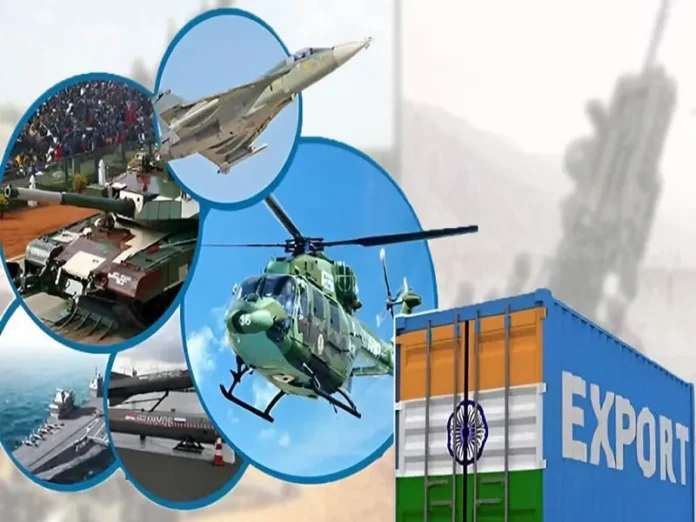
Head of publicly financed TASS’ office in Japan, Vasily Golovnin, published a post on Telegram in late April about how Bharat is nowadays emerging as a military-technical competitor to Russia. According to him, its arms sales increased by 63% last year to a little over $4 billion, but this is a 56-fold increase since the start of Prime Minister Narendra Modi’s tenure in 2014. 85% of its exports go to the Philippines (42%), Armenia (32%), and Vietnam (11%), the last two being traditional Russian arms markets.
It was assessed last year that “India Has A Decent Chance Of Expanding Its Military-Technical Exports”, namely due to their low cost and the political benefit that they provide of meeting its partners’ security needs without risking the US pressure that could follow purchases from Russia. As regards Armenia, it was concluded in late 2023 that “India’s Arms Sales To Armenia Aim To Assist Yerevan’s Clumsy Balancing Act”, but the incipient Azeri-Indian rapprochement could hypothetically lead to a decrease in sales.
The Asian dimension of its sales is derived from its partners’ shared threat assessment of China, particularly with respect to their maritime territorial disputes, which is why the Philippines purchased Bharat’s BrahMos supersonic missiles that are jointly produced with Russia. Vietnam and Indonesia might soon follow suit. Golovnin touched upon that in his post and also predicted that Bharat could try to squeeze China out of the Bangladeshi and Myanmarese markets in the coming future too.
Long-time Russia-based journalist Brian Macdonald reported on Golovnin’s post the day that it was published, which preceded Indian outlets doing the same. The wider awareness of Golovnin’s post drew attention to Bharat’s military export strategy, but it’s crucial to clarify that the perception of it as a competitor to Russia like some casual social media users have emphasized isn’t entirely accurate. Instead of undermining Russian interests, these sales actually advance them, but indirectly and not immediately.
To be sure, Russia does indeed stand to lose some market share and therefore profits to India, but both can be mitigated through more sales of jointly produced equipment like the Brahmos. Furthermore, among countries that are drifting away from Russia as a result of Trump 2.0’s Neo-Reagan Doctrine, it’s better from the Kremlin’s perspective for its reduced military influence to be replaced by Bharat than the West. Such is the case with Armenia at present and could soon be repeated with Venezuela and others.
Likewise, as the ASEAN states recalibrate their Sino-US balancing acts under changing regional circumstances, relying more on Bharat for meeting their security needs could alleviate pressure from those two. After all, they’d object to those states increasing purchases of their rival’s wares, but they’re expected to not have a problem with them buying more of India’s. Bolstering their balancing acts instead of letting them intensify their dependence on one of the two superpowers aligns with Russian interests.
Although it wasn’t his intent, Golovnin’s post reinforced the false perception among some that was pushed by Pepe Escobar of Bharat “betraying” Russia in spite of them being so close as to recently agree to the limited deployment of their forces in one another’s territories. That’s why it’s so important to clarify the means through which India’s increased arms sales actually advance Russian interests. Bharatiya and Russian experts and media would therefore do well to emphasize these points going forward.
(The article was published on Korybko.substack.com on May 07 and has been reproduced here)
