


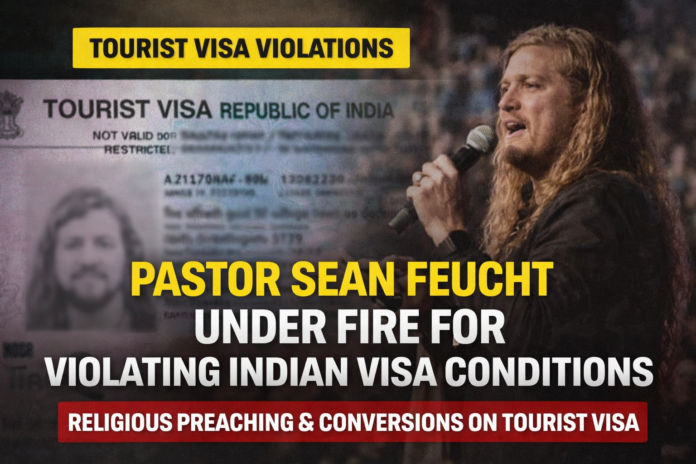
American evangelist Sean Feucht has stirred controversy after abruptly leaving Bharat following allegations that he violated visa regulations by engaging in Christian religious activities beyond the scope permitted under a tourist visa. Feucht has since claimed that he faced persecution in Bharat, even suggesting that the United States government is not very happy with the situation, claims for which no official confirmation has been provided.
Feucht had recently visited Bharat along with his wife and participated in the inauguration of the ‘Zion Centre’ facility in Andhra Pradesh’s Anantapur district. The center, described as a religious and community hub, reportedly hosted large-scale gatherings involving prayer sessions and evangelical outreach. Visuals and social media posts from these events triggered scrutiny, raising questions about the nature and legality of his activities.
As per OpIndia reports, a formal complaint was subsequently filed with the Foreigners Regional Registration Office (FRRO) in Bengaluru, alleging that Feucht entered Bharat on a tourist visa but engaged in preaching, evangelism, and proselytization. Under Bharatiya visa regulations, foreign nationals on tourist visas are strictly prohibited from conducting missionary work, delivering sermons, or participating in activities aimed at religious conversion.
While authorities have not publicly confirmed the specific visa category under which Feucht entered the country, legal experts emphasize that even missionary visas come with limitations and do not permit organized conversion drives or propaganda-based outreach. If proven, such actions would constitute a clear violation of visa norms and raise concerns about misrepresentation at the time of entry.
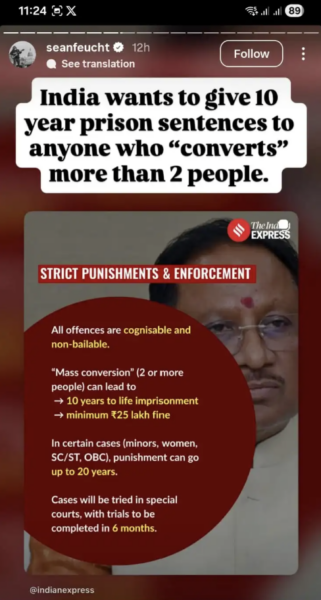
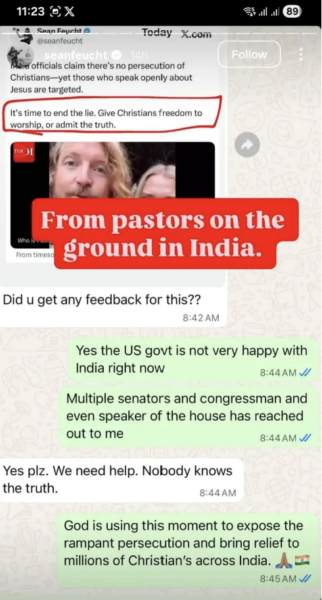
As the controversy intensified, Feucht exited Bharat and began portraying the situation as one of religious persecution. Through a series of social media posts, he claimed that Christians in Bharat face systemic restrictions and amplified concerns regarding anti-conversion laws, suggesting that such laws impose harsh penalties. He also alleged that American lawmakers had reached out and that the US government was unhappy with Bharat’s stance, assertions that remain unverified.
Screenshots shared by Feucht also included messages purportedly from individuals described as pastors on the ground, alleging difficulties in openly practicing Christianity. In private communications made public, he described the situation as rampant persecution and sought broader international attention and support.
However, Bharatiya law does not prohibit voluntary religious conversion; rather, it regulates conversions carried out through coercion, inducement, or fraudulent means. Several states have enacted anti-conversion laws specifically to address concerns over organized or forced conversions, particularly involving vulnerable communities.
Feucht’s repeated claims of persecution may be an attempt to shift focus away from the core issue of alleged visa violations. By framing regulatory enforcement as a matter of religious freedom, such narratives risk creating external pressure on Bharatiya authorities while potentially enabling continued missionary activities without adequate scrutiny.
