


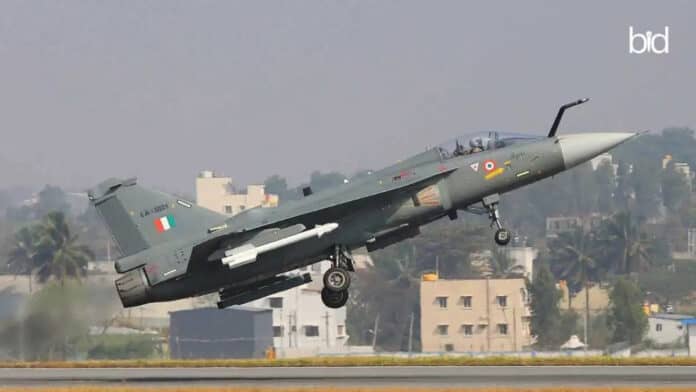
Summary: Prakash Nanda argues that Bharat should adopt defence co-production on South Korea's lines, moving from selling arms to co-developing and co-manufacturing them with partners. The KF-21 shared 20 per cent of its development cost with Indonesia, and the $14 billion Poland deal builds K2 tanks and K9 howitzers on Polish soil. He says the Tejas took 32 to 35 years to reach Final Operational Clearance and gained pace only with a GE engine and Israeli radar, and urges an IDCM (Indigenously Designed, Co-Manufactured) route beside IDDM (Indigenously Designed, Developed and Manufactured), reports EurAsian Times.
Why it matters: Insisting on building every subsystem alone cost Bharat 35 years and left the IAF at 31 squadrons. A civilisational power should own the design and share the risk, so that partners are tied to Bharat's interests and not the reverse.
Source: “LCA Tejas Needs a KF-21 Lesson: Why India Needs To Adopt S.Korean Defense Co-Production Model: OPED”, The EurAsian Times · 9 Nov 2026
Should a country's military-industrial strength be measured by how many weapons it manufactures and how successfully it sells them abroad?
Or should this strength be judged by whether it is a reliable partner in the global defense-industrial ecosystem by participating in joint production, sharing technologies, and building manufacturing relationships that endure beyond individual arms contracts?
A debate over these two questions is unfolding in South Korea, which experts say can offer a valuable lesson to countries like India…
Read the full article at The EurAsian Times →
