


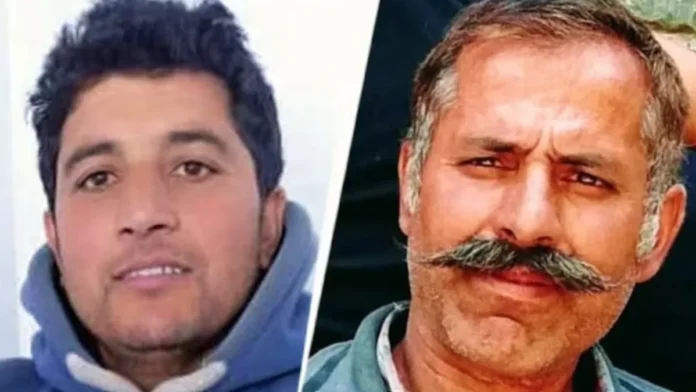
On the morning of 18 November, security forces killed Mohammad Lateef Bhat, a 22-year-old Lashkar-e-Taiba (LeT) commander from Khrewan in Kulgam district, Jammu and Kashmir, after a standoff at a mosque in Zangalpora. J&K’s Director General of Police described him as the last remaining terrorist on the police list of active local recruits. Some media outlets called it a landmark moment, 35 years into Pakistan-sponsored terrorism in Kashmir.
Outside Kashmir, few people paid much attention. Encounters in the Valley have become routine news in Bharat, read and quickly forgotten. That says something good about how much safer the country has become. It also says something worrying about how easily we have grown used to a conflict that is still going on.
How terror used to feel
Those who lived through the decade before 2014 will remember how close terror felt, far beyond Kashmir. Delhi’s markets were bombed two days before Deepawali in 2005. Seven bombs on Mumbai’s local trains killed close to 200 commuters in July 2006. Jaipur was hit in May 2008, Ahmedabad in July 2008, where 56 people died, and Delhi again that September, before 26/11 brought the country to a standstill. Mumbai was attacked once more in July 2011, the Delhi High Court gate that September, and Hyderabad’s Dilsukhnagar in February 2013.
Government figures released in 2016 counted 707 people killed and over 3,200 injured in terror attacks since 2005. Bag checks at malls, cinemas and railway stations were part of everyday life in those years.
Much of that fear has since faded from Bharat’s cities, though the danger has not disappeared. On 10 November 2025, a car bomb near Delhi’s Red Fort killed 13 people. Investigators traced it to a Jaish-e-Mohammed (JeM) module run by Kashmiri doctors. Attacks like this are now far less frequent, and the networks behind them are pursued much more aggressively than before.
The end of the stone-pelting summers
Before 2019, the Kashmir Valley went through cycles of street violence almost every summer, most severely in 2008, 2010 and 2016. In 2016, after Hizbul Mujahideen commander Burhan Wani was killed, J&K recorded 2,653 stone-pelting incidents and more than 10,500 arrests.
After Article 370 was abrogated in August 2019, stone-throwing dropped by 87 per cent within a year, and hartal calls eventually fell by 90 per cent. Official data shows 124 civilians died in protest clashes in the three years before abrogation and none in the three years after. Local recruitment has also collapsed. Active local terrorists numbered about 160 in 2020 and just two by October 2026: Bhat and his associate Umer Nisar Dar, both of whom have now been killed.
What the police list does not count
These are real gains, but the police list of local terrorists has its limits. It counts only identified, active recruits who have taken up arms. It leaves out “hybrid” operatives who keep a normal life and carry out attacks when asked. It also leaves out the overground workers who feed and hide terrorists, such as Parvaiz and Bashir Ahmad Jothar, two locals arrested by the NIA for sheltering the Pakistani terrorists before the Pahalgam massacre.
Nor does it count educated recruits like the doctors behind the Red Fort blast, or Kashmiris directing the jihad from across the border. One of them is The Resistance Front (TRF) chief Sheikh Sajjad Gul, born in Srinagar’s old city, who crossed into Pakistan in 2017 and is the designated terrorist who recruited Bhat. J&K Police have for years tracked dozens of Kishtwar-origin terrorists operating from Pakistan and Pakistan-occupied Jammu & Kashmir (PoJK).
Bhat himself was hardly a reluctant recruit. When he was cornered, Kulgam’s Senior Superintendent of Police (SSP) and the Army’s commanding officer spent a long time on a video call urging him to surrender. He told them he wanted to meet Allah and was very happy, and then opened fire. Within hours, the clip was circulating online in a way security officials fear could inspire others.
He carried a ₹15 lakh bounty, was linked to the killing of a J&K Police personnel and two migrant workers from Chhattisgarh, and was believed to be receiving logistical help from local associates. On 11 November, he and Dar fired on a Central Reserve Police Force (CRPF) post near Mir Bazar, injuring three jawans.
Kishtwar: two Hindu SPOs killed, and the denial that followed
In Kishtwar district, Special Police Officers (SPOs) Babi Chand, 57, and Rashpal Kumar, 45, went missing on 11 November while travelling from their camp at Kiyar to an Army post. Both served with the local Special Operations Group. Their bullet-riddled bodies were found in the Dachhan forest the next day, and their rifles had been taken. The police FIR names unidentified terrorists and invokes the UAPA.
Kishtwar MLA Shagun Parihar spoke to villagers and the victims’ families. Based on what they told her, she says the SPOs had been threatened through announcements from a local mosque, and that police did nothing despite earlier warnings. She also says some locals passed on the SPOs’ movements to their killers, and that their bodies were brought home three days later in a dumper truck. Leader of Opposition Sunil Sharma says a Special Operations Group picket that had guarded the area for two decades had been withdrawn. Parihar knows this kind of loss herself: her father Ajit and uncle Anil Parihar, a BJP state secretary, were shot dead by terrorists in Kishtwar in November 2018.
The reactions that followed were telling. The Congress’s J&K president Tariq Karra suggested the two men had ‘gone hunting’ and may have been shot by the Army. The Islami Markaz-e-Majlis Shura, Kishtwar’s Islamic clerical body, demanded an apology from the MLA rather than the arrest of the killers. Within days, the public debate had moved away from two murdered Hindu policemen to whether a Hindu legislator should have repeated what the families were saying.
Put the pieces together:
- Pakistani killers fed and sheltered before Pahalgam.
- A commander given cover and logistics for a year, choosing a mosque for his last stand, and celebrated online afterwards.
- Doctors building car bombs.
- Clerics and a national party rushing to deny, not to condemn.
Support for terror, and hostility towards Hindus and Bharat, remains deeply embedded in Kashmiri Muslim society. It was built up over decades by Pakistan’s training camps, by separatist politics and by the unpunished expulsion of Kashmiri Hindus in 1990. It will take far more than encounters and elections to undo it.
A former chief minister’s praise for Pakistan
On 24 October, National Conference president Farooq Abdullah, father of Chief Minister Omar Abdullah, told party workers in Baramulla that Pakistan raises the Kashmir issue everywhere, and that “that is what is saving us”. He added that Delhi’s intentions were “not good”.
Pakistan is the country that trains, arms, funds and sends the men who kill Kashmiris, jawans and SPOs. After the Kulgam and Kishtwar attacks, Abdullah claimed he had been ‘misrepresented’. He asked Pakistan to stop terrorism, but also pushed again for talks with it.
Electoral politics has given separatist sentiment a respectable platform. In 2024, Baramulla elected Engineer Rashid to the Lok Sabha while he was in Tihar jail in a terror-funding case, defeating Omar Abdullah himself. Separatist sentiment and apologia for terror find voice not only in street protests in Kashmir but also at party conventions, on the floor of the Assembly and in Parliament itself.
Why procedural democracy is not enough
In December 2023, the Supreme Court upheld the abrogation of Article 370. The same Constitution Bench ordered Assembly elections by 30 September 2024 and recorded the Centre’s assurance that statehood would be restored “at the earliest”. In effect, the court set a deadline for ending direct central rule, barely five years after seven decades of special status had ended.
Elections were held, the Abdullahs returned to power, and the Assembly has since passed a resolution demanding the “immediate and urgent” restoration of statehood. Yet while hearing petitions on statehood, the court itself acknowledged that what happened at Pahalgam could not be ignored.
Elections and timelines cannot by themselves deradicalise a society where Islamism and separatism have taken root over generations. That needs years of sustained work: dismantling support networks, changing what is taught in schools and mosques, drawing the region into the national economy, and keeping a steady hand on security.
Punjab is a useful comparison. Khalistani terrorism was defeated in the early 1990s, yet in 2024 voters in Khadoor Sahib elected Amritpal Singh to Parliament while he was detained under the National Security Act. The court’s deadline came too early, and statehood should wait until there is clear, measurable change on the ground.
Pakistan’s thousand cuts continue
Pakistan’s long-standing strategy of bleeding Bharat through a thousand cuts has not changed. Most terrorists killed in J&K are now Pakistani nationals: 42 of the 68 killed in 2024, and the majority in 2025. About 35 Pakistan-based terrorists are still active in J&K, and infiltration attempts happen almost daily. The three Pahalgam terrorists killed in Operation Mahadev in July 2025 were Pakistani LeT operatives.
Beyond J&K, the cuts keep coming. This year alone, police and investigators trace these back to Pakistan:
- Pokhran, January: a man in Jaisalmer district was arrested for allegedly passing Indian Army information to Pakistan’s Inter-Services Intelligence (ISI).
- Amritsar, late March: grenades were thrown at the Bhindi Saida police station. Police say the attackers were backed by the ISI, promised ₹4 lakh, and given grenades picked up near the border.
- Patiala, April: a railway track blast in which four suspects were arrested, with Punjab Police claiming links to Pakistan-based arms suppliers.
- Jaipur, June: Rajasthan’s Anti-Terrorism Squad (ATS) arrested Babita Dhakad alias Khadija under the UAPA for alleged contacts with Jaish-e-Mohammed.
- Sri Ganganagar, 3 November: the railway track was bombed barely half an hour after a passenger train passed. The ATS says a 21-year-old woman from Gurdaspur, Punjab, was lured by handlers in Pakistan with romance and ₹2.23 lakh.
It is not only Bharat saying so. In June, Afghanistan’s Taliban government claimed strikes on Islamic State-Khorasan Province (ISKP) centres inside Pakistan, in Balochistan and Khyber Pakhtunkhwa. In October, its ambassador to Russia accused Islamabad of enabling Islamic State activity on its soil. Pakistan denies it and accuses Kabul in turn. When even the Taliban call your country a haven for jihadis, the problem is the state.
Cricket, handshakes and a “propaganda” film
Against all this, Bharat still plays Pakistan in multilateral tournaments at neutral venues: Dubai in the 2025 Asia Cup, Colombo in the 2026 T20 World Cup, and Doha just this month. The only protest Bharat’s players have made is to keep their hands to themselves. Even that was too much for some.
Shashi Tharoor called the handshake snub a breach of the spirit of the game in September 2025. Before the Colombo match in February, former cricketer Sanjay Manjrekar called it “silly” and “unbecoming of a nation like ours”. But is it becoming of a nation that values its citizens’ lives to ask the families of Pahalgam victims to watch their cricketers shake hands with Pakistan as if nothing had happened?
Then there is Dhurandhar, Aditya Dhar’s spy thriller about Pakistan’s terror establishment and the gang wars of Karachi’s Lyari. It became one of the year’s biggest hits and was reportedly banned in Pakistan. YouTuber Dhruv Rathee called it “dangerous propaganda”. In October, Tharoor said there was “a lot of propaganda stuff” in it, though he conceded that Pakistanis watching might recognise wrongs done in their name. A film that shows the Islamist character of Pakistan’s establishment, and how even ordinary Pakistanis suffer under it, is dismissed as propaganda. Meanwhile, matches against the state that sponsors these attacks carry on as usual.
Newsrooms do their part too. When Dar was killed on 16 November, ThePrint, founded by Shekhar Gupta, headlined him as a “bread maker”. It had earlier introduced Bhat as a “missing carpenter”, and the three CRPF men shot on 11 November appear only well down its report. OpIndia and The Commune called it out within a day. A bread maker does not wake up one morning and fire on a CRPF post. Someone recruits him, trains him, arms him and pays him, and that someone sits in Pakistan.
There is another blind spot in our commentary on Pakistan. The daily, state-sanctioned cruelty inflicted on Pakistani Hindus and other minorities, from the abduction and forced conversion of minor Hindu girls in Sindh to blasphemy mobs and temple attacks, leaves thousands of families no option but to quietly migrate to Bharat. Yet it rarely finds a place in the columns and op-eds our liberal intelligentsia and foreign-policy experts write on “how to improve relations with Pakistan”. None of them consider the lives of those minorities worth including in their assessments of Pakistan. The same voices never tire of reminding readers how Bharat’s treatment of Muslims and other minorities affects the way the world sees it. If even Bharat gives Pakistan a free pass on its barbaric treatment of Hindus, who will speak for those hapless people?
Dismantling Pakistan’s terror state
The relative calm that allows Bharat to pay little attention to a Kulgam encounter was secured by soldiers, CRPF jawans, J&K Police and SPOs like Babi Chand and Rashpal Kumar. It is a genuine achievement. The risk is that courts, commentators and cricket administrators read this calm as a sign that Kashmir has healed. Some of them may not be looking for real solutions at all: commentators & judges keen to show off their liberal credentials, and cricket administrators keen to keep the revenue flowing. The mindset that led a young man to seek death in a mosque, and that led clerics to defend a mosque before mourning two murdered Hindus, will take decades of steady effort to change. Until then, the killing of the last listed local terrorist should be seen as one step in that process, not the end of it.
As for Pakistan, every form of engagement only lends it legitimacy and lets the Pakistani state project an image of normalcy. The world today is blind to the human rights abuses that state commits every day. Big powers such as the US, China, Russia and the EU pay only lip service to the crimes of the Pakistani establishment, the same establishment that carried out the 1971 genocide in what is now Bangladesh. Bharat may have to wage a lonely battle to dismantle this hateful, genocidal establishment, and only that can bring lasting peace and stability to our part of the world.
That a task is difficult is no reason not to undertake it. South Africa’s apartheid regime was accepted in the international order for decades. As more and more countries took a stand against its racist laws and human rights abuses, the pressure forced a reckoning, and apartheid had to end.
