


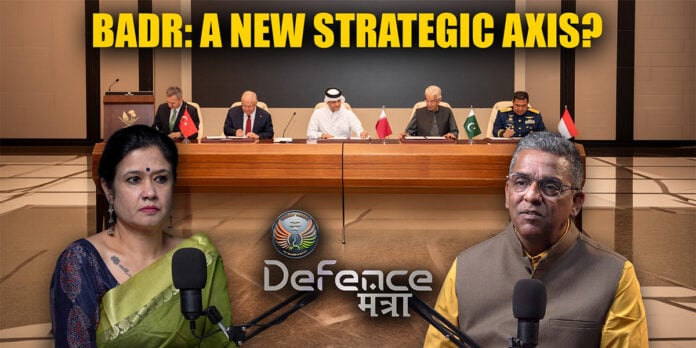
Summary: Pakistan, Türkiye, Qatar and Indonesia signed the Badr Pact or Memorandum of Understanding in Doha on 21 October 2026, setting up a framework for cooperation in defence manufacturing, research and development, technology sharing and military training. Pakistan gains technology access, investment and export routes, Türkiye brings its defence-industrial base, Qatar money and demand, and Indonesia a push to build locally. Indonesia is the sensitive partner for Bharat, given their growing defence engagement. Bharat Shakti’s Defence Mantra episode argues that Bharat should protect sensitive technologies, deepen engagement with Jakarta and track Pakistan’s defence capabilities, without mistaking an industrial agreement for a collective-defence alliance.
Why it matters: The name of the pact, Badr, recalls the 624 CE battle in which Muhammad decisively defeated the Meccan Quraysh, whom Islamic tradition brands “idolaters”. Today it is attached to a defence industry alliance. Pakistan has added three funded, industrialised partners to its defence supply base, with Turkish factories and Qatari money behind it. Bharat’s status-quoist, Nehruvian foreign-policy establishment will be loath to admit it, but Türkiye and Qatar deserve to be treated as hostile powers that share Pakistan’s long-term plan to destabilise Bharat. The test now is whether Indonesia’s growing defence ties with Bharat stay clear of this new industrial pipeline.
Source: “Badr MoU: A New Defence Partnership and What It Means for India” by Team Bharatshakti, Bharat Shakti, 27 October 2026.
The defence ministers of Pakistan, Türkiye, Qatar and Indonesia signed the Badr Memorandum of Understanding in Doha on 21 October 2026, opening a new framework for cooperation in defence manufacturing, research and development, technology sharing and military training. But what brings these four countries together, and what could the arrangement mean for India?
In this episode of Defence Mantra, we examine the strategic calculations behind the pact and distinguish its industrial ambitions from the security commitments associated with a conventional military alliance.
Badr is intended to strengthen the domestic defence industries of its signatories, encourage joint production and develop capabilities that could serve their own requirements as well as those of allied and friendly countries. Türkiye brings an established defence-industrial base and systems integration experience; Pakistan seeks technology access, investment and export opportunities; Qatar brings financial resources and demand; and Indonesia hopes to expand local manufacturing and diversify its defence partnerships.
Read the full article at Bharat Shakti →
