


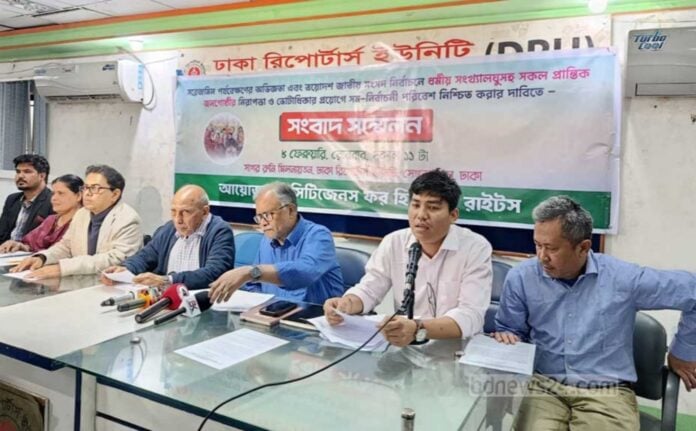
Minority communities in Bangladesh have effectively been pushed into the status of second-class citizens during the past eighteen months under the interim government, a prominent academic and human rights activists alleged on Sunday.
Speaking at a press conference in Dhaka after visiting violence-hit areas in Chattogram, Professor Robayet Ferdous of Dhaka University said religious minorities—particularly Hindus, Buddhists, and Christians—have faced systematic insecurity and discrimination during the current political transition.
He warned that repeated incidents of violence, intimidation, and arson targeting minority households reflect a disturbing pattern aimed at spreading fear ahead of the national election. In recent attacks in the Rauzan and Mirsharai areas, at least 19 homes belonging to Hindu families were reportedly set on fire, with attackers allegedly locking doors from outside before igniting the fires.
“These were not acts of robbery. Nothing was stolen. The purpose was clearly to terrorize communities and discourage them from participating in the election,” Ferdous said.
Human rights organisation Citizens of Human Rights stated that minority residents in affected areas are now living in constant fear, staying awake at night, organising community patrols, and installing CCTV cameras to protect themselves. The group warned that the violence appears designed to suppress minority voting rights and deepen social divisions.
Activists also criticised the failure of law enforcement and state institutions to ensure safety and justice, arguing that administrative weaknesses and political impunity have worsened the vulnerability of marginalised communities.
The organisation placed five key demands before the government, including special security measures in minority-populated areas, swift investigation and punishment of perpetrators, compensation and rehabilitation for victims, psychological support for affected families, and stronger oversight by the National Human Rights Commission.
Calling on political parties to act responsibly, the rights group urged all stakeholders to ensure the safety and democratic rights of minority citizens before, during, and after the election.
The situation has reignited debate over religious freedom, state responsibility, and the future of pluralism in Bangladesh at a time of heightened political tension.
