


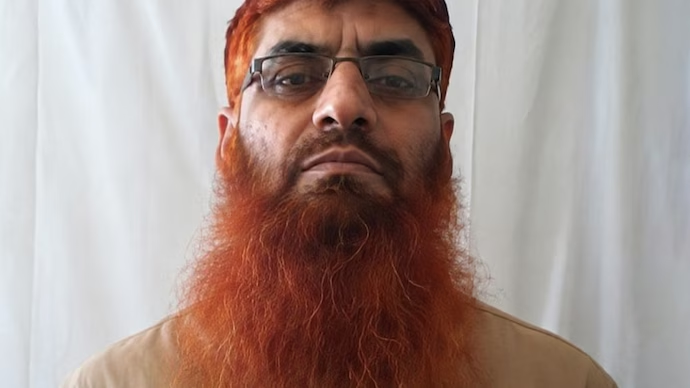
Mohammad Sharif, one of the men tried for the horrific terror attack of 1 January 2008 on the Central Reserve Police Force (CRPF) Group Centre in Rampur, Uttar Pradesh, in which seven CRPF jawans were martyred and a rickshaw-puller killed, was shot dead on Tuesday, in the Khajuria police station area of Rampur district. A trial court had sentenced him to death in 2019. In October 2025, the Allahabad High Court set that aside and convicted him only under the Arms Act, with ten years’ imprisonment and time served counted, which let him walk out of Bareilly Central Jail in November 2025.
Accounts differ in detail. The New Indian Express quotes local sources as saying he was shot 16 times. Most other reports describe two masked men on a motorcycle opening fire as he rode pillion behind his 21-year-old son near the Panwaria crossing. He died in hospital. Police have formed a team and begun a manhunt. Additional Superintendent of Police Anurag Singh said family statements were being recorded to check for any threat or dispute.
The terror attack
In the early hours of 1 January 2008, armed terrorists attacked the CRPF Group Centre in Rampur, Uttar Pradesh, with AK-47s and grenades. Seven CRPF personnel and a rickshaw-puller were killed, and others were injured. The attack was linked to the Pakistani state-backed terror outfit Lashkar-e-Taiba (LeT). Intelligence agencies had reportedly flagged a possible attack on the camp in the last week of November 2007.
On 10 February 2008, police arrested six suspects: two Pakistani nationals, Imran Shahzad and Mohammad Farooq, and Sabauddin in Lucknow, and Sharif, Fahim Ansari and Jang Bahadur in Rampur.
Rampur was not an outlier. Between 2004 and 2013, Bharat’s cities were struck again and again. The Delhi serial blasts of 2005 and the Mumbai train blasts of 2006, which killed 189, were followed by the serial blasts in Jaipur, Bengaluru, Ahmedabad and Delhi in 2008, and by 26/11, which killed 166. Uttar Pradesh itself saw the court blasts of November 2007 in Lucknow, Varanasi and Faizabad. The Rampur attack was an assault on a paramilitary camp inside the country’s largest state.
Sharif, of Badanpuri-Khajuria village in Rampur district, appears in court records under several aliases, including Suhail and Anwar. The 2019 trial court held him among four men directly involved. Police described the two Pakistanis, Imran Shahzad of Bhimbar in Pakistan-occupied Kashmir (PoK) and Mohammad Farooq of Gujranwala, as LeT members. Sabauddin Ahmed of Madhubani, Bihar, and Fahim Ansari were also accused in the 26/11 maps case and acquitted there for ‘lack of evidence’. Sabauddin, Shahzad and Farooq were sentenced to life in a separate terror case in February 2023.
Legal help for Sharif and others came from the Jamiat Ulama Maharashtra (Arshad Madani) Legal Aid Committee, which argued the appeal. It was alleged that Samajwadi Party leader Azam Khan – a ten-time MLA from Rampur and twice an MP, a powerful cabinet minister in both the Mulayam Singh Yadav (2003–07) and Akhilesh Yadav (2012–17) governments, who ran Muslim-majority Rampur in western Uttar Pradesh as his personal fiefdom and was even given charge of the Kumbh Mela in 2013 – had backed the accused and sought withdrawal of cases.
Apart from being a rabble-rouser, known for terrorizing the state machinery and police to protect the 2013 Muzaffarnagar rioters, Khan has 93 criminal cases pending against him, over land-grabbing, forgery, cheating and the demolition of opponents’ houses. He is charged with grabbing 13.84 hectares of property for his Mohammad Ali Jauhar University, named after the Rampur-born Khilafat Movement leader, Muslim League co-founder and co-founder of Jamia Millia Islamia, who served as Congress president in 1923 and, in 1930, argued in London that ‘only the League spoke for Indian Muslims’.
Courts have convicted Azam Khan in some of these cases. In the dual PAN card case, he and his son were given seven years in November 2025. In May 2026 a court enhanced his term to ten years. He also drew two years in May 2026 for derogatory remarks against the then District Magistrate. A 2008 road-blockade case cost his son his Assembly seat. A three-year hate speech conviction in 2022 was set aside on appeal in May 2023, and a separate two-year hate speech sentence followed in July 2023.
In 2019 the Election Commission barred him from campaigning for 72 hours over a “khaki underwear” jibe at BJP rival Jaya Prada, and the National Commission for Women issued a notice. The Commission banned him again that month over inflammatory communal remarks. The Enforcement Directorate (ED) is now probing the Jauhar University funds. He was freed from Rampur jail on 31 October 2026, detained by the ED the same day and sent to 14 days’ judicial custody in the money-laundering case.
At the time of the CRPF camp terror attack, Mayawati’s Bahujan Samaj Party (BSP) government ruled in Lucknow and the Congress-led United Progressive Alliance (UPA) governed at the Centre.
Justice at a crawl
The Rampur trial court convicted six on 1 November 2019 and sentenced four to death on 2 November, nearly 12 years after the attack. Additional District Judge Sanjay Kumar Singh gave Sharif, Sabauddin, Shahzad and Farooq death, and Jang Bahadur life. The High Court took six more years. Ajmal Kasab, by comparison, was hanged within four years of 26/11.
On 29 October 2025, a bench of Justices Siddhartha Varma and Ram Manohar Narain Mishra acquitted all five of murder, terror (UAPA) and waging-war charges. The bench said the case would have ended differently with a more trained police force, and that “the defect in investigation went to the root of the case”. All five were still convicted under the Arms Act and given ten years and a fine of Rs 1 lakh each. Time served counted, which is how Sharif walked free.
The Uttar Pradesh government has appealed. On 11 February 2026, a Supreme Court bench of Justices Vikram Nath and Sandeep Mehta issued notice on the state’s appeal against all five. As far as reports show, it is pending. Eighteen years after the attack, no verdict on who killed seven jawans is final.
The Red Fort attack of 22 December 2000 killed three soldiers – its legal journey through the Indian judicial maze reflects the same agonising delay, as if waging war against the State were an ordinary criminal case. LeT’s Mohammad Arif alias Ashfaq, a Pakistani national, was sentenced to death in October 2005. The Delhi High Court upheld it in 2007 and acquitted six others. The Supreme Court confirmed it in 2011 and dismissed a review in 2022. President Droupadi Murmu rejected his mercy petition in May 2024. In January 2026 the Supreme Court issued notice on yet another plea.
