


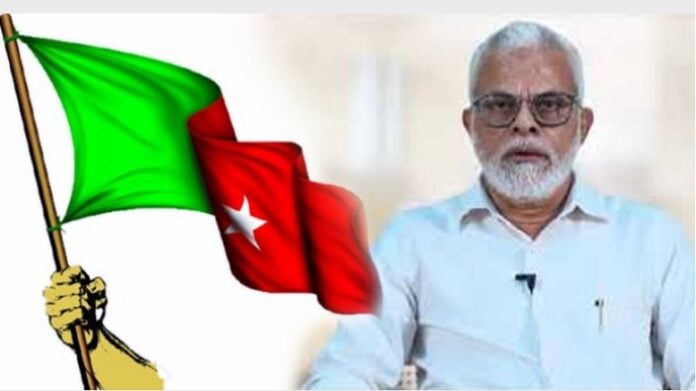
The Delhi High Court rejected the bail plea of E. Abubacker, the leader of the banned organisation Popular Front of India (PFI). The verdict was delivered by a bench comprising Justices Suresh Kumar Kait, Manoj Kumar and Jain.
Erappungal Abubakar, alias E. Abubacker, was the founder and president of the Social Democratic Party of India (SDPI) and chairman of the earlier banned National Development Front (NDF). The court said the evidence collected against him indicated he had committed a “terrorist act” under the Unlawful Activities (Prevention) Act (UAPA).
Abubacker filed a bail application seeking expert treatment, claiming health grounds. Abubacker is in the third stage of cancer; his lawyer, Adv. Deepak Prakash argued. The demand was for interim bail to treat Parkinson’s disease and cancer.
The National Investigation Agency (NIA) arrested the terrorist leader (and a host of others) on 22 September 2022 under the UAPA Act. This was his third bail application, which the court rejected. However, the High Court ordered that the jail director shift Abubacker to Delhi AIIMS hospital immediately if his health deteriorated without official court approval.
The NIA had opposed the bail plea in the court. The NIA argued that there were many cases against Abubacker, and he should not be released.
Delhi’s Patiala House Additional Judge Shailender Malik asked the Tihar Jail authorities to submit a final report on Abubacker’s health condition after receiving his earlier bail application. The court denied bail based on its verification.
The High Court identified the National Executive Council (NEC) members, including Abubacker, as the conduits through which PFI operated based on information gathered throughout the investigation.
The High Court declared that PFI had planned and secretly intended to overthrow Bharat’s democratic and constitutional government by 2047. The PFI planned to install Islamic/Shariah law by building an army of jihadists who would wage an armed campaign to establish a Caliphate in Bharat.
One of the accusations against Abubacker was that he had previously been connected to the outlawed organisation Students Islamic Movement of India (SIMI). He eventually became a crucial component of the PFI. Additionally, he was authorised to sign documents for PFI’s bank accounts.
According to the prosecution, Anshad Badruddin, a terrorist, received money from an account. Abubacker is accused of coordinating and overseeing weapon training camps, giving inflammatory speeches, and encouraging terrorist acts.
The High Court cited a declaration made by a protected witness in the case, according to which Abubacker and other national PFI officials used to inspire jihad among the students enrolled in the PFI classes.
“During imparting physical training, a candidate used to be transformed into a fully motivated jihadi. They were taught about Ghazwa-e-Hind, which means declaring war on Bharat and returning to the Caliphate,” the High Court said, referring to the protected witness’ statement.
Jihadis who participated in the PFI camps used to be informed that Bharat would be prepared to embrace bloody Islamic governance by the time the Fourth Caliphate took power. The statement continued that these commanders, including Abubacker, used to instruct the camp on these concepts.
The witness also disclosed that they were instructed to arm themselves with weapon training, including sharp weapons such as knives, to get ready for Ghazwa-eHind. He also learned about the Kurshit Department of PFI, which served as the organisation’s local counterintelligence section and was responsible for carrying out assassinations of Hindu leaders, according to the report.
The High Court stated that “it cannot be said that the allegations were merely to the extent of ideological propagation of the activities of PFI” in light of the information gathered by the investigative agency and the witness statements recorded during the inquiry. Undoubtedly, it involved much more than that.”
