


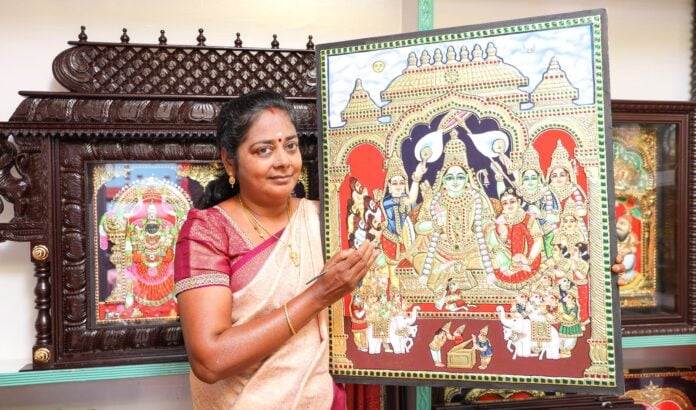
Summary: Thanjavur painting, the gold-foil and gemstone devotional art known as palagai padam, continues to flourish as artists pair centuries-old methods with modern materials. Award-winning painters Vijayalakshmi Prabhakaran and Marimuthu Uthrapathi say it now carries a Geographical Indication (GI) tag, while plywood and factory glue have replaced jackfruit wood and tamarind-seed paste. Cheap imitations using synthetic gold and young people drifting to stable jobs are the main threats; Artisans Cards, Poompuhar showrooms and online sales are bringing in buyers, writes Padma Krishnan in Hinduism Today.
Why it matters: Bharat’s temple and palace arts seldom get a news cycle, yet this one is thriving on its own merits: GI protection, artisan schemes and online sales are helping artists compete with cheap imitations. Plywood has replaced jackfruit wood and sales have moved online, while the gold foil and the master’s hand on the Deity’s face remain. Dharma is a living tradition, its norms changing around an eternal core.
“The Glittering Gold Heritage of Thanjavur’s Famed Art Lives on” — Hinduism Today, 1 Jul 2026
Thanjavur is a city in south india with a rich cultural heritage. This fertile land, fed by the river Kaveri, flourished under the rule of the Tamil Cholas, Nayaks and the Marathas prior to British colonial rule. It has birthed many art and craft forms and boasts four government-recognized handcrafted products: Thanjavur painting, dancing dolls, brass plates and the Saraswati vina. Among these, Thanjavur painting, known locally as palagai padam (wooden plank picture), is the most popular.
We spoke with award-winning painters Vijayalakshmi Prabhakaran and Marimuthu Uthrapathi to learn of the fascinating history of this glittering art form and their journeys as artists…
Read the full article at Hinduism Today →
