


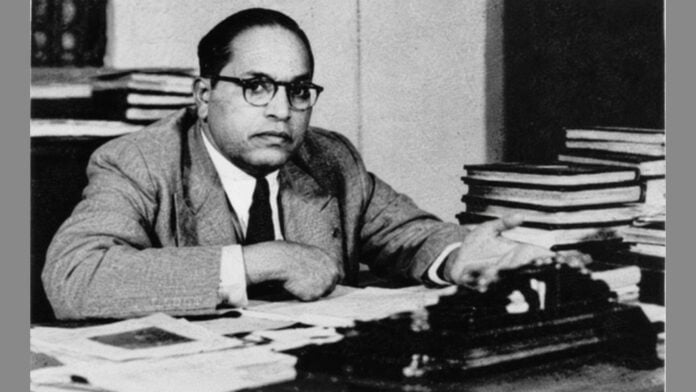
Summary: In 1916, at 25, Ambedkar told a Columbia University seminar that 'caste' rests on endogamy (marrying within the group) and spreads by imitation. He called the idea that Brahmins imposed it "incorrect in thought and malicious in intent", and said scripture came later only to "gild the pill". Twenty years later, in Annihilation of Caste, he made scripture the root cause, called Hindu society "a myth", and urged reformers to "apply the dynamite to the Vedas". The lawyer-writer Pramodh, in Jung Indien, sets the two texts side by side. They disagree on unity, on cause and on how 'caste' spreads, and Ambedkar never reconciled them. The 1936 text even concedes that Muslims, Christians and Sikhs keep 'caste' without any scripture behind it. The turn came after Ambedkar's 1935 Yeola vow not to die a Hindu, when a case against Hindu Dharma served his exit. Pramodh's verdict: "The first sought an explanation, and the second sought a conviction."
Why it matters: Today's neo-Ambedkarite politics quotes only the 1936 prosecutor, to attack the Vedas and Hindu Dharma itself. Yet Ambedkar's own 1916 research says scripture was never the cause, and his 1936 text concedes that casteism survives where no Shastra commands it. Treating him as an infallible oracle serves those who want Hindus to disown their own tradition. Asking him the questions he demanded of Gandhi is the honest way to honour him.
Source: “Ambedkar Vs Ambedkar”, Jung Indien · 22 Nov 2026
In May 1916, a twenty-five-year-old bright Indian student read a paper on caste to Alexander Goldenweiser’s anthropology seminar at Columbia University. Twenty years later he wrote an address for a reform society in Lahore that was never delivered. Both texts are about caste, and both are routinely quoted as though they make one argument. Well, they do not.
Dr BR Ambedkar invited the assumption himself. In 1944, he wrote that he had meant to recast the later essay to absorb the earlier one, and had given up for want of time. The merger never happened, and I suspect it never could have, because something in one text had to give way to the other. This inconsistency also raises a question on the reasons why the scholar changed his diagnosis?…
Read the full article at Jung Indien →
