


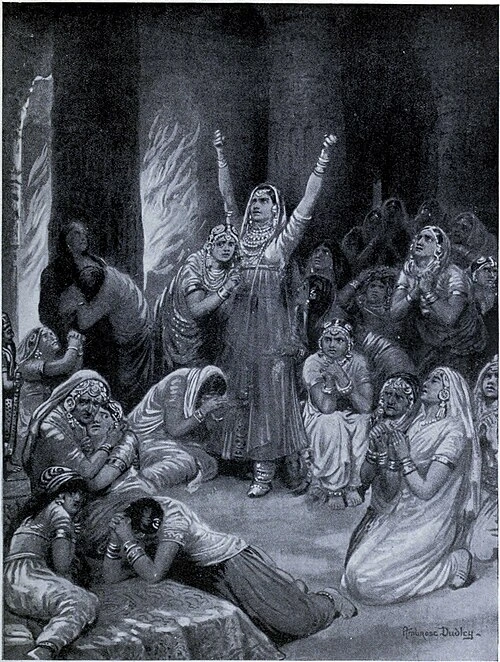
“The aurat bazaar, TheDossier, 9 Sep 2026.
“The evening after Jauhar (mass self-immolations), once the women had died, the Rajputs and the surviving men donned kesariya (saffron-colored robes), smeared turmeric on themselves, and rode out of the fort gates for a suicidal, fierce last stand against the enemy with no intent to return. Because surrender and subsequent slavery were unacceptable, with burning fury, they charged against the invading Islamic armies, knowing defeat was imminent. The Hindus called it the Saka.
Hindus knew that barbarians at the gate were used to raping even the corpses of women. Through the fire of Jauhar, the women denied the invaders the humiliation and conquest they sought. In choosing death over captivity, they claimed a moral victory even in the face of military defeat. Once the men had fallen, the enemy was left with just ashes surrounded by the empty walls of the fort.
The 2018 movie Padmaavat, based on the 14th– century siege of Chittor when the invaders outnumbered the defenders, depicts these scenes rather accurately. However, a public critic of the movie recently argued that the Jauhar scenes treat rape as the end of a woman’s life. Rape survivors watching the movie would be made to feel that she should have died rather than lived. It was implied that one should ‘choose life’ rather than commit suicide because it was cowardly. The scene of a pregnant woman participating in Jauhar was repulsive, as an unborn child should not be denied ‘life’ because of the threat of sexual violence.
This is not the first and definitely not the last time such comments have been made about the film and the brave acts of Jauhar and Saka. Unfortunately, those completely ignorant of history make such arguments, equating the past actions of women with today’s issues…………”
Read the full article at TheDossier.
