


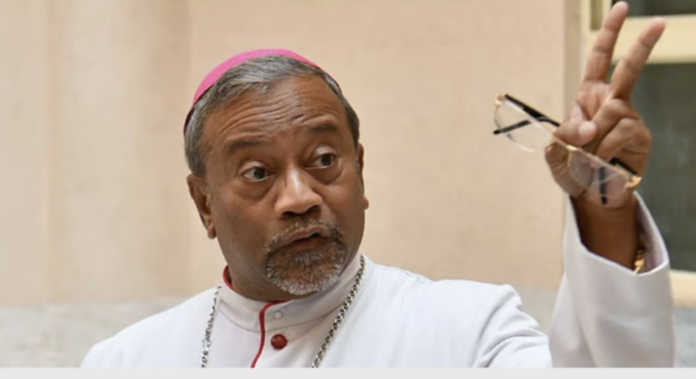
A group of Christian leaders from Karnataka, led by Bengaluru Archbishop Peter Machado, met Congress president Mallikarjun Kharge at his Bengaluru residence on September 14 and pressed for the repeal of the Karnataka Protection of Right to Freedom of Religion Act, commonly referred to as the anti-conversion law. The delegation also sought a separate 1% reservation for Christians, the nomination of a Christian representative to the Karnataka Legislative Council, and greater representation in government boards, corporations, and other statutory bodies.
The demands go beyond the repeal of the legislation. The Christian group argued that sections of the Christian community face socio-economic difficulties and sought greater opportunities in education, employment, and other areas. It also requested increased political and administrative representation. According to reports, the delegation said Kharge gave them a patient hearing and assured them that their concerns would be taken up with the Karnataka government.
Archbishop Machado has previously been a prominent critic of Karnataka’s conversion legislation. In a 2022 discussion involving former Vice-President Hamid Ansari and US lawmakers, Machado argued that the proposed legislation was unnecessary and expressed concern that it could affect religious freedom, marriage, and privacy. The event was described in contemporary reporting as a special congressional briefing on Bharat’s constitutional and religious-freedom issues.
As per OpIndia reports, the present demand therefore represents a continuation of Machado’s publicly documented opposition to the legislation. However, claims that he currently has a pending police case specifically for criticizing the Bharatiya judiciary at that US briefing could not be independently verified from the reliable sources located for this report. There are, however, court proceedings involving Machado on other matters, including a 2022 Supreme Court petition concerning attacks against Christians.
The Karnataka law was enacted under the previous BJP government and prohibits religious conversion obtained through specified means, including misrepresentation, force, undue influence, coercion, allurement, fraudulent means, or certain promises connected with marriage. The legislation has been strongly opposed by Christian organizations, while supporters have argued that statutory safeguards are necessary to prevent coercive or fraudulent conversions.
Advocate Girish Bharadwaj tweeted on X: Hindu religious institutions across Bharat have long contributed to Anna, Akshara, and Ashraya, food, education, and shelter, along with disaster relief, healthcare, hostels, women’s welfare, and other social-service initiatives.
When Christian leaders demand the repeal of Karnataka’s anti-conversion law, the questions are legitimate: What safeguards will remain against conversion through force, fraud, coercion, undue influence, or inducement? Why repeal the law without clearly explaining what will replace these protections?
The latest meeting also brings the issue of religious representation and reservation directly into the political arena. The delegation has sought a separate 1% quota while arguing that Christians currently fall within the broader Category 3B framework and do not receive sufficient access to government employment and other benefits.
The demand to repeal Karnataka’s anti-conversion law raises a larger question about how the state will protect voluntary freedom of religion while preventing conversion through force, fraud, coercion, undue influence, or material inducement. If the law is repealed without an equally effective legal safeguard, the regulatory framework against coercive or fraudulent conversions could be weakened. Claims that particular Christian denominations use the absence of such restrictions to expand their religious base would, however, require specific evidence rather than generalization.
For the Congress leadership, including Mallikarjun Kharge, D.K. Shivakumar, and Priyank Kharge, the issue is therefore not simply about repealing a law. Any change should address the potential consequences for religious freedom, vulnerable communities, and the enforcement of complaints involving coercion or fraudulent conversion. A repeal without a clear alternative safeguard could create legitimate concerns about whether the state has adequate mechanisms to distinguish genuine religious choice from unlawful inducement or coercion.
