


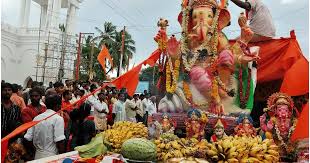
Hindu Dharma does not necessarily promote murti worship, yet Hindus are known for this due to their recognition and use of multitudes of sacred icons. However, Hindus are not actually worshipping the image or the structure. They worship the Murti or the embodiment of the particular Devata’s presence and consciousness.
The murti or divine figure is awakened with Prana Pratishta, mantra, invocations, intention, and rights-of-passage performed by the Pujari, sage, Swami, yogi, or devotee, who calls in and invokes the presence of the divine entity.
Such rituals, which may take weeks, are then continued on a regular basis as to stabilize the Murti. Then the devotion of adherents is known to also play a role in keeping the Murti’s presence alive.
Christians may still see this as ‘idol worship’, because they have constructed an ego-identification with an exclusive and mono-cultural religion, which views ‘idol worship’ as a great evil and sin even though most Christians and churches have their own images and statues.
Actually, if one were to visit a traditional Catholic cathedral and then a Hindu mandir, they would witness what seems to be similar scenery and activities. They would see in the cathedral many statues and paintings of Jesus, the Virgin Mary, and multiple saints. They would see such figures with their own altars and shrines. They would hear bells, smell incense, and see parishioners offering their obeisances, prayers, and lit candles in front of one or more of the aforementioned. These are all similar things they would see upon visiting a Hindu mandir.
So why do so many Christians consider Hindus to be primitive or backward ‘idol worshipers’ when they themselves act in the same manner? Firstly, it is not so much about religion as it is about psychology. Some people simply need to be sanctimonious. Some Christians need a sense of superiority in order to justify their faith. Perhaps they see religion as a competition. Perhaps they want to make sure they stay on top of the religious food chain.
Hindu Dharma is not primarily a belief or faith-based religion while Christianity emphasizes faith over what Hindus might call ‘conscious union’ with inner divinity or with a particular Ishvara (chosen deity).
Many Christians will boast about how much faith they have, but it is likely they also struggle with not possessing as much as they think they need in order to get into Heaven. Believing well is easier than acting well, and even though the Bible says that ‘Faith without works is dead’, Christians still place the importance of faith over the importance of karma.
In order to achieve more faith, many Christians will demonize, ridicule, and vilify people and practices of other religions. They have been trained to see their religion as the only true way to ‘God’ and truth, yet they will and have also attempted to invalidate Christians of different sects than their own. Again, such behavior is not really as much about religion as it is about psychology.
If a statue in the temple breaks, do Hindus think ‘god’ is dead? Of course not, but some will still see Hindus as being superstitious idol worshipers. It is of some importance to note that Christian worship and Hindu worship are not exactly alike.
One Sanskrit word for ‘worship’ is ‘upasana’, which simply means sitting or being near or in the presence of the divine. Some Westerners will see a video of a Hindu giving a cow Tilak and an apple. They will say ‘Oh look, this silly person is worshiping a cow.’ They do not understand the difference between an act of worship and veneration, or an act of respect and gratitude.
Multiple Bible verses condemn idol worship. However, many do not just refer to statues as idols but also to money, status, desire, or most anything or attachment other than union with ‘God’. Some Christians do relish in cherry-picking their favorite Bible verses and use them to ridicule other religions.
Think about this. The Puranas, Mahabharata, Ramayana, and Tantric literature contain lengthy and detailed descriptions of what various Devatas look like while the only thing the Bible says about the appearance of Jesus was that he was not a very handsome man.
The appearances of the Hindu Devis & Devatas stems from the visions of Rishis, yogis, and seers who witnessed them in states of Samadhi or Super-Consciousness. Such higher mental and metaphysical states produced experiences held by many sages over a span of thousands of years, which were and still are too similar to be ignored. Modern psychology also still recognizes these states of higher consciousness.
So now the question I have is, if the Bible had as many physical descriptions of Jesus as Hindu Shastra has of Hindu avatars, would they not have become ‘idol worshipers’ themselves? Would Christians not have also used figures and imagery in their religious or spiritual practices?
Let’s look into the reasoning and ideology behind idols and Murti worship.
Prior to the icon taking on the Murti or energy of the Devata, they are known as pratima (likeness), bera or bimba (image/idol), or simply vigraha (form). Many temple statues are very beautiful works of art that are produced along with the meditative states and the chanting of mantras. The artisans likely come from many generations of artisans who created the icons as per ancient Hindu tradition.
The images and statues are highly symbolic. Some like to ask why Hindu deities are depicted with many arms or even many heads. The Hindu ‘gods & goddesses’ are not only physical or material beings. They are multidimensional and live on various planes of existence or lokas. They are omnipotent and omnipresent. They are able to control multiple aspects of existence at once. The multiple arms and heads some Devatas have represent this.
Other aspects of the icon also contain symbolism including: The podium they sit or stand on, their gaze, their headdress, their mudra or hand gesture, gestures of their arms, their hair style, their dance, the animals present with them, their dress, their jewelry, and whatever they may be holding in their hands.
The Devatas also represent various qualities and aspects of ourselves. Performing a puja to a certain deity or simply offering obeisances to them can either fortify or decrease such qualities and aspects of the devotee. The icons and Hindu imagery are also esoterically functional. They offer the devotee a beautiful depiction to think on and to use in a devotional manner. The imagery is also used and holds deep meaning in the practice of meditation.
If we look on the surface, it seems as though Hindus are ‘idol worshippers.’ If we look deeper we can see that there is logic, science, and philosophy behind Hindu worship.
At the end of the day, if a person can show pure, strong, unconditional, and egoless devotion to a pebble, that is an authentic act. More so than that of a person worshipping haphazardly or with selfish intentions. If we can feel such devotion towards a pebble, how much more can we feel towards the Devas?
Sean Bradrick, author of A Hindu’s Guide to Advocacy and Activism: Fighting the Narrative War and the upcoming Awakening the Hindu Mind: A Comprehensive Guide for the Hindu-curious is an American Hindu and Yogi living in Omaha Nebraska
