


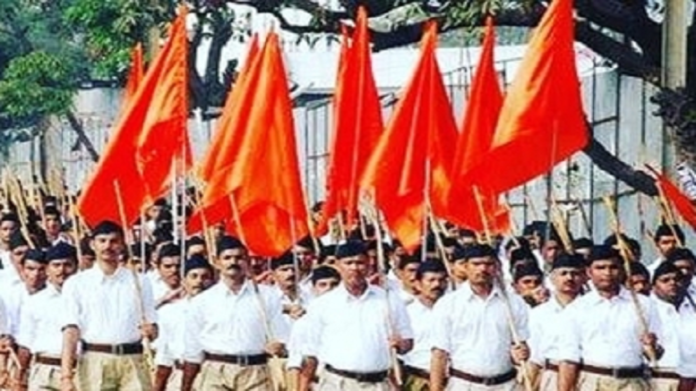
A fresh political controversy has erupted after Karnataka Congress President B.K. Hariprasad openly endorsed state minister Priyank Kharge’s demand that the Rashtriya Swayamsevak Sangh (RSS) keep its registration documents ready. Defending Kharge’s remarks, Hariprasad argued that any organization claiming to be patriotic and cultural must be registered and suggested that action could be taken if the RSS fails to comply.
As per Udayavani reports, the comments have once again brought into focus the Congress party’s long-standing hostility towards the RSS, an organization that has spent nearly a century engaged in social service, character-building, disaster relief, and nation-building activities across Bharat. Founded in 1925 by Keshav Baliram Hedgewar, the RSS has grown into one of the world’s largest voluntary organizations, with lakhs of swayamsevaks participating in daily shakhas and community activities across the country.
Over the decades, RSS volunteers have played significant roles during national emergencies and natural disasters. From relief efforts during floods, earthquakes, cyclones, and pandemics to social outreach in remote tribal regions, the organization has established an extensive network of service projects under the banner of ‘Seva Dharma.’ Through thousands of schools, healthcare initiatives, rural development programs, environmental campaigns, and social welfare projects, RSS-inspired organizations have reached communities often neglected by governments and political parties.
Instead of acknowledging these contributions, the party has repeatedly sought to portray the RSS through a political lens. The latest demand regarding registration is another attempt to question the legitimacy of an organization that has maintained its structure as a voluntary body of individuals. RSS leaders have consistently maintained that the organization’s legal status has been recognized by various authorities, including tax authorities and courts, and that it operates within the law.
The Congress party’s criticism of the RSS is not new. Since independence, several Congress leaders have accused the organization of promoting a particular ideological vision of Bharat. However, supporters of the RSS argue that these attacks stem less from legal concerns and more from ideological discomfort with the Sangh’s growing influence in social, cultural, and national life. They contend that the RSS has become a powerful force in shaping civic consciousness and promoting cultural nationalism, making it a frequent target of political opponents.
‘RSS should keep its registration documents ready,’ declared Karnataka Home Minister Priyank Kharge after the BJP questioned his appointment, reigniting concerns about the Congress government’s attitude towards organizations rooted in Hindu society. Hariprasad’s endorsement of Priyank Kharge’s remarks comes amid broader political tensions between the Congress and the BJP. For millions of swayamsevaks and supporters across the country, the RSS represents far more than a political talking point. It is an institution that has dedicated itself to national service, social harmony, and cultural preservation for nearly a hundred years. Attempts to undermine or question its legacy, they argue, amount to an attack on an organization whose contributions have become deeply woven into the fabric of modern Bharat.
Such statements raise serious questions about the government’s priorities, whether it is focused on governance and public welfare or on targeting ideological opponents. What is Congress doing by associating with the SDPI? The SDPI has often faced allegations of involvement in radical activities, and its links to extremist elements have been a matter of public debate. During the BJP government’s tenure, restrictions were imposed on organizations associated with such activities, but these were later revoked under the Congress government. Why is Congress extending support or legitimacy to groups that are working against national interests? At the same time, organizations like the RSS, which its supporters credit with contributing to nation-building and social service, continue to face criticism and targeting. What kind of secularism is this? It appears to be a form of selective or pseudo-secularism practiced by the self-proclaimed secular Congress Party.
