


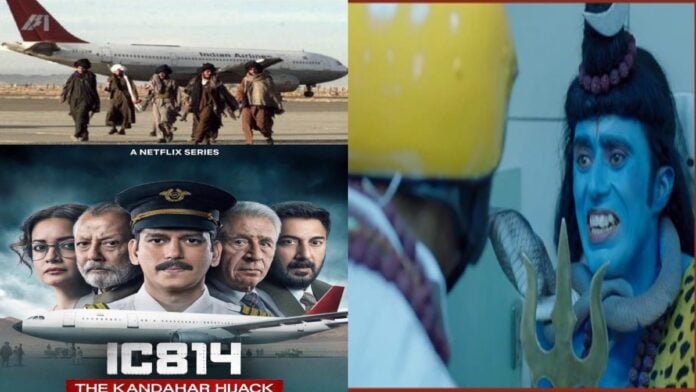
In Bharat, a concerning trend has emerged with the rise of land jihad and love jihad, where individuals exploit religious sentiments to further their agendas. Based on the reports from Zee News, recently, a new form of jihad, termed script jihad, has surfaced, where narratives and representations in media and literature are manipulated to distort Hindu cultural identities.
Bollywood, the heart of Bharatiya cinema, has often presented itself as a mirror to society, reflecting its diverse cultural and religious narratives. However, the portrayal of Hindu characters and themes has often sparked controversy, with allegations of misrepresentation, distortion, and, at times, overt disrespect. This report analyzes specific instances where Bollywood films are argued to have marginalized or mischaracterized Hindu identity, while sometimes elevating narratives that can be perceived as either secularly biased or favoring Islamic perspectives.
In recent years, discussions have intensified around the representation of religious figures and communities in Bharatiya cinema, with some alleging an unfair portrayal of Hindu Dharma while being cautious or selective in depictions involving Islam. Movies like ‘Chak De India‘, inspired by the real-life story of former Bharatiya hockey coach Mir Ranjan Negi, have drawn both praise and questions regarding the choice of characters’ religious identities. Kabir Khan, played by Shah Rukh Khan, is Islamist despite the original story revolving around Negi, a Hindu. While ‘Chak De! India‘ is widely celebrated for promoting national unity, but some critics argue that a selective choice was made, potentially downplaying Hindu representation.
Bollywood actor Annu Kapoor exposes the industry’s alleged Anti-Hindu agenda
Based on the Zee News reports, Annu Kapoor stated, “Chak De! India is a popular film based on Ranjan Negi, a renowned Bharatiya coach. However, in the film, they chose to highlight a Muslim character, sidelining the original Hindu figure. This isn’t a new trend; even today, they continue to emphasize certain narratives that overshadow Hindu figures and disrespect Hindu Pandits and customs. This is exactly what they are doing,” he remarked.
Dhirendra Krishna Shastri recently commented on another example of this trend. Referring to films like Hawas Ka Pujari that depict Hindu Pandits in negative or humorous lights, he questioned why such titles rarely use terms associated with Islamic figures, such as Maulvi or Maulana. Dhirendra Krishna Shastri questioned why the term Hawas ka Maulavi (maulvi of lust) isn’t used, suggesting that there seems to be a double standard in the way religious figures are discussed in society. He highlighted that Bollywood and its writers often take advantage of Hindu Dharma, portraying it in a negative light while being cautious around other religions. According to him, this reflects a fear of backlash from those religions, leading to skewed representation that undermines Hindu beliefs and values.
Rajkumar Hirani’s PK
Additionally, films like PK have also sparked debate over the depiction of Hindu deities and customs. PK, directed by Rajkumar Hirani, satirises organised religion but prominently critiques Hindu practices, showing scenes where Hindu Bhagwan is depicted in humorous or questionable lights, while other religions are left relatively untouched. While the film calls for introspection within Hindu society, people argue that the selective portrayal might contribute to a biased narrative, especially as other religions like Islamism and Christianity are addressed with caution.
In PK, the character played by Aamir Khan, who is an alien, questions and critiques various religions and their practices, including Hindu Dharma, Islam, Christianity, and Sikhism. However, the film predominantly targets Hindu Dharma, making numerous derogatory remarks about Hindu deities, particularly Bhagwan Shiva, as well as mocking aspects of Hindu culture, including the roles of swamis and pandits, as well as various rituals and pooja practices. This portrayal has led to significant criticism for its perceived insensitivity and for undermining Hindu beliefs while seemingly adopting a more lenient approach towards other religions.
Bollywood’s controversial representation: the use of Hindu names in IC 814
The portrayal of hijackers in IC 814 has sparked significant debate regarding the intentional use of Hindu names, particularly the names Bhola and Shankar for characters based on real-life terrorists. Critics argue that this decision reflects a broader agenda within Bollywood to divert attention from Islamic identities and portray Hindus in a negative light. While the series uses the actual code names employed by the hijackers during the incident, many believe that the choice of these specific names was not coincidental. This incident raises concerns about how Bollywood handles sensitive historical events, suggesting a pattern of reinforcing stereotypes and perpetuating biases against Hindu identity while sidestepping the true identities of the Islamist perpetrators. Such narratives contribute to a troubling trend in the industry, where religious identities are manipulated to serve a particular agenda, fostering division and resentment within society.

Controversial religious portrayals in Annapoorni
Annapoorni, starring Nayanthara, has sparked significant controversy due to its portrayal of Hindu Dharma and its deities. The film includes a scene where a Hindu girl in love with an Islamic character references the Valmiki Ramayana to argue that Bhagwan Rama was non-vegetarian, suggesting that during their vanavas (exile), Rama, Lakshmana, and Sita hunted and consumed meat. This interpretation has been criticized for potentially distorting sacred texts to challenge traditional Hindu dietary practices. Additionally, the film includes derogatory remarks about Bhagwan Murugan, raising further concerns about insensitivity towards Hindu beliefs. The conclusion of the movie, which depicts the Hindu heroine gaining luck after performing namaz, has led to accusations of promoting Islamism over Hindu Dharma, where originally she was following Hindu Dharma. Why did she not perform pooja or prarthana but instead chose to perform namaz, despite being a Hindu girl? This raises serious questions about the film industry and its representation of Hindu practices.
Historical inaccuracies and religious bias in Hindi cinema
Annu Kapoor highlighted a notable scene from the film Bemisal, starring Amitabh Bachchan, which takes place in Kashmir. In this scene, the film inaccurately depicts the Mughals as the discoverers of Kashmir and praises them, while omitting the historical fact that Adi Shankaracharya visited Kashmir long before. Additionally, it neglects to mention significant sites like Sharada Peeth, a renowned ancient center of learning. Recent observations indicate a troubling trend in Hindi cinema, where approximately 60% of films portray corrupt politicians as Brahmins, while around 80% depict virtuous characters as Muslims. This pattern raises concerns about the representation of Hindu religious identities and the potential biases in the narratives presented by the film industry.
These examples highlight a recurring pattern of either marginalizing or modifying Hindu identities and themes within Bollywood cinema. While Bollywood’s intent may vary from promoting secularism to creating dramatic effect, many argue that these portrayals are increasingly problematic, as they tend to overlook Hindu perspectives or use Hindu symbols controversially.
Zee News attempted to address the bias in Bollywood while Annu Kapoor has been vocal in exposing the situation to raise awareness among the people of Bharat. His efforts to shine a light on these issues are commendable, as they encourage a much-needed dialogue about the portrayal of Hindu Dharma in Bharatiya cinema. The citizens of Bharat need to recognize and stand against the growing anti-Hindu sentiment that has emerged in the film industry over the past few decades. By fostering awareness and encouraging critical discussions, the public can help promote a more balanced representation of all religions in cinema.
Earlier in 2022, the Hindu Post reported that the #Boycott Bollywood trend marked a significant victory for Hindus in response to the attack on Hindu Dharma in Bollywood. Following films like Shamshera, Laal Singh Chaddha, Rakshabandhan, Dobara, and Liger. However, this trend remains a growing concern, reflecting a larger scale of discontent with Bollywood’s portrayal of Hindu Dharma.
