


Since ancient times, pilgrimage has occupied a central place in the life of Bharat. Travelling to places associated with great saints, historic temples, rivers, mountains, and tirthas has long been regarded as a means of self-discovery and inner growth. In the Indian worldview, the landscape itself is intertwined with history, faith, and collective memory. Visits to Kashi, Rameswaram, Kedarnath, Puri, and countless other centres of worship are therefore more than acts of devotion; they provide an opportunity to engage with traditions that have shaped Indian civilisation for centuries. These places continue to serve as repositories of culture, learning, and community life, sustained through generations of worship and practice.
My wife Sreelakshmi and I have long cherished the aspiration of travelling across Bharat, exploring its rich cultural and religious heritage. We derive great satisfaction from visiting ancient temples, spending time in ashrams, and meeting teachers whose lives exemplify dedication, simplicity, and wisdom. Each such visit broadens our understanding of the country’s diverse traditions and offers occasions for reflection and learning. More than sightseeing, these journeys help us appreciate the remarkable continuity of values and practices that continue to bind this vast and varied land together.
In the gentle warmth of August 2024, we set out on a soul-enriching journey through the heartland of Andhra Pradesh. Our itinerary, though spontaneous in parts, was deeply anchored in devotion and serenity.
The Banks of Divine Flow
Our first major halt was Rajahmundry, now officially known as Rajamahendravaram, nestled on the banks of the sacred Godavari River. The mighty river greeted us with its majestic presence. As our car crossed the expansive bridge over the Godavari, we stopped to offer silent prayers. Stepping down to the banks, we cupped its cool waters in our palms and gently sprinkled them on our heads, reciting the sacred verse:
“Gange cha Yamune chaiva Godavari Saraswati…” The experience was not merely symbolic—it touched our hearts and awakened a deep sense of gratitude for Bharat’s spiritual lineage.
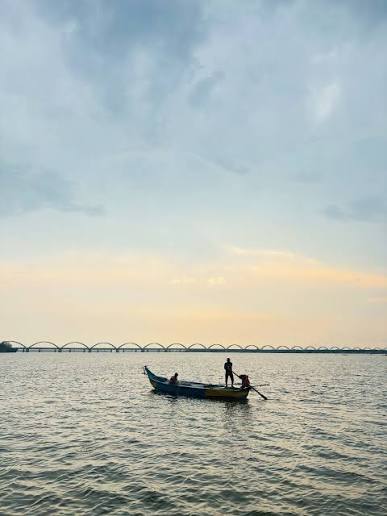
We visited the Kotilingeshwara Temple and ISKCON Rajahmundry, both situated near the riverbanks. The temple’s sprawling complex and towering Shiva Linga made a strong impression on us while the rhythmic chanting and the aroma of incense in the ISKCON temple elevated our minds to a state of calm joy.
Satyanarayana’s Abode
After spending a memorable morning in Rajahmundry, we resumed our journey towards Annavaram, one of Andhra Pradesh’s most revered pilgrimage centres. The drive itself was delightful. The highway passed through stretches of lush paddy fields, coconut groves, and picturesque villages that reflected the prosperity of the Godavari region. The changing landscape, punctuated by distant hills and occasional water bodies, made the journey both relaxing and enjoyable.
By noon, we stopped at a vegetarian restaurant along the way and enjoyed a traditional Andhra meal served on a banana leaf. The steaming rice, dal, vegetable curries, and hot Andhra pickles provided a welcome break after the morning’s travel. Refreshed after having a glass of butter milk, we continued our journey and soon caught sight of Ratnagiri Hill, home to the famous Sri Veera Venkata Satyanarayana Swamy Temple.
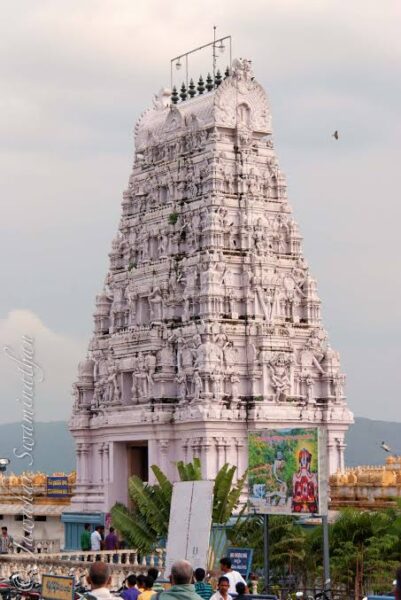
As our vehicle climbed the winding road to Ratnagiri Hill, we could see patches of emerald-green paddy fields stretching towards the horizon. The Pampa River glimmered in the distance, while clusters of tiled-roof houses nestled among coconut groves below. Before entering the temple, we stopped at one of the flower stalls near the entrance. The small shops were bursting with strings of jasmine, bright orange marigolds, coconuts, and puja offerings. The fragrance of fresh flowers mingled with the aroma of camphor and incense drifting from the temple precincts. After purchasing our offerings, we joined the steady stream of pilgrims heading towards the shrine.
The temple, overlooking the sacred Pampa River, is one of the most important centres of Satyanarayana worship in India. Temple tradition traces its origin to the nineteenth century when the deity was revealed through a series of divine visions. The presiding deity is unique in representing the harmony of the Trimurtis—Brahma, Vishnu, and Shiva. The sanctum is also distinctive, with the main deity enshrined above and the sacred Yantra installed below.
Though not ancient in the manner of many South Indian temples, the shrine possesses an impressive character. Its gopuram, spacious mandapams, and well-maintained complex are designed to accommodate the large number of devotees who visit throughout the year. From the temple courtyard, we could watch buses negotiating the winding ghat road below while the Pampa River traced a silver ribbon through the countryside. The view offered a striking contrast between the bustle of pilgrims and the quiet rural landscape beyond.
The darshan of Lord Satyanarayana was a fulfilling experience. Along with the principal deity, devotees also worship Sri Anantha Lakshmi Ammavaru within the temple complex. Annavaram is especially known for the performance of the Sri Satyanarayana Vratham, and we witnessed several families participating in the ritual during our visit. Seated together in designated halls, they followed the priest’s instructions, while elders recited prayers from booklets and younger members listened attentively.
Major festivals such as the annual Kalyanotsavam and Vaikuntha Ekadashi attract large numbers of pilgrims. Even on a regular day, the temple precincts were vibrant with activity. The queue moved steadily through the complex, volunteers guided pilgrims efficiently, and temple bells sounded intermittently above the hum of conversations and devotional chanting.
Before leaving, we spent a few minutes on the hilltop watching pilgrims arrive in a continuous stream while the afternoon sun cast a golden hue over the surrounding fields. The combination of a unique temple tradition, the hilltop setting, and the unbroken flow of devotees made Annavaram The hilltop setting and the distinctive Satyanarayana tradition gave Annavaram a character all its own.
The Abode of Lord Dattatreya
From Annavaram, the next day, we continued our pilgrimage towards Pithapuram, a town revered by devotees of Lord Dattatreya throughout India. The road passed through fertile stretches of East Godavari district, dotted with coconut groves, paddy fields, and bustling market towns. By the time we reached Pithapuram, the afternoon sun had softened, casting a warm glow over the ancient temple town.
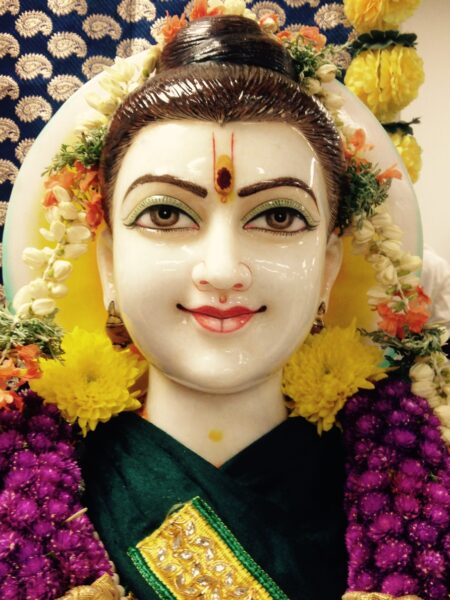
Our destination was the historic Sri Kukkuteswara Swamy Temple, one of Andhra Pradesh’s most sacred shrines. The temple is remarkable because it brings together several streams of Hindu spirituality in a single sacred complex. It is a celebrated Shaiva kshetra, an important Shakti Peetha, a revered Datta Kshetra, and the famed Pada Gaya Kshetram, where devotees perform rites for their ancestors. According to tradition, the feet (pada) of the demon Gayasura fell here, while other parts of his body fell at Gaya in Bihar and Jajpur in Odisha, making these three places collectively sacred for ancestral rites.
Entering the temple precincts, we first noticed the large Padagaya Sarovaram, the sacred tank associated with the legend of Gayasura. Pilgrims were performing tarpanam and other ancestral rituals on its banks. The atmosphere was reflective, reminding us that pilgrimage in India often embraces both devotion to the Divine and remembrance of one’s forefathers.
The presiding deity of the temple is Lord Kukkuteswara, a self-manifested (swayambhu) Shiva Linga. Temple lore associates the deity with a cock (kukkuta), from which the temple derives its name. An enormous monolithic Nandi sits facing the sanctum, regarded as one of the largest stone Nandis in Andhra Pradesh. Within the sprawling complex are shrines dedicated to Sri Rajarajeswari Devi, Sri Puruhutika Devi, Kala Bhairava, Subrahmanya Swamy, Ganapati, and several other deities.
For many pilgrims, however, Pithapuram’s greatest distinction lies in its connection with Sripada Srivallabha, widely revered as the first complete incarnation of Lord Dattatreya in the Kali Yuga. Tradition records that he was born here in the fourteenth century and spent his early years in the town before commencing his spiritual mission. Even today, devotees from across India visit Pithapuram to seek his blessings and pay homage at the Datta Peetham and associated shrines.
Another sacred dimension of Pithapuram is its association with Sri Puruhutika Devi, one of the eighteen revered Shakti Peethas. According to the ancient legend of Daksha Yajna, a part of Sati Devi’s body fell here when Lord Shiva wandered the universe carrying her mortal remains. As a result, Pithapuram became a major centre of Shakti worship and has attracted pilgrims for centuries.
After offering our prayers at the various shrines, we spent some time near the Datta Peetham. Unlike many larger pilgrimage centres marked by crowds and constant activity, Pithapuram seemed to possess a quieter rhythm. Devotees sat silently reading the Guru Charitra, some chanting the name of Dattatreya, while others simply sat in contemplation. We too found ourselves slowing down, absorbing the atmosphere of the place.
Sreelakshmi sat quietly for several minutes before the shrine of Sripada Srivallabha. Nearby, an elderly devotee softly recited Datta stotras. The sounds of temple bells from the main sanctum occasionally drifted across the courtyard. There was nothing dramatic about the moment, yet it carried a depth that lingered long after we left.
The temple’s ancient stone corridors, sacred tank, numerous shrines, and centuries-old traditions make Pithapuram far more than a single temple visit. It is a confluence of Shaiva, Shakta, and Datta traditions, woven together through mythology, history, and living faith. What had initially appeared to be a brief halt on our itinerary gradually revealed itself as one of the most meaningful stops of our pilgrimage through Andhra Pradesh.
The Fierce and Compassionate Lord
From Pithapuram, our pilgrimage journey took us southwards towards Visakhapatnam and the celebrated hill shrine of Simhachalam, one of the most revered Narasimha Kshetras in India. Long before the temple came into view, the forest-clad Simhachalam Hill dominated the landscape. As our vehicle wound its way up the ghat road, the bustle of Visakhapatnam gradually faded behind us, replaced by thick greenery and occasional glimpses of the city and coastline in the distance.
The hill derives its name from the Sanskrit words Simha (lion) and Achala (hill), literally meaning the “Lion Hill.” Nestled amidst these wooded slopes stands the magnificent Sri Varaha Lakshmi Narasimha Swamy Temple, a shrine that has attracted devotees, kings, saints, and scholars for nearly a thousand years. Historical inscriptions found within the temple complex trace its antiquity to at least the eleventh century, while the present structure owes much to the patronage of the Eastern Ganga rulers, the Cholas, the Gajapatis, and later the Vijayanagara emperors, including the great Krishnadevaraya. More than five hundred inscriptions preserved within the complex make Simhachalam a valuable repository of South Indian history.
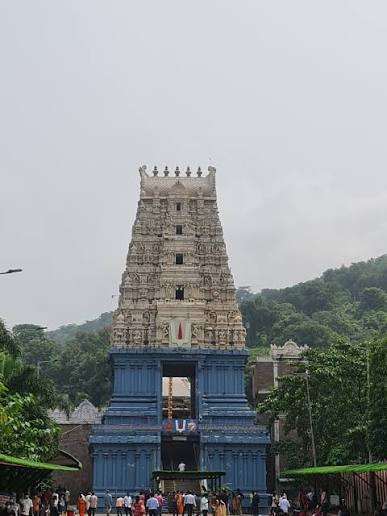
The temple’s mythology is closely intertwined with the story of Prahlada and Narasimha. According to tradition, after slaying the tyrant Hiranyakashipu to protect his young devotee Prahlada, Lord Vishnu manifested here in a unique form combining two of His avatars—Varaha, the divine boar who rescued Mother Earth, and Narasimha, the man-lion incarnation who upheld dharma. This rare composite form, known as Varaha Lakshmi Narasimha, is the presiding deity of Simhachalam. Temple lore further states that Prahlada himself worshipped the Lord on this hill, making it one of the most sacred centres associated with Narasimha worship.
One of the most fascinating traditions of Simhachalam concerns the main deity. Throughout the year, the image remains completely covered with layers of sandalwood paste, giving it the appearance of a smooth Shiva Linga. Only once annually, on Akshaya Tritiya, during the famous Chandanotsavam, is the sandalwood covering removed and devotees are granted the rare Nijaroopa Darshanam of the Lord’s original form. Millions regard this as one of the most sacred darshans in South India. Local tradition explains that the sandalwood paste both cools and conceals the Lord’s powerful form, while another legend associates the practice with the rediscovery of the deity by King Pururava.
Before entering the temple, we paused for a few moments to admire the imposing structure. Simhachalam is a masterpiece of medieval temple architecture, blending the Kalinga style of Odisha with Chalukyan and Dravidian influences. The intricately carved stone walls, sculptured pillars, ornamental mandapams, and beautifully proportioned gopurams bear testimony to the artistic genius of generations of craftsmen. Particularly striking were the exquisitely carved pillars depicting scenes from the Puranas, celestial beings, and various manifestations of Lord Vishnu. The famous Kalyana Mandapam and the stone chariot within the complex drew our attention for several minutes before we proceeded for darshan.
Apart from the main deity, the temple complex houses shrines dedicated to Lakshmi Devi, Andal, Alwars, and several Vaishnava saints. The influence of Sri Ramanujacharya is also remembered here through local tradition. As we moved through the corridors, priests, pilgrims, and volunteers went about their duties with quiet efficiency. Temple bells rang intermittently, and devotional chants echoed through the stone halls.
The queue advanced steadily towards the sanctum. Though the deity remained covered in sandalwood paste, the darshan was profoundly moving. There was something unique about standing before a form that remains hidden for most of the year, known more through faith than through sight. The Lord of Simhachalam embodies both protection and power—the fierce Narasimha who destroys evil and the compassionate guardian who responds to the prayers of devotees.
After darshan, we spent some time walking around the temple precincts and enjoying the cool breeze that swept across the hilltop. Looking out from the temple grounds, we could see stretches of forest descending towards the plains, while Visakhapatnam shimmered in the distance. The contrast between the ancient stone temple and the modern city below was striking.
As we began our descent from Simhachalam, the image that remained with us was not merely that of a magnificent temple or an ancient legend. Simhachalam combined legend, history, and temple tradition in a manner that distinguished it from every other shrine we visited during the journey. It was not just another stop on our itinerary; it was one of those rare places where every stone seemed to carry a story, and every story pointed towards the enduring presence of the Divine.
The Sacred Abode of the Kurma Avatar
From Simhachalam, we continued northwards towards Srikakulam district to visit one of the most unusual and historically significant temples in India—the ancient Sri Kurmanatha Swamy Temple at Sri Kurmam. Unlike most Vaishnava shrines dedicated to Rama, Krishna, Venkateswara, or Narasimha, this temple is dedicated to Lord Vishnu’s Kurma (Tortoise) Avatar, making it one of the very few such temples in the world.
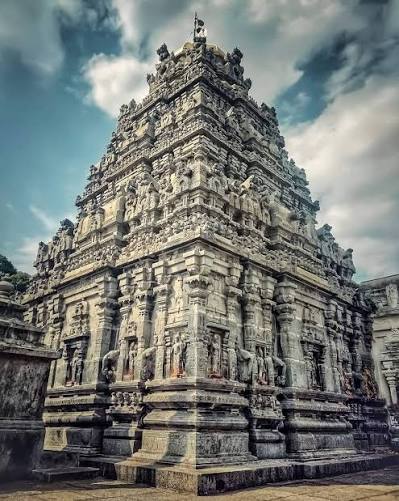
The temple’s origins are shrouded in mystery. Historians believe that the present structure dates largely to the eleventh and twelfth centuries, though the site’s sacred associations are considerably older. The temple received patronage from the Eastern Ganga rulers of Kalinga, whose influence is evident in its architecture and inscriptions. Over the centuries, it evolved into one of the most important Vaishnava centres in the region, and tradition holds that Sri Ramanujacharya visited the shrine and helped establish its Vaishnava rituals.
The temple derives its sanctity from the Kurma Avatar, the second incarnation of Lord Vishnu. According to the Puranas, when the Devas and Asuras churned the Ocean of Milk (Samudra Manthana) in search of Amrita, the mountain Mandara began sinking into the ocean. Lord Vishnu then assumed the form of a gigantic tortoise and supported the mountain upon His back, enabling the cosmic churning to continue. The deity worshipped here commemorates that divine act of sustaining the universe. Unlike conventional images of Vishnu, the principal deity at Sri Kurmam is worshipped in a form resembling a tortoise, making the shrine unique among India’s temples.
As we entered the complex, the temple’s distinctive architectural character immediately caught our attention. Built primarily in the Kalinga style, the shrine features beautifully sculpted pillars, stone carvings, and ancient mandapams that reflect the artistic traditions of medieval Odisha and Andhra Pradesh. The sanctum itself is designed in a manner that evokes the form of a tortoise, reinforcing the temple’s unique theological significance.
Within the complex are shrines dedicated to Sri Kurmanayaki Thayar, Lord Lakshmi Narayana, Andal, the Alwars, and several other Vaishnava deities. The temple also possesses a sacred tank and numerous inscriptions that provide glimpses into its long history. One of the interesting local traditions associated with Sri Kurmam is its connection with ancestral rites. Many devotees visit the temple to perform rituals for departed ancestors, believing the kshetra to be especially sanctifying for such observances.
Unlike many famous pilgrimage centres that are crowded throughout the year, Sri Kurmam retains an air of serenity. The absence of commercial bustle allowed us to absorb the surroundings at a leisurely pace. We spent time admiring the ancient stone corridors, weathered sculptures, and the quiet dignity of a temple that has witnessed centuries of worship.
After darshan, we sat for some time beneath the shade of the old peepal trees within the temple precincts. A gentle breeze rustled through the leaves while the occasional sound of temple bells drifted across the courtyard. A few devotees sat silently reading scriptures, while others circumambulated the shrine in unhurried devotion.
There was a stillness here that felt different from the vibrant energy of larger pilgrimage centres. Perhaps it was the secluded setting, the unique symbolism of the Kurma Avatar, or simply the accumulated devotion of countless generations. Whatever its source, the atmosphere encouraged quiet reflection rather than outward expression.
As we prepared to leave, Sri Kurmam remained in our minds not merely as a rare temple dedicated to an uncommon incarnation of Vishnu, but as a living reminder of the sustaining principle embodied by the Kurma Avatar—the silent strength that upholds the world while remaining largely unseen. Among the many temples we visited during our pilgrimage, Sri Kurmam stood apart for its unique deity, ancient tradition, and association with the Kurma Avatar.
The Radiant Temple of the Sun God
Our journey through northern Andhra Pradesh next brought us to Arasavalli, a small town near Srikakulam that is home to one of India’s oldest and most significant Sun temples. Though less famous than the Sun Temple of Konark, the Sri Suryanarayana Swamy Temple of Arasavalli has remained an important centre of Sun worship in South India for well over a millennium.
The road from Sri Kurmam to Arasavalli passed through fertile countryside dotted with paddy fields, coconut groves, and busy roadside markets. As we neared the temple town, flower vendors, fruit sellers, and shops offering coconuts and puja materials lined the approach road. The temple’s gopuram soon rose above the surrounding buildings, marking our arrival at a shrine whose antiquity stretches back nearly fourteen centuries.
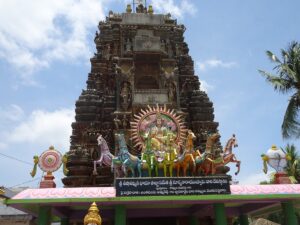
According to local tradition, the temple was built in the seventh century CE by the Kalinga ruler Devendra Varma. Legend narrates that Indra, the king of the Devas, was relieved of a curse after worshipping Surya at this spot. During his penance, the image of the Sun God is said to have emerged from the earth, leading to the establishment of the shrine. Over the centuries, successive dynasties patronized the temple, helping it evolve into one of the foremost centres of Surya worship in the region.
The temple’s mythology reflects the ancient Hindu understanding of Surya as the source of light, energy, health, and sustenance. Even today, devotees visit Arasavalli seeking relief from ailments, particularly those relating to eyesight and skin disorders. Special pujas and offerings dedicated to Surya are conducted throughout the year, drawing pilgrims from Andhra Pradesh, Odisha, Telangana, and beyond.
Architecturally, the temple displays strong Kalinga influences. One of its most remarkable features is its precise astronomical alignment. During specific periods of the year, particularly around the equinoxes, the rays of the rising sun pass through the temple entrance and travel directly into the sanctum, illuminating the feet of the presiding deity. This feature reflects the sophisticated knowledge of astronomy and temple architecture possessed by the builders hundreds of years ago.
As we entered the temple, the morning worship was underway. Bells rang intermittently, priests recited Vedic hymns, and devotees moved purposefully through the corridors. We joined the queue, passing through stone halls adorned with traditional carvings and architectural details that hinted at the temple’s long history.
The presiding deity, Sri Suryanarayana Swamy, is carved from a single block of black granite and depicts the Sun God standing upon a chariot drawn by seven horses, symbolizing the seven days of the week and the seven colours of sunlight. On either side stand his consorts, Usha and Chhaya, while attendant figures complete the iconographic ensemble. Decorated with flowers and ornaments, the image possesses a striking dignity that immediately draws the eye.
Apart from the main shrine, the temple complex contains sanctums dedicated to Lord Shiva, Lord Ganesha, Sri Lakshmi, and other deities. Priests were conducting Archana and other rituals, while families waited patiently for special pujas connected with health, well-being, and personal vows.
When our turn arrived, we paused before the deity and took in the remarkable iconography of Surya standing on his chariot, flanked by his consorts and attendants. The image, illuminated by lamps and adorned with fresh flowers, reflected the artistic vision of an age when religion, astronomy, and sculpture were closely intertwined.
After offering our prayers, we spent some time exploring the temple complex. Elderly devotees sat in shaded corners reciting hymns, while families waited for special pujas to begin. Children accompanied their parents’ carrying baskets of flowers and coconuts, while groups of pilgrims from neighbouring states listened attentively to explanations of the temple’s history.
We also took time to observe the details of the temple architecture—the sculpted pillars, weathered stonework, and the constant rhythm of worship that has continued here for centuries. The steady flow of visitors from different regions testified to the enduring importance of the shrine in the religious life of the region.
Before leaving, we walked once more around the temple complex and paused near the entrance, where flower vendors and pilgrims added colour and activity to the scene. Arasavalli left a lasting impression not only because of its historical legacy but also because it continues to serve as a vibrant centre of worship after nearly fourteen centuries. Its rich history, distinctive iconography, living traditions, and remarkable continuity made it one of the most interesting stops on our journey through Andhra Pradesh.
A Hidden Gem on the Banks of the Vamsadhara
Our next destination took us away from the busier pilgrimage routes to the historic village of Sri Mukhalingam in Srikakulam district. Situated on the banks of the River Vamsadhara, the village is home to one of Andhra Pradesh’s most remarkable yet relatively lesser-known temples. The drive to Mukhalingam took us through green fields, village ponds, and coconut groves. As we approached the village, the silhouette of the ancient temple rising above the surrounding landscape hinted at its glorious past.
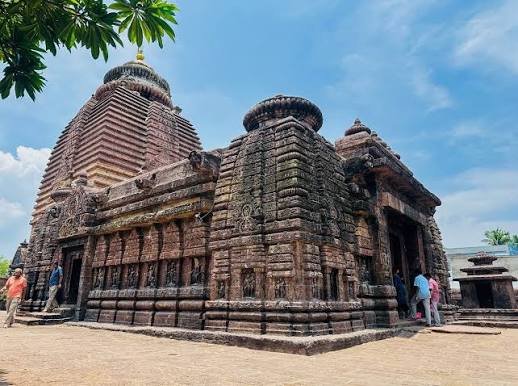
Mukhalingam was once an important centre of the Eastern Ganga dynasty, which ruled large parts of present-day Odisha and northern Andhra Pradesh. Between the ninth and twelfth centuries, the town flourished as a political, cultural, and religious centre. The temple that survives today stands as one of the finest reminders of that period and remains an important destination for devotees and students of history alike.
The presiding deity is Lord Mukhalingeswara, a distinctive form of Lord Shiva. The name derives from Mukha (face) and Linga, referring to the facial form associated with the deity. Local tradition holds that Lord Shiva manifested here in this unique aspect, combining the symbolism of the Shiva Linga with a visible human form. This rare representation makes the temple unique among the many Shiva shrines spread across the country.
As we entered the temple complex, we were immediately struck by its culture and dignity. Built in the Kalinga style that flourished across ancient Kalinga Desa, the temple bears the imprint of a mature artistic tradition. The entrance gateways, sculpted walls, and stone pillars contain depictions of deities, dancers, musicians, floral motifs, and scenes from Hindu mythology. The carvings are intricate without being excessive, revealing the confidence and skill of the artisans who created them ages ago.
The complex includes subsidiary shrines dedicated to associated deities and forms of Shiva, reflecting the temple’s long evolution as a centre of worship. Daily rituals continue uninterrupted, linking the present with a tradition that stretches back nearly a thousand years.
Inside the sanctum, the darshan of Lord Mukhalingeswara was particularly memorable. The facial aspect associated with the deity distinguishes the shrine from most Shiva temples. Illuminated by oil lamps and adorned with flowers, the deity seemed to bridge the symbolic and personal dimensions of Shiva worship in a manner rarely encountered elsewhere.
The temple is especially vibrant during Maha Shivaratri, when thousands of devotees from Andhra Pradesh and Odisha gather to participate in special rituals and celebrations. Even during our visit outside the festival season, a steady stream of worshippers could be seen entering the shrine and offering prayers.
After darshan, we walked around the temple at a leisurely pace, pausing frequently to observe details that revealed the craftsmanship of an earlier age. The weathered sculptures, decorative motifs, and architectural proportions reflected a cultural legacy that has endured for centuries.
The nearby Vamsadhara River added another dimension to the experience. From the temple grounds, we could glimpse the river flowing through the surrounding countryside. The presence of the river has shaped the past of the settlement and undoubtedly contributed to its emergence as an important centre during the Eastern Ganga period.
Before leaving, we spent some time beneath an old tree within the temple premises. A few local devotees were engaged in prayer, while others exchanged greetings with familiar faces. Sreelakshmi remarked that Mukhalingam felt less like a tourist destination and more like a living monument site where history and worship continue side by side.
Mukhalingam left a lasting impression through its association with the Eastern Gangas, its rare idol, and its location on the banks of the Vamsadhara.
Temples by the Sea
Nestled between the verdant Eastern Ghats and the vast expanse of the Bay of Bengal, Visakhapatnam, popularly known as Vizag, is one of the most picturesque cities on India’s eastern coast. A major port city and the headquarters of the Eastern Naval Command of the Indian Navy, Vizag combines industrial importance with striking natural beauty. Its beaches, hills, temples, educational institutions, and cultural landmarks have made it one of Andhra Pradesh’s most visited destinations.
My association with Visakhapatnam, however, began long before this pilgrimage. Nearly three decades ago, I came across an article by the late Dr. K. R. Srinivasa Iyengar—distinguished scholar, former Vice-Chancellor of Andhra University, and the authoritative biographer of Mahayogi Sri Aurobindo. In that article, he wrote evocatively about his walks along the famous Ramakrishna Beach. His description of the sea, the breeze, and the atmosphere of the city left a lasting impression on my mind. A quiet desire arose within me to one day see the place for myself. As with many long-cherished aspirations, life intervened, and the years passed. It was only now, during this pilgrimage, that the opportunity finally presented itself.
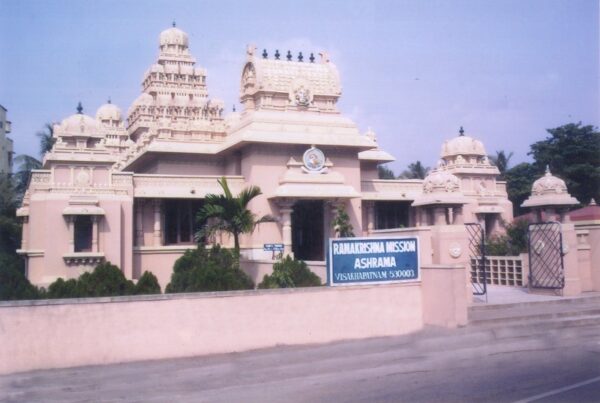
Our first stop in the city was the Sri Ramakrishna Ashram, situated close to the renowned RK Beach. Founded in the ideals of Sri Ramakrishna, Holy Mother Sri Sarada Devi, and Swami Vivekananda, the Ashram serves as a centre for spiritual practice, educational activities, and social service. The peaceful atmosphere of the prayer hall, the neatly maintained premises, and the presence of devotees engaged in meditation provided a welcome respite from the activity of the city outside. We spent some time in silent prayer before continuing our exploration of Vizag.
The next destination was Kailasagiri, the hilltop park that has become one of the city’s most recognizable landmarks. From the summit, we enjoyed sweeping views of Visakhapatnam, its coastline, and the Bay of Bengal stretching far into the horizon. The gigantic white statues of Lord Shiva and Goddess Parvati, seated majestically against the backdrop of the sea, dominate the landscape and have become an iconic symbol of the city. Standing there, with the sea on one side and the green hills on the other, we could appreciate why Visakhapatnam is often regarded as one of India’s most beautifully situated cities.
We also visited the historic Sri Kanaka Mahalakshmi Temple, the city’s presiding deity and one of its most cherished shrines. Unlike many temples where the deity is housed within a traditional sanctum, the original idol of Goddess Kanaka Mahalakshmi is worshipped in a unique setting that reflects the temple’s distinctive history. Local tradition holds that the Goddess has protected the city for generations, and devotion to her cuts across social and economic boundaries. The temple precincts were bustling with activity. Devotees carrying flowers and coconuts queued patiently for darshan, while priests conducted rituals amidst the continuous chanting of sacred hymns.
As evening approached, we finally made our way to the famous Ramakrishna Beach. The moment carried a special significance for me. Nearly thirty years after first reading Dr. Iyengar’s evocative account, I found myself walking along the very shoreline that had inspired those youthful imaginings. The beach was alive with families, children, vendors, and visitors enjoying the cool evening air. Fishing boats could be seen in the distance, while waves rolled steadily onto the shore.
We spent a long time simply watching the sea. The rhythmic sound of the waves, the cool breeze from the Bay of Bengal, and the gradual transition from daylight to dusk created a catchy setting. As darkness descended and the city lights began to illuminate the coastline, I reflected on how certain aspirations remain quietly alive within us for years before finding fulfilment. What had begun decades earlier as a passing wish inspired by a writer’s description had finally become a lived experience.
Arakku Valley
One of the most delightful interludes during our Andhra Pradesh pilgrimage was our visit to Araku Valley, nestled amidst the Eastern Ghats. The journey began early in the morning at Visakhapatnam Railway Station, where we boarded the train to Araku in a Vistadome coach. What followed was far more than a train ride; it was an experience in itself.
As the train gradually left the coastal plains behind and entered the hills, the landscape changed dramatically. The large panoramic windows and glass roof of the Vistadome coach provided uninterrupted views of forests, valleys, coffee plantations, streams, and scattered tribal hamlets. The train passed through numerous tunnels and crossed several bridges, each revealing a different aspect of the Eastern Ghats. Many passengers gathered near the observation area to photograph the journey, and we too found ourselves captivated by the constantly changing terrain.
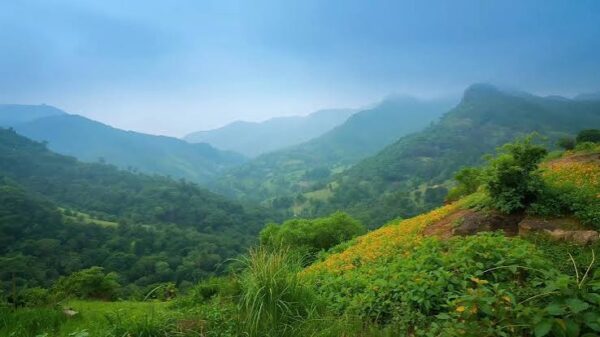
Upon arriving at Araku Valley, we were welcomed by the pleasant mountain climate and the relaxed atmosphere of the hill region. Surrounded by coffee estates and tribal settlements, Araku offers a striking contrast to the bustling cities and temple towns of coastal Andhra Pradesh.
During our stay, we visited some of the valley’s well-known attractions. The Tribal Museum provided valuable insights into the traditions, customs, art forms, and lifestyle of the indigenous communities who have inhabited these hills for generations. The exhibits offered a fascinating introduction to a cultural past that remains vibrant even today.
We also spent time exploring Araku’s famous coffee plantations, which have earned the region national recognition. Walking through the estates and learning about coffee cultivation added an interesting dimension to our visit. The locally produced coffee, widely regarded for its quality, has become an important source of livelihood for many tribal families in the area.
Our accommodation was a modest homestay run by a local family. Though simple in its amenities, it was clean, comfortable, and welcoming. The hosts served freshly prepared local food and shared interesting stories about the valley, its people, and the changes they had witnessed over the years. Their warmth and hospitality made our stay particularly memorable.
In the evening, we spent some time relaxing at the homestay and interacting with fellow travellers. Away from the noise and rush of city life, the valley seemed to move at a gentler pace. The surrounding hills, visible from the verandah, provided a lovely backdrop as daylight gradually faded.
The following morning, before beginning our return journey, we took a short walk through the nearby countryside. Farmers were already at work, and the village was slowly coming to life. The simplicity of everyday life in the valley left a lasting impression on us.
Araku Valley offered a welcome contrast to the temple towns of Andhra Pradesh. Its railway journey, tribal customs, coffee culture, and hospitality made it a distinctive and rewarding part of our pilgrimage.
A Pilgrimage of Heart and Spirit
Our journey through Andhra Pradesh was far more than a sequence of destinations on an itinerary. From the sacred banks of the Godavari to the hills of Araku, from the ancient temples of Kalinga era to the bustling shrine towns of the coast, each place revealed a different facet of the region’s rich cultural and spiritual legacy.
Among the most meaningful moments of the pilgrimage were our visits to the Velpur Mouna Swami Ashram and Sri Shanti Ashram. These were not merely places we visited; they were places where we paused, reflected, and stepped away from the constant movement of travel. Our meeting with Mataji Jnaneswari remains one of the enduring memories of the journey. Encounters such as these added a personal dimension that complemented the temple visits and historical explorations.
As the pilgrimage progressed, we travelled through a remarkable cross-section of Andhra Pradesh—from the sacred banks of the Godavari and the ancient temple towns of the north coast to the hills of Araku and the shores of the Bay of Bengal. Each destination revealed a different dimension of the state’s history, culture, and religious traditions.
When we finally returned home, we felt that the pilgrimage deepened our appreciation of Andhra Pradesh’s rich roots and reaffirmed our conviction that travel, undertaken with openness and reverence, can become a powerful means of learning, reflection, and inner growth.
