


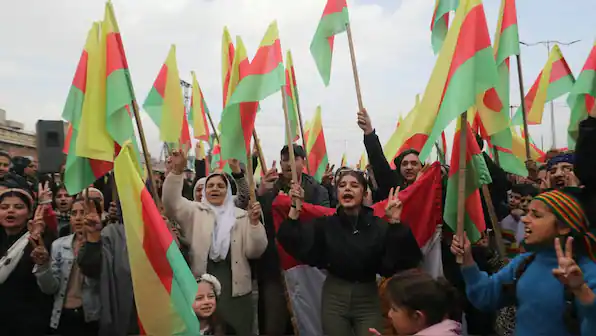
“Why supporting the Kurdish cause serves India’s interests”, First Post, February 23, 2026
“The Kurds remain the largest people without a nation. Cursed by geography, perhaps 45 million Kurds live spread across Syria, Iraq, Iran, and Turkey. Point 12 of US President Woodrow Wilson’s 1918 Fourteen Points not only promised “secure sovereignty” for “the Turkish portion of the present Ottoman Empire” but also “autonomous development” for “the other nationalities which are now under Turkish rule.” Two years later, the Treaty of Sèvres promised Turkey’s Kurds independence after one year, but after Mustafa Kemal Atatürk militarily changed the facts on the ground, the 1923 Treaty of Lausanne rescinded the promise of a Kurdistan.
Turkey crushed by brute force subsequent Kurdish uprisings as Kurds sought fulfilment of their national rights while successive Turkish governments pursued a genocidal policy to eradicate the Kurds, not only razing their villages but also banning their language and denying their very existence. Even writing certain letters—Q, W, and X—that exist in Kurdish but not Turkish could lead to lengthy prison sentences. At the height of Kemalism, the laical, Turkish nationalist movement that Atatürk founded, Kurds simply became “mountain Turks” in official parlance.
It was against this backdrop that the Kurdistan Workers’ Party (PKK) emerged. Like anti-apartheid activist Nelson Mandela, PKK founder Abdullah Öcalan initially embraced both Marxism and armed struggle, though he later renounced both. Öcalan’s prison writings reveal a clear evolution of thought…….”
Read full article at firstpost.com
