


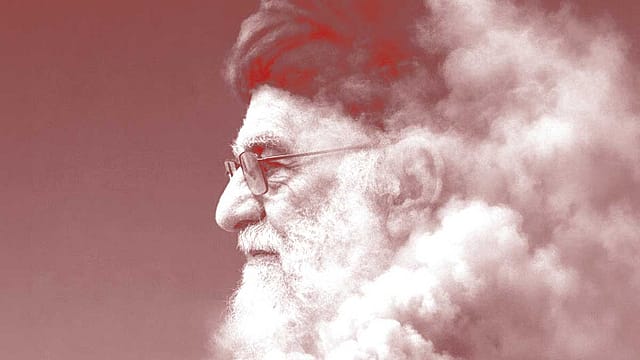
“The Rites of Freedom In Tehran”, Open the magazine, March 06, 26
“THE JUST WAR IS AN IDEA that puts morality in the crossfire. Pacifists see it as legitimisation of extraterritorial violence by the worst instincts of power, and to gift-wrap it in morality is to institutionalise the inversion of idealism. For the defenders it is a necessary act for justice, the terms of invasion determined by conscience. The neoconservatives, whom Donald Trump never held in high esteem, were the ones who dared to practise it. They moralised every missile that fell on Iraq early in this century. The war on Iraq was a just war in their reading not because of the cause of destroying hidden weapons of mass destruction (which were never found) in Saddam Country. It was a war on evil, which was not an abstraction in neocon vocabulary. For the active idealists in the court of George W Bush, the Ba’athist dictator in Baghdad was evil, and he was a good reason for a war of liberation. How the just war ended in a Mesopotamian moral wreckage troubles the most idealistic of conservatives even today. The justness of a just war has clarity in the beginning. Few warrior rulers succeed in retaining the moral propulsion till the end. Is a just war underway in Iran?
This war was not really necessitated by the nuclear deviousness of Iran. The bunker busters, by Trump’s own admission, have already done the job for America and Israel. And it was not that there were no negotiations between America and Iran. They were there till the day before the war, and the doors were not closed for further talks either. This war was launched with a higher purpose, though ‘higher purpose’ were not the words the liberal commentariat would attribute to Trump. The end of theocratic tyranny, its tentacles spread across the region, was a righteous cause. The Ayatollah, himself an apostle of holy wars, made another just war inevitable. Compared to Ayatollah-ism, in its domestic terror and neighbourhood sponsorship of multiple wars, all very ‘just’ in his Book, Saddamism was a lesser story of fear. The imamate, born in the scriptural purity of resistance against monarchy, thrived in demonology. When God’s will was established on earth by men, the republic of faith required a demon. The Great Shaitan was not just Quranic Iran’s rhetorical portrait of America; it was the personification of a decadent culture. Every war Iran sponsored was a cultural war on the West and its values. The blood rite was a horror show at home and abroad.
The revolutionary road could not have taken Iran anywhere else. It was the preordained path the Supreme Leader—doesn’t every revolution in power need one?—had chosen. In the hoary history of revolutions, it always begins with a promise that blends with the impatience of a people. Ayatollah Ruhollah Khomeini, from his exile in the dying days of the Shah’s reign, promised not divine dictatorship but freedom grounded in faith—and there was nothing wrong with democracy with a religious content. It prevailed for centuries in the West. Once the revolutionary preacher became the patron saint of the Islamic Republic, the terms of engagement changed. As in the revolution of ideology, the revolution of faith, too, in its haste to maintain the supremacy of the leader over the counterrevolutionary temptations of the masses, resorted to the construction of hell on earth. By veiling a country of civilisational richness and free spirit like Iran with a Book-born doctrine of savagery, the Islamic Revolution was not appeasing God as much as it was supersizing the Imam cult. The theo-fascist state was not content with filling the Middle East’s biggest gulag with dissidents. In the last bout of protests in Iran alone, by one account, more than 6,000 Iranians were killed. Statistics don’t matter in a revolutionary state……”
Read full article at openthemagazine.com
