


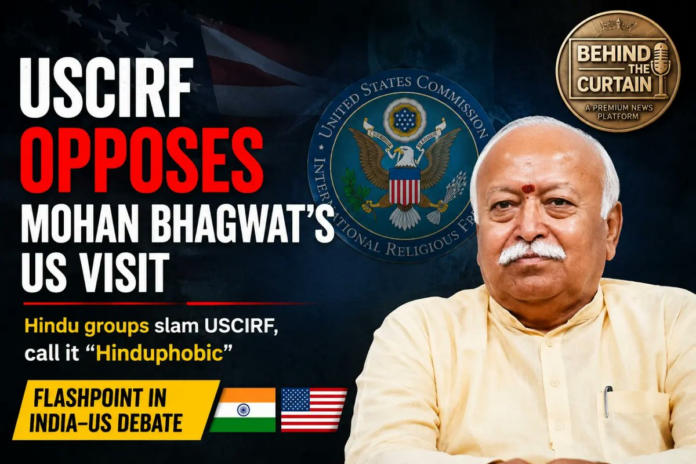
“Mapping the Coalitions That Mobilized Before Mohan Bhagwat Landed in America”, IndiaFacts, 24 Aug 2026.
“I. Introduction
No religion appears anywhere in India’s Foreign Contribution (Regulation) Amendment Bill, 2026. That has not stopped five months of claims that it amounts to one: a US congressman called it “a clear attack against Christians,” a federal commission renewed its case for sanctions against India’s largest Hindu volunteer organisation, the Rashtriya Swayamsevak Sangh, and Canadian civil society split into open argument over whether the RSS’s chief, Mohan Bhagwat, should even be allowed to address the crowd waiting for him in New York. Read the calendar closely enough, though, and the tidiest version of this story — a coordinated campaign, timed to a funding law New Delhi had every right to pass — falls apart on its own dates. What survives is smaller, stranger, and considerably harder for USCIRF to explain away.
- Coincidence, coordination, or the internationalisation of an argument India has been having with itself for a century? Not one source in this paper settles that question by simply asserting an answer. The dates do more work than the rhetoric does.
II. The Law Behind the Outrage
The bill, introduced in the Lok Sabha on 25 March 2026 and referred to a Joint Parliamentary Committee in August after sustained domestic opposition, does not change who may receive foreign funds. It creates a “Designated Authority” empowered to take provisional, and eventually permanent, custody of the assets of any organisation whose FCRA registration lapses, is surrendered, or is cancelled. The stock under management is already substantial: 14,449 active certificates against 22,498 cancellations and roughly 15,000 further lapses since 2019 (Figure 1).
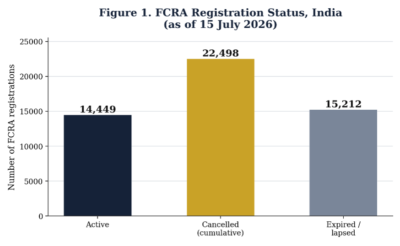
Figure 1. FCRA Registration Status, India (as of 15 July 2026). Source: PRS Legislative Research (2026); FCRA public data portal, Ministry of Home Affairs.
Its harshest domestic critics were not American. Kerala civil-society groups and church councils objected within weeks of introduction; Mizoram’s congregations marched in Aizawl; Nagaland’s chief minister sought a formal review; and the Tamil Nadu Assembly passed a resolution against the bill in early August — pressure substantial enough, on its own, to push the Lok Sabha toward committee referral before Washington had said a word that month. That sequencing matters: it is difficult to sustain the claim that New Delhi was reacting to American pressure when its own Parliament was already responding to Indian citizens first……………………………..”
Read the full article at IndiaFacts.
