


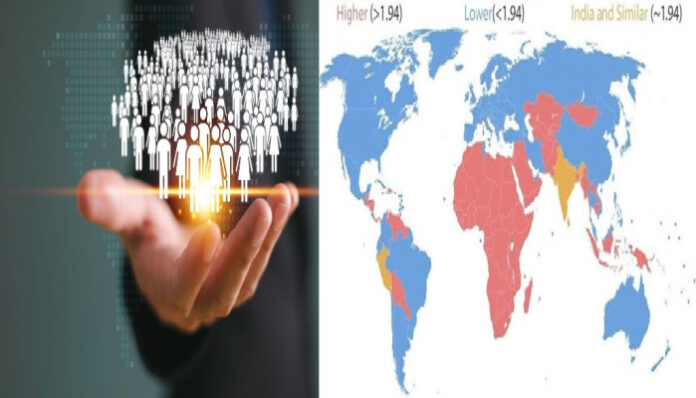
“Global Fertility Rates of Countries: Implications for Development Economics”, My Ind Maker, January 05, 2026
“As global fertility rates continue to decline, albeit unevenly among countries, several implications arise for assessing successful outcomes in development economics. Such an assessment requires reflection and further research, which has the potential to impact the nature of development economics itself. This deserves to be a high priority for researchers in development economics.
The Global Total Fertility Rate (TFR) has declined from around 5.0 in the 1950s to about 2.2 in 2025. TFR measures the average number of children a woman produces in her reproductive years. TFR of 2.15, if it persists, portends a stable population. But a TFR below 2.15 portends a declining population over time. The current global TFR trends indicate a steady movement towards below replacement rate fertility. Managing declining populations, with relatively little experience globally, will be critical for most countries in sustaining their accustomed way of life. Indeed, for some countries, their very prospects for preserving their existence are likely to be at stake1.
Trends in TFR are not just about population numbers, but have wide-ranging consequences for society, and on the financial sector, asset markets, household welfare, labour markets, and other areas of society and economy, as well as on political dynamics2……”
Read full article at myind.net
