


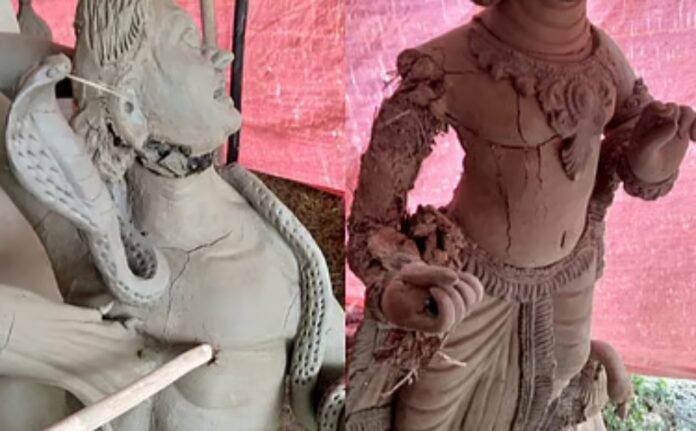
In a fresh wave of anti-Hindu vandalism, two murtis were found mutilated at the temporary Durga Puja mandap in Kandulia Kalibari of Netrokona district. The attack, which occurred in the early hours of Tuesday between 3:00 AM and 6:00 AM, has reignited fears among Bangladesh’s Hindu minority about their safety and religious freedom.
When locals arrived at the site in the morning, they discovered that Karthik’s right arm had been twisted, Asura’s left arm broken, and Asura’s neck partially severed. The idols had been under construction for several days and were carefully covered with tarpaulin and cloth to protect them. Community members allege that Islamist miscreants entered the mandap at night and deliberately inflicted the damage.
The incident has deeply shaken the local Hindu population. Outraged community members, joined by sympathetic Muslim neighbours, gathered at the site and demanded urgent action from authorities. They called for the perpetrators to be identified and punished swiftly, warning that unchecked attacks are emboldening extremists.
A Pattern, Not an Isolated Event
The Netrokona desecration is far from an isolated case. It fits into a troubling nationwide trend:
Frequent vandalism of idols and temples across Bangladesh, particularly escalating during Hindu festivals such as Durga Puja, Kali Puja, and Saraswati Puja.
Between 2021 and 2024, hundreds of incidents were documented—including broken idols, desecrated temples, and entire pandals vandalised.
Attacks often occur at night and are routinely dismissed by local officials as “land disputes,” “miscreant activity,” or “random vandalism.” However, Hindu community leaders argue that such incidents are rooted in extremist Islamist ideology, aimed at intimidating Hindus and gradually erasing their visibility.
Implications: Toward ‘Hindu-Emptiness’?
The repeated desecration of idols suggests a sinister underlying goal: the gradual erasure of Hindu symbols and identity from Bangladesh’s public life—a process that community leaders describe as “Hindushunya,” meaning “Hindu-emptiness.”
Key consequences include:
Fear and self-censorship: Many Hindus are increasingly hesitant to celebrate their festivals openly, fearing reprisals if they construct visible pandals or conduct loud celebrations.
Erosion of pluralism: Such acts contradict Bangladesh’s constitutional commitment to secularism and weaken the fabric of communal harmony.
Communal polarization: Each attack signals that Hindus are vulnerable, deepening mistrust and pushing society toward greater division.
Cultural loss: The destruction of idols disrupts traditional artisan crafts and erases centuries-old cultural and religious heritage that enriches Bangladesh’s diversity.
