


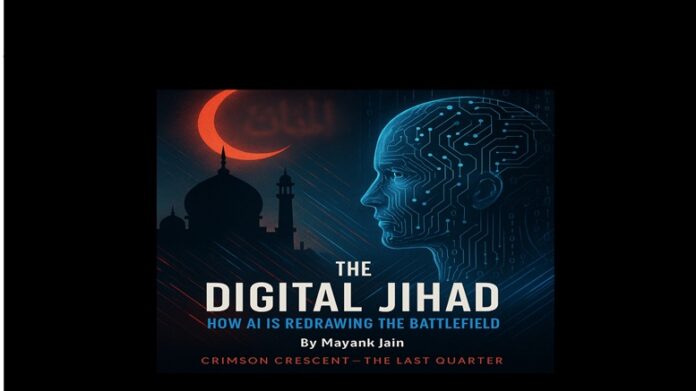
In the 15th century, when the printing press began producing Bibles that ordinary people could read, it shattered the Catholic Church’s control over religious interpretation. What had once been the exclusive domain of Latin-speaking clergy now reached the minds and hearts of the ordinary masses. Interestingly, the printing press, which initially spread Biblical teachings, soon became a vehicle for rebellion against the Church.
As the Renaissance unleashed the power of free inquiry, thinkers like Copernicus and Galileo challenged Church dogma through science and reason. And now, with mass printing unstoppable, their ideas traveled faster than any ‘Inquisitor’ could censor. The press that once guarded religious orthodoxy was now mass distributing its critique—ushering in a new era of rationalism and human inquiry, a huge information revolution !
Three hundred years later, the same technology printed en masse The Communist Manifesto, fueling the Leninist-Stalinist-Maoist ideologies that led to the slaughter of millions. But it did not end there. The printed word that once propped up Marxist revolutions later became their undoing. In 1973, The Gulag Archipelago by Aleksandr Solzhenitsyn exposed the brutal machinery of Stalin’s prison camps to the world—an unthinkable act within the Soviet regime. Similarly, Václav Havel’s The Power of the Powerless, typed and circulated through underground presses in Czechoslovakia, became a blueprint for non-violent resistance across Eastern Europe. Every tool that liberates can, with a shift in purpose, also subjugate—or liberate again. Artificial intelligence is only the newest blade on that double-edged sword.
Is Riyadh Pulling Back from Transnational Islamism?
For decades, Saudi oil wealth funded a global ideological campaign. Between 1982 and 2005, an estimated $87 to $100 billion supported a vast web of madrassas and religious institutions that promoted radical interpretations of Islam to young, impressionable minds. These ideas didn’t remain in textbooks—they spilled into streets, riots and even acts of terror.
But today, Crown Prince Mohammed bin Salman (MbS) appears to be changing course. His Vision 2030 plan and the ambitious NEOM city project—costing up to $1.5 trillion—now command Saudi Arabia’s attention and finances. Religious police have been sidelined, cinemas have come up, concerts are being held and women are driving. There’s an undeniable push toward modernization.
Why the shift?
Because MbS can feel the ground shifting beneath his feet. Over 70% of Saudi Arabia’s population is under the age of 35. A 2022 Arab Youth Survey indicated that many young Saudis, like their regional peers, prefer a country where religion plays a smaller role in public life. Many are educated abroad or connected through social media to modernist, ethical and cosmopolitan values. One of MbS’s own relatives, Prince Khaled bin Alwaleed, is a vocal vegan and advocate of clean energy—a striking symbol of the shifting ethos among elite and educated Saudis. In a landmark 2017 speech, MbS declared a return to “moderate Islam open to the world and all religions”.
This wasn’t just diplomacy—it was a generational survival strategy. Projects like Vision 2030 and NEOM are not just economic reforms; they are designed to absorb the aspirations of a youth demographic that no longer sees Wahhabi orthodoxy as its moral anchor. And while the state has reduced direct funding for missionary zeal, the ideological momentum persists, increasingly moving online.
Digital Daʿwah vs Digital Reason
Every technological leap has lit a path for both progress and peril. The same internet that carried memes and manifestos also became a space for radicalization—and reform. Pew data, cited by TIME Magazine, showed that in Pakistan, support for suicide bombings dropped from 41% in 2004 to 3% in 2014, particularly in regions with increased internet access. In Iran, a 2020 GAMAAN survey found that 47% of adults identify as having ‘no religion’. In Syria, too, many youth are embracing secular or pluralist values, distancing themselves from clerical control.
Technology reflects not truth or virtue but the motives of those who control it. The printing press gave voice to Galileo’s challenge against Church orthodoxy—that the Earth revolved around the Sun. What was once branded heresy became a turning point in human understanding. Radio carried Roosevelt’s calming words and Hitler’s poisonous ones. The early internet gave rise to the Arab Spring and extremist groups like ISIS, who were quick to exploit its reach for digital recruitment.
Artificial intelligence is now repeating that pattern. Salafi seminaries in Pakistan, Indonesia and the Gulf are introducing AI crash-courses for aspiring imams. Sermons are written by language models trained on Qurʾanic and Hadith texts. Chatbots dispense religious rulings in multiple languages, often without any human filter. Jay Smith points out that in Saudi Arabia today, only about ten percent of Hadith are considered truly authoritative. But in the AI age, such distinctions blur. Algorithms don’t ask if something is canonical or authentic. They just amplify it.
When Algorithms Preach
Today, language models create sermons and digital mentors that can guide believers toward compassion—or push them toward violence, depending on who’s behind the keyboard. Governments and tech companies are responding to this challenge. Google’s Redirect Method, a private-sector initiative, reroutes users searching extremist terms to curated content that debunks radical ideas.
Early tests halved the time users spent watching jihadist videos. NATO and the ICCT are exploring predictive threat-mapping using AI. But experts note that this technology can fuel the propaganda it aims to fight. “The arms race between takedown and upload is speeding up—algorithms alone will not win it,” notes a 2024 ICCT report. Without human oversight, AI risks becoming a megaphone for whichever ideology feeds it best.
The Military-Industrial Calculus
Wars pay enormous dividends to weapons makers—so the “war on terror” has never been just about ideology. Since 2001, the United States has spent more than $8 trillion on wars and homeland security, with a huge slice funneled straight to defense contractors (22). Saudi Arabia alone has ordered over $80 billion in American arms in the past decade. Even the original CIA-backed war against the Soviet Union in Afghanistan became a profit loop: the mujahideen turned into al-Qaeda, al-Qaeda struck the West and every new attack justified more spending on missiles, drones and surveillance gear.
AI and the open internet can help break that cycle—by exposing radical ideologies, tracking arms flows in real time and showing taxpayers who profits from each bomb. But transparency alone won’t uproot an industry that thrives on fear. Two deeper moves are needed:
- Follow-the-Money Mapping: Use open-source AI tools to trace arms contracts, lobby spending and campaign donations—then publish them in plain language so citizens can see the cost of every strike and drone sale.
- Flip the Subsidies: Channel a fixed share of defense R&D money into peaceful tech—green energy, pandemic readiness and climate security. Contractors that now build smart bombs could just as profitably build smart grids or satellite fire-warning systems.
The Digital Vulnerability of Pluralist Cultures
Pluralist civilizations—particularly within the Hindu fold, including tribal traditions and other pagan systems—often assume that technology naturally inclines toward harmony and progress. India’s Digital India initiative, for example, frames the internet as a tool for learning, not ideological warfare. Elders in tribal regions see AI as a way to archive folklore, not recruit soldiers.
Yet pluralism should never be mistaken for passivity. The Hindu tradition has always recognized the threat of the ātātāyī—the aggressor who must be confronted. Rāma’s slaying of Rāvaṇa and Kṛṣṇa’s counsel on the Kurukshetra plain show that dharma sometimes demands decisive force. Jain and Buddhist ethics honour non-violence but acknowledge the need to restrain the violent before ahimsā can flourish.
Technology, meanwhile, plays no favorites. Algorithms reward repetition, outrage and money. Jihadist TikTok clips, tracked by the Soufan Group, rack up millions of views before they are taken down. Rural India and tribal belts remain digitally under-equipped, ceding the narrative battlefield to louder voices. Just as earlier Indian ruling classes were caught off-guard by the technological advantages of invading powers—like the cannon-wielding Mughals or the steam-powered British—the next blow could come through an AI chatbot whispering into youthful ears. Pluralist cultures cannot rely on hope; they must arm themselves with code, content and civilisational confidence—or watch their voices be buried under louder, more aggressive ideologies.
A Tug-of-War, Not a Rout
Pew still reports Muslim retention rates above 90% globally. But defections are growing—and when people leave Islam, most don’t join another faith. They step into secular space. On Reddit, Ex-Muslim forums number in the hundreds of thousands. On YouTube, anonymous creators dissect scripture with humour and rigour, drawing in millions of views.
This is not just a quiet shift in beliefs—it’s an all-out culture war being fought through technology and storytelling. On one side are sleek AI-driven Islamic outreach proselytising (Daʿwah) channels, producing sermons and videos tailored for every age group and region. On the other side are solitary voices—often anonymous individuals armed only with a laptop and determination—who carefully dissect doctrine, expose contradictions and spark new thinking.
In the end, the side that learns to use technology better—faster, smarter and with more determination—will shape what the next generation sees, hears and believes.
What Preparedness Looks Like
The answer isn’t to block apps or fear technology—it’s to embrace it with purpose. Digital literacy must be treated like civic literacy. Students should be taught how to check facts, question authority and trace the funding behind online content—so they can recognise who benefits and why certain ideas are being promoted. Pluralist societies need to build their own AI systems—models trained not on dogma but on debate, reason, and dissent. Otherwise, the loudest preachers will dominate the digital pulpits.
