


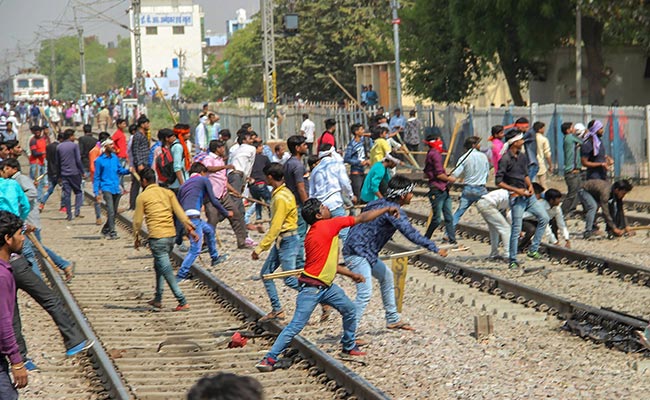
The events of July 9, 2025, witnessed across multiple states in Bharat under the banner of “Bharat Bandh,” were not merely expressions of political dissent. Instead, they represented organized violence, destruction of public property, and deliberate attempts to disrupt the social fabric of the nation. The article based on a compilation report, details 28 significant incidents that occurred during this nationwide shutdown, highlighting the impact on public life, the economy, and the core values of Bharatiya civilization.
Introduction
The Bharat Bandh was called by the INDI Alliance and several affiliated organizations, with support from various trade unions. While the right to protest is a democratic principle, the manner in which these protests devolved into violence, vandalism, and obstruction of essential services stands in stark contrast to the ideals of non-violence, tolerance, and social responsibility that are foundational to Hindu civilization.
Detailed Account of Key Incidents
1. Disruption of Public Services
- Railway and Road Blockades: In cities like Jehanabad, Darbhanga, Ara, Patna, Gaya, Muzaffarpur, Bhagalpur, Ranchi, Bhubaneswar, Coimbatore, Mumbai, and Gorakhpur, protesters blocked railway tracks and roads, halting train and vehicular movement. This not only inconvenienced daily commuters but also violated the rights of ordinary citizens.
- Impact on Emergency Services: In Darbhanga, an RJD legislator stopped an ambulance, endangering the life of a patient. Such actions directly contradict the Hindu ideal of “Parhit Saris Dharma Nahi Bhai” (no religion is greater than serving others).
2. Economic and Educational Setbacks
- Banking and Commercial Shutdowns: In Patna, Ranchi, Kerala, Bhubaneswar, and Mumbai, banks, petrol pumps, and shops were forcibly closed, resulting in significant economic losses.
- Disruption in Education: Examinations in colleges like Bhagalpur’s Marwari College were disrupted, affecting the academic future of students.
3. Violence, Arson, and Intimidation
- Incidents of Arson and Assault: In Muzaffarpur and Gaya, protesters set vehicles ablaze and assaulted auto drivers. Shopkeepers were threatened, and women faced harassment.
- Threats and Abusive Language: RJD leaders in Darbhanga issued threats of prolonged violence, while in Hajipur, abusive language was used against citizens, violating democratic norms.
4. Political and Ideological Conspiracies
- Controversy Over Voter Lists: In Patna, the Congress supported the bandh after the removal of illegal Bangladeshi and Rohingya names from voter lists, reflecting political interests over national security.
- Role of Trade Unions and Leftist Groups: In Kerala, West Bengal, Tamil Nadu, Himachal Pradesh, Delhi, and Maharashtra, trade unions and leftist organizations used the bandh to incite unrest under the pretext of opposing government policies.
Civilizational Perspective
1. Violation of Non-Violence and Tolerance
Hindu civilization upholds the right to dissent, but always through dialogue, reason, and non-violence. The violence, arson, and disruption of public life during the Bharat Bandh were antithetical to these values.
2. Assault on Social Harmony
These incidents bred fear, mistrust, and division within society. The Hindu ethos of “Vasudhaiva Kutumbakam” (the world is one family) emphasizes the welfare of all sections of society. When political interests inflict suffering on common citizens, students, traders, and patients, it is a crime against civilization itself.
3. National Interest vs. Political Gain
The Bharat Bandh prioritized political interests over national welfare. In Hindu tradition, the nation is supreme, and any protest or movement should aim for national progress and public welfare, not chaos and division.
The Table below presents a detailed overview of the of the 28 key incidents from the Bharat Bandh of July 9, 2025, with specific details, locations, groups involved, and the nature and impact of each event.
Table: 28 Major Incidents – Bharat Bandh, July 9, 2025
| # | Location (State) | Group/Party Involved | Incident Description | Impact/Notes |
|---|---|---|---|---|
| 1 | Jehanabad Railway Station, Bihar | RJD Student Wing | RJD student members sat on railway tracks in support of Bharat Bandh, blocking the Patna-Gaya MEMU and other trains from early morning. | Rail traffic halted; passengers faced severe inconvenience. |
| 2 | Patna, Bihar | Congress | After illegal Bangladeshi/Rohingya names were removed from voter lists, Congress leaders blocked roads, lying down and declaring the bandh a success. | Major roadblocks, political sloganeering. |
| 3 | Gopalganj, Bihar | Mahagathbandhan | An ambulance was stuck in traffic during protests; police had to intervene to clear the way. | Patient care delayed, risk to life. |
| 4 | Darbhanga Railway Station, Bihar | Congress Minority Cell | Congress minority leaders blocked the Nambharat train and raised communal slogans; also blocked the Sampak Kranti Express. | Train services disrupted; police had to clear agitators from the station. |
| 5 | Mahatma Gandhi Setu, Patna, Bihar | Mahagathbandhan | Complete blockade of the crucial bridge connecting Patna; long queues of vehicles, people forced to walk kilometers with luggage. Leaders like Tejashwi Yadav, Pappu Yadav, and Rahul Gandhi participated. | Severe hardship for commuters; city traffic paralyzed. |
| 6 | Ara-Sasaram Highway, Bihar | Mahagathbandhan | Protesters set up barricades at Pilot Bus Stand, blocking the highway completely. | Long lines of vehicles, public movement severely affected. |
| 7 | Ara Railway Station, Bihar | Congress | Four Congress leaders blocked the 15744 Up Balughat-Bhatinda train at the station; local markets also forced shut. | Train and market disruptions. |
| 8 | Habhiya Railway Station, Bhojpur, Bihar | Mahagathbandhan/RJD MLA | Protesters led by ex-RJD MLA Bhai Dinesh blocked Shramjeevi Express and Bhubaneswar Express for 30 minutes. | Train services delayed; police and RPF had to remove protesters. |
| 9 | Bairali, Bihar | RJD | RJD workers forced shops to close; when a shopkeeper refused, they locked him inside his shop. | Intimidation of shopkeepers, forced closures. |
| 10 | Gaya, Bihar | RJD | RJD workers beat auto drivers with sticks near Gandhi Maidan to enforce the bandh. | Violence against drivers, demand for police action. |
| 11 | Chakulia, Jharkhand | Labor Leader Sarakar Hakso | Road blocked by labor union from 10:30 am to 12:00 pm, halting all traffic. | Local residents faced major inconvenience. |
| 12 | Muzaffarpur, Bihar | RJD | Protesters blocked roads at four major points, forced shops to close, and set fire to objects on the road. | Traffic jams, panic, arson. |
| 13 | Bhagalpur, Bihar | RJD | RJD activists disrupted ongoing exams at Marwari College; forced closure of all college buildings and PG departments. | Students’ exams interrupted, academic loss. |
| 14 | Ranchi, Jharkhand | Central Trade Unions | Nationwide strike led to closure of most banks except SBI and Jharkhand Gramin Bank; about 500 crore worth of transactions affected. | Major economic loss, banking operations hit. |
| 15 | Patna, Bihar | INDI Alliance & Trade Unions | 20-25% of bank business affected; about 100 crore worth of trade impacted; shops forced to close. | Economic loss, business disruption. |
| 16 | Darbhanga, Bihar | RJD MLA | RJD MLA stopped an ambulance carrying a critical patient; family pleaded but MLA refused to let the ambulance pass, also abused the family. | Patient endangered, MLA’s misbehavior on record. |
| 17 | Darbhanga, Bihar | RJD (Baldev Ram) | RJD leader threatened to continue such blockades for 90 years; viral video showed him blocking an ambulance and threatening people. | Public outrage, lawlessness. |
| 18 | Bairali, Bihar | RJD (Kedar Yadav) | RJD leader lay down on the road with a blanket, blocking traffic; set fire to national highway tires, causing a complete blockade. | Traffic halted, arson. |
| 19 | Bairali, Bihar | RJD | RJD workers clashed with school teachers over school closures; forcibly stopped teachers from reopening schools, even chased female teachers. | Intimidation, disruption of education, harassment. |
| 20 | Hajipur, Bihar | RJD (Santosh Chaudhary) | RJD leader abused a car driver, threatening violence; video of the incident went viral. | Public intimidation, abusive language. |
| 21 | Coimbatore, Kerala | Railway Trade Union | Long-distance train services completely halted; buses also blocked; passengers stranded for hours. | Transport paralysis, passenger hardship. |
| 22 | Bhubaneswar, Odisha | Trade Unions | Several petrol pumps closed, major roads blocked at Jaydev Vihar and National Highway; bus and ambulance movement restricted. | Fuel shortage, traffic chaos, emergency services affected. |
| 23 | Kolkata, West Bengal | Left Unions | Left trade unions organized a massive march at Jadavpur; 10 central trade unions called for the bandh, opposing economic reforms. | Citywide disruption, anti-reform slogans. |
| 24 | Thoothukudi, Tamil Nadu | Labor Union | Municipal sanitation workers went on strike, demanding permanent jobs; city’s four zones affected. | Sanitation services disrupted, city cleanliness affected. |
| 25 | Jantar Mantar, Delhi | AICCTU (Central Trade Union) | Protest at Jantar Mantar against central government’s economic and labor policies; anti-government slogans raised. | Political demonstration, media attention. |
| 26 | Mumbai, Maharashtra | Banking Federation of India | Bank employees and national trade unions protested against privatization; banking operations disrupted. | Banking services hit, public inconvenience. |
| 27 | Hamirpur, Himachal Pradesh | Central Trade Unions & Farmer Groups | Heavy rain did not deter workers, farmers, and bank employees from rallying against privatization and labor reforms; public services affected in several areas. | Public life disrupted, rallies despite adverse weather. |
| 28 | Gorakhpur, Uttar Pradesh | LIC, Bank, Postal Unions | Employees of LIC, banks, and postal department held protests at their offices; UP Bank Employees Union took out rallies. | Essential services affected, public inconvenience. |
This table provides a comprehensive view of the scale, nature, and impact of the Bharat Bandh’s major incidents, showing a pattern of organized disruption, intimidation, and violence. The events collectively resulted in economic losses, hardship to common citizens, and a direct challenge to the principles of non-violence and social harmony central to Hindu civilization.
Conclusion
The Bharat Bandh of July 9, 2025, was not just a manifestation of political dissatisfaction but a direct assault on Bharatiya civilization, social harmony, and democratic values. Violence, destruction of public property, and infringement of citizens’ rights go against the core tenets of Hindu civilization. Future protests must be conducted in a manner consistent with Bharatiya culture—peaceful, disciplined, and in the national interest—to preserve the eternal consciousness and unity of Bharat.
