


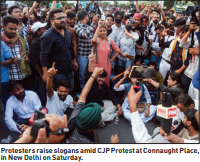
Summary: The Cockroach Janta Party (CJP) protest in New Delhi on 10 October 2026 against Chief Election Commissioner (CEC) Gyanesh Kumar bears the hallmarks of a Colour Revolution: a grievance against one institution, an emotive narrative, and a push to turn public anger into a confrontation with the state, with Prime Minister Narendra Modi and Home Minister Amit Shah as the ultimate targets. The script is familiar from Bangladesh in 2024, where it is estimated up to 1,400 were killed between 1 July and 15 August, and from Nepal in 2025. Saurav Das had warned of a 'civil war-like situation', with 'protesters killed by right-wing extremists' and blame fixed on the government and Delhi Police, before the protest began. Security agencies must trace the money, messaging and coordination behind the movement, writes Dr Savio Rodrigues in Sunday Guardian.
Why it matters: Bangladesh 2024 and Nepal 2025 show how fast a street agitation against one institution becomes a campaign against a government once a death occurs. Bharat's agencies are right to trace the money, messaging and coordination around the CJP before any violence, not after.
“India must be alert: A Colour Revolution is in the making” — The Sunday Guardian, 10 Oct 2026
A Colour Revolution does not necessarily begin with a revolution. It can begin with a grievance, a protest, an emotionally charged narrative and a political ecosystem willing to transform public anger into a confrontation with the state. What appears initially to be an isolated democratic agitation can, under certain circumstances, become the foundation for a much larger campaign to undermine constitutional authority and destabilise an elected government.
I have spent considerable time studying geopolitical conflicts, covert influence operations and the manner in which domestic vulnerabilities can be exploited by hostile external interests…
Read the full article at The Sunday Guardian →
