



Recent observations have raised concerns about several Bangladeshi nationals who, after entering Bharat on various types of visas, have been seen to be engaged in activities deemed anti-India. The individuals reportedly entered Bharat using visas acquired before or through recent emergency medical requests and have been accused of abusing their stay in the country. The following examples represent different instances where Bangladeshi nationals allegedly engaged in activities that raised concerns.
Agra Incident: Alamgir Hossain
Alamgir Hossain from Lalmonirhat, Bangladesh, reportedly posted a Facebook live video during a visit to Agra, in which he threatened to “break apart” India and integrate the Northeast region into Bangladesh. Hossain was subsequently detained at the border and had his visa canceled, but was later released. The incident attracted significant media attention, raising questions about visa regulations and monitoring.
Visit of Islamist Mufti Mohmodul Hasan Zubayer
Mohmodul Hasan Zubayer, a Bangladeshi Islamist mufti known for anti-India posts on social media, was reported to have visited multiple cities in India. Despite his history of controversial statements, Zubayer managed to enter and exit India without any significant action taken against him. The incident was covered by various news outlets, including Hindupost, highlighting the perceived leniency towards such visitors.
BNP leader’s visa canceled in Kolkata
A leader from the Bangladesh Nationalist Party (BNP) was detained at Kolkata Airport after being identified for past anti-Bharat posts. The individual had been visiting Kolkata since 2007, but following the discovery of his controversial online activity, his visa was revoked. The incident was covered by several news channels, pointing to the potential misuse of long-term visitor visas by political figures.
Social media influencer Alif Sabuj’s anti-Bharat posts
Bangladeshi influencer Alif Sabuj, who frequently shares anti-Bharat content on his public Facebook account, visited Kolkata recently and continued posting derogatory remarks about India and Hindus while still in the country. When confronted by Indian users, Sabuj responded defiantly, stating he would return, settle in Kolkata, and eat beef regularly. His posts raised alarm about the need for stricter monitoring of visitor activities.
Br Masud’s YouTube channel promoting misuse of medical visas
A YouTube channel run by a Bangladeshi named Br Masud has reportedly been sharing videos almost daily on how to obtain an Indian visa, including advising viewers to fake medical emergencies to acquire a visa. Masud’s channel contains several anti-India comments, with some directed against the Indian Army. Despite the inflammatory content, this case has not received significant media coverage.
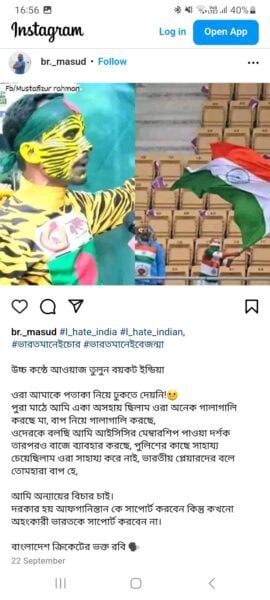
In the image below, he says, “I_hate_india #I_hate_indian Raise your voice and boycott India. They did not let me in with the flag! I was helpless alone in the whole field, they are abusing my mother and father, I am telling them that I am an ICC member and they are still abusing me. I want justice for injustice. It is necessary to support Afghanistan but never support arrogant India.”
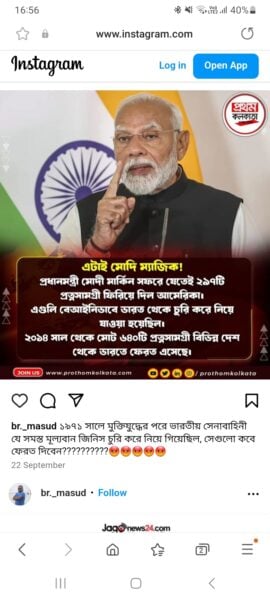
In the image above, he says “When will Indian Army return all the valuables stolen after 1971 Liberation War?”
Scholarship concerns at institutes in Bharat
Concerns have also been raised about the ICCR scholarship program, which funds around 500 Bangladeshi students across India, providing free education and a monthly stipend. The majority of these students reportedly have educational gaps of over two years and do not need to pass the JEE for admission, with only an essay submission required. Complaints have emerged regarding their academic performance, with many scoring below a CGPA of 7, sparking debates on the efficacy and fairness of the program.
NIT Silchar Incident
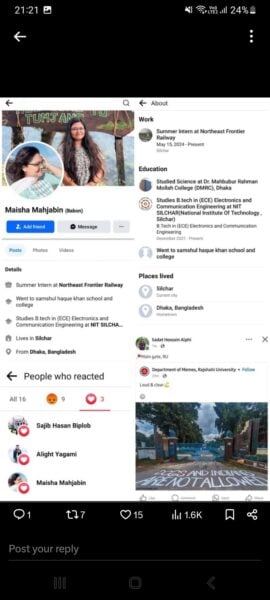
A notable case involves students from Bangladesh studying at the National Institute of Technology (NIT) Silchar under the Indian Council for Cultural Relations (ICCR) scholarship program. The controversy began when a former student posted a derogatory remark on social media, stating “Dogs and Indians are not allowed,” which was liked by a current student with a “love” emoji. There are over 100 Bangladeshi students at NIT Silchar, receiving an INR 18,000 monthly stipend and exemption from fees through the ICCR scholarship. Unlike Indian students, they do not have to pass the Joint Entrance Examination (JEE); admission is based solely on an English essay. Most of these students have educational gaps of two to four years, and only a few have a Cumulative Grade Point Average (CGPA) above 7.5, prompting concerns about the program’s fairness and transparency.
Specific Cases at NIT Silchar
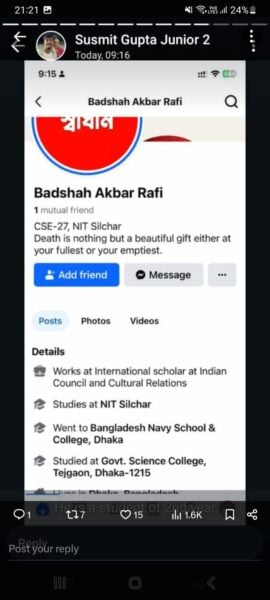
Badshah Akbar Rafi, a current student at NIT Silchar, has reportedly posted content vilifying both India and the institute. He is expected to graduate in 2027.

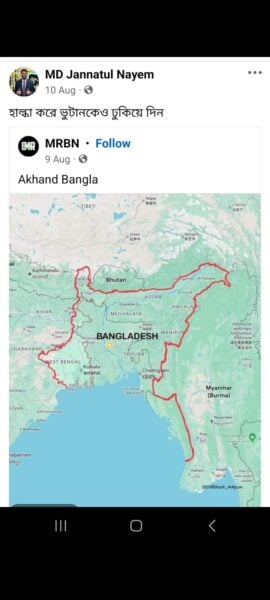
Jannatul Nayem, another student likely to graduate this year, has been linked to online statements supporting a “greater Bangladesh” including West Bengal, Sikkim, and Northeast India. In this picture below, he says, “Add Bhutan as well.”

Sirajul Islam Sayem also set to graduate this year, was accused of running a ragging racket at the institute and allegedly involved in abuse cases.
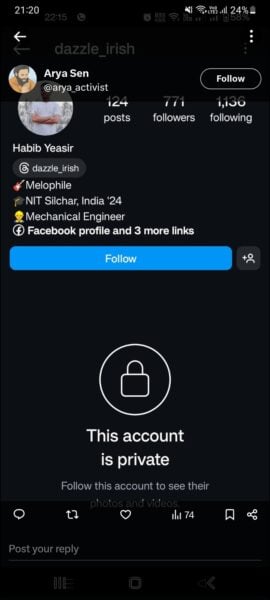
Habib Yeasir, another student nearing graduation, has been linked to controversial social media activity.

Maisha Mahjabeen, who was deported for making anti-India posts, adds to the list of problematic cases involving Bangladeshi scholarship recipients.
These are just a few examples of how radicals in Bangladesh are instigating and also doing what they are preaching – infiltrate Bharat by misusing visa status. We are getting news every single day on illegal Bangladeshis and Pakistanis found living hidden inside various cities in Bharat. It is high time the central government cracked down on all these illegals.
