


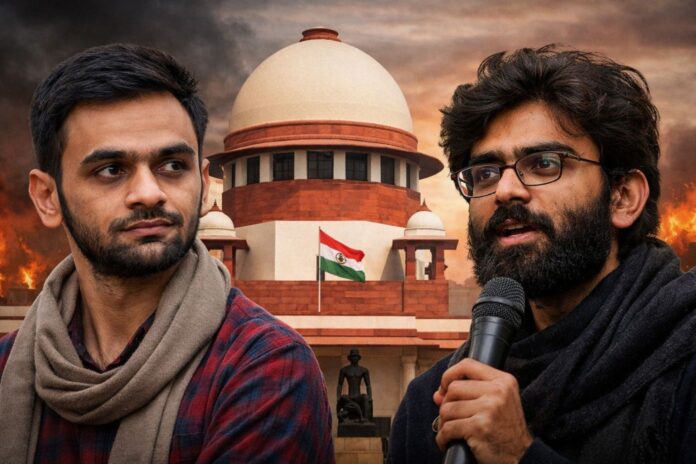
“Delhi Riots verdict explained: Why the SC rejected bail for Umar Khalid and Sharjeel Imam, seeing it as a planned conspiracy and not spontaneous violence”, OpIndia, January 06, 2026
“The Supreme Court of India’s judgment in the Delhi Riots conspiracy case on January 5, 2026, established a precedent that fundamentally alters how democratic courts weigh individual freedom versus state security. This historic ruling, authored by Justice Aravind Kumar, distinguishes between criminal conspiracy and superficial activism while revealing the government’s case and the court’s clever reasoning. There are several levels of argument that the average reader cannot see to comprehend what the court deemed most convincing.
The conspiracy that wasn’t spontaneous
The central claim of the prosecution’s case is that the February 2020 Delhi riots were a well-planned conspiracy that was developed right after the Citizenship Amendment Bill was approved on December 4, 2019, rather than an unplanned outburst of intercommunal violence. This distinction is significant because, under the Unlawful Activities (Prevention) Act of 1967, it changes the legal landscape from spontaneous public disorder to premeditated terrorist activity.
The timetable is devastating. The ‘Muslim Students of JNU’ WhatsApp group was established just hours after the Cabinet approved the CAB. In a matter of days, communally sensitive references to Kashmir and Babri Masjid were being printed in leaflets. In a matter of weeks, Sharjeel Imam gave talks at Jamia Millia Islamia advocating for Delhi to be ‘choked’ by traffic blockades, or chakka jams, which would interfere with supplies of milk and water. The court determined that this development was structural evidence of planning rather than accidental. Acid bottles, stones, and petrol bombs are not stored in homes weeks in advance of a spontaneous protest. Children from minority schools are not evacuated in advance during a spontaneous protest……”
Read full article at opindia.com
