


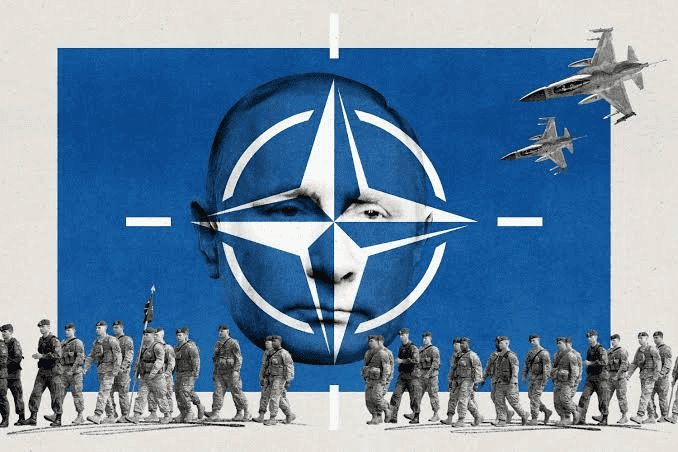
In just two weeks, Russian targets have been struck in three seas. On 11–12 November, a Ukrainian drone hit the Buyan-M missile ship Naro-Fominsk near Gogland Island in the Gulf of Finland, about 40 km from Finland, in the first strike on an operational Russian warship at sea in the Baltic. On 15 and 16 November, waves of drones and missiles destroyed the road navigation span of the Kerch Strait Bridge to Crimea and damaged its rail section. And last weekend, Libyan National Army officials told the Associated Press that Ukrainian sea drones, launched from a Ukrainian-run base in western Libya, hit a Russian ship at the Benghazi naval base.
Journalist Finian Cunningham and retired US Army Lt Col Daniel Davis, host of the Deep Dive podcast, say this is no accident. In an interview Cunningham posted on 24 November, Davis argued that the strikes do little to change the war in Ukraine, where Russia has the upper hand. But their timing, and the dramatic footage released of each impact, suggest they are meant to goad Moscow into retaliation that would widen the war.
The strikes came either side of the Coalition of the Willing summit that German Chancellor Friedrich Merz hosted in Berlin on 19 November. Leaders of Germany, France, Britain, Poland and Italy attended, along with NATO Secretary General Mark Rutte, and pledged to step up their backing for Kyiv. Washington, meanwhile, has been talking to Moscow and Beijing. Europe is doubling down even as the US looks for a deal.
Not Ukraine’s war alone
John Mearsheimer has long said the long-range campaign is not Kyiv’s alone. “There’s no question that NATO is deeply involved,” he told Glenn Diesen’s Greater Eurasia podcast in July. He noted that the G7 had pledged to “accelerate their support for the long-range bombing campaign by Ukraine into Russia”. He also named the likeliest path to a direct Russia–NATO clash: “if any drones are launched from territory in the Baltic States, they will attack those launch sites.” A strike 40 km off Finland brings that scenario uncomfortably close.
Libya shows how far the front has spread. Ukrainian forces working from territory held by the Turkey-backed government in western Libya were accused in March of sinking the Russian LNG tanker Arctic Metagaz in the Mediterranean. Andrew Korybko unpacks the Turkish angle.
Jeffrey Sachs, also on Diesen’s show, called Europe’s new military course “madness. It’s suicidal. It’s a path of war.” He warned that “Europe is taking defensive steps that are going to lead to war because they are really offensive,” and that “what Merz is doing is going to possibly provoke a disastrous war.” Mearsheimer turns the usual charge around: “the Europeans, not the Russians, are talking about the inevitability of World War III.” Scott Ritter goes further, arguing that Russian retaliation is now unavoidable.
Cunningham’s explanation is blunter: “History shows that war is the get-out-of-jail card for ruling elites who have lost political legitimacy within their own nations.”
Why Bharat should care
Bharat buys Russian oil and defence equipment, and needs open sea lanes from the Baltic to the Mediterranean. A NATO–Russia war on either sea would hit shipping and energy prices, and the multipolar balance Bharat’s diplomacy depends on. Sachs’s way out is plain: “Ukraine should be neutral, period. This is the way to peace.” Europe’s capitals are heading the other way.
