


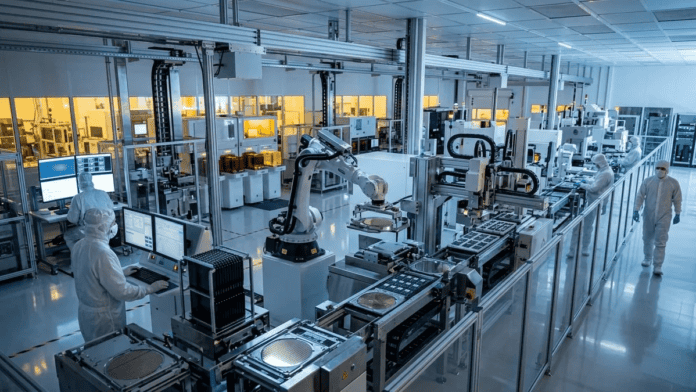
On 25 November, the Office of the US Trade Representative (USTR) issued its finding in a Section 301 investigation into “structural excess capacity” in manufacturing. The probe, opened in March 2026, covers 16 economies, among them China, the EU, Japan and Bharat. Its charge against Bharat is remarkable for its candour: Bharat’s “unreasonable acts, policies, and practices include industrial plans to expand manufacturing”, which are harming the US economy. The proposed punishment is a tariff of up to 25 per cent on all goods from Bharat, cut to 17 per cent if New Delhi signs a trade deal on Washington’s terms. The USTR singles out pharmaceuticals and medical devices, steel, solar, telecom and electronics, and petrochemicals, complaining that Bharat’s solar module capacity is nearly three times domestic demand. Public comments are open until 5 January 2027.
New Delhi has rejected the premise. The Commerce Ministry said it had told the USTR that “India does not have structural excess capacity in any sector.” This is the same Washington that, in April 2021, as Bharat’s second Covid wave raged, refused to lift its embargo on vaccine raw materials, because the rest of the world, its spokesperson explained, was better off with Americans vaccinated first.
A familiar weapon
Section 301 of the 1974 Trade Act is the tool Washington has used to cut rising industrial powers down to size. In 1986, Section 301 pressure pushed Japan into a semiconductor agreement that helped end its lead in memory chips. In 2018, the same section was used against China. Now it is Bharat’s turn, and the offence is no longer unfair subsidies or stolen technology, but the very plan to build factories. Offering a lower rate if Bharat signs a deal makes the purpose plain: the tariff is a lever to extract concessions at the negotiating table.
As economist Surya Kanegaonkar observed, “An industrialized India means a prosperous India – one that can sustain its consumption with its own production and rise as an independent pole in the world.” Bharat’s industry, he notes, “has been hobbled in some part by foreign lobbies and local acolytes over the decades”, and “the Americans are simply spelling out their long-held agenda since the horse has already bolted the stable.” His mention of “a Western-approved RBI governor who held special disdain for manufacturing” will remind readers of Raghuram Rajan. Rajan, a former IMF chief economist who headed the RBI from 2013 to 2016, has repeatedly questioned the PLI subsidies and argued that Bharat can prosper just through services instead.
The engine that never came
Defence shows what dependence costs. The Tejas Mk1A fighter runs on GE’s F404 engine, and HAL has said deliveries were held up by the awaited GE engines while the Indian Air Force’s squadron strength fell. Bharat’s own Kaveri engine was starved of funds for years while commentators called it a failure, and the indigenous programmes that depend on the F414 (AMCA, Tejas Mk2 and the naval TEDBF) wait on the next American engine. The X account Eurasia Immortal asks: if Washington sees even Bharat’s non-military manufacturing as a threat, “will it allow India to have Aerospace industry? NO.”
Trade office today, aid agency yesterday
The trade office is not alone. An X user has unearthed a 2022 “Authoritarianism Reading List” from USAID’s Democratic Resilience and Innovation team, which named Bharat as a country where democracy is declining. The same post shows USAID training material on “disinformation” that drew on propagandist Rana Ayyub to target the BJP, during the Biden presidency.
One arm of the US state brands Bharat’s elected government a threat to democracy. Another brands its factories a threat to American jobs. Both serve the same goal: a Bharat that consumes American goods and ideas but never competes. New Delhi must continue to engage Washington without getting carried away by the rhetoric of “natural democratic partners”. American hegemony has always rested on ruthless realpolitik, and American interests often run counter to those of Bharat. We cannot trade away our industrial future for a lower tariff rate.
