


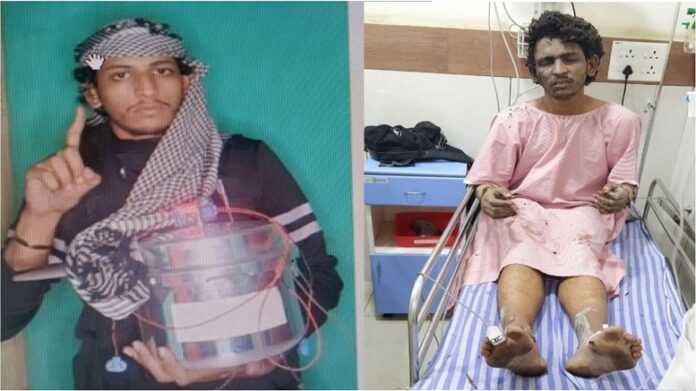
The Enforcement Directorate (ED) has uncovered a grave terror conspiracy involving plans to target Karnataka’s revered Dharmasthala Manjunatha Swamy Temple as part of a broader ISIS-linked network operating across southern Bharat. As per the Organiser, the revelations emerged during the agency’s probe into the 2022 Mangaluru cooker bomb blast, which has now been linked to a sophisticated terror funding and training operation.
Under the provisions of the Prevention of Money Laundering Act (PMLA), the ED has seized ₹29,000 from the bank account of Syed Yasin, one of the prime accused in the Mangaluru blast case. Investigations revealed that Yasin and Mohammed Shariq, the main accused, were part of a network receiving overseas funding through cryptocurrencies and illicit banking channels to plan multiple terror strikes, including an attack on Dharmasthala.
According to the ED, Shariq had conspired to plant and detonate an IED at the Dharmasthala temple. However, on November 19, 2022, a technical error in the device’s timer, set to nine seconds instead of the intended ninety minutes, caused the explosive to detonate prematurely inside an auto-rickshaw in Mangaluru’s Kankanady area. The blast severely injured Shariq, leading to his arrest.
Subsequent investigations by the ED and the National Investigation Agency (NIA) uncovered a wider operational structure. Encrypted messaging platforms like Telegram and Wickr were used by foreign-based ISIS handlers, including one identified as Colonel, to train Bharatiya operatives in IED manufacturing and target reconnaissance. The accused received detailed bomb-making tutorials and surveillance instructions through these secure channels.
A critical link in the network was Maj Munir, who facilitated the use of unauthorized bank accounts for receiving funds from overseas. The ED has established that approximately ₹2.86 lakh was routed to operatives through cryptocurrencies, later converted into cash by Point of Sale (POS) agents for a commission. These funds were used to purchase explosive materials online, rent safe houses in Mysuru and other cities, and conduct reconnaissance in Karnataka, Kerala, and Tamil Nadu.
Earlier, the NIA had seized ₹39,000 from Shariq’s possession immediately after the Mangaluru blast. While the NIA continues to probe the terror plot, the ED’s focus remains on dismantling the financial channels that sustained the network. Officials have warned that more seizures, arrests, and international linkages are likely to surface.
The original case began with a complaint from auto driver K. Purushottam, who unwittingly transported Shariq on the day of the explosion. What was initially treated as a local blast incident soon escalated into a major counter-terrorism investigation when authorities discovered the intended target, a prominent Hindu religious site attracting lakhs of devotees annually.
The ED has registered an Enforcement Case Information Report (ECIR) under the PMLA, working in parallel with the NIA’s terror probe. Both agencies are now focusing on dismantling what they describe as a well-structured terror financing ecosystem, which relies heavily on cryptocurrencies, darknet operations, and covert banking to fund extremist activities in Bharat.
