


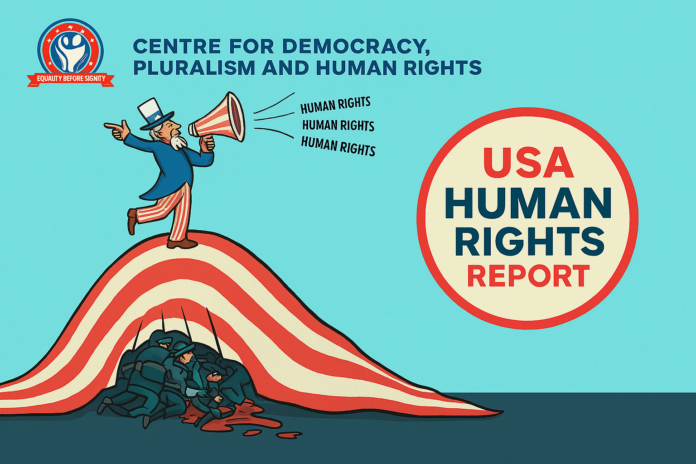
Among the most enduring human rights failures in the United States is the treatment of its Indigenous peoples. Unit 3 of the Human Rights Report: USA – Equality, Justice, Dignity argues that Native American discrimination is not a historical injustice that ended with westward expansion, but a continuing system of dispossession, legal infantilization, and economic exclusion. Unlike other minority groups, Native Americans are governed through a separate legal regime that mirrors colonial administration rather than equal citizenship, rendering them among the most structurally disadvantaged populations in the country.
What emerges from this unit is a disturbing conclusion: the United States remains a settler‑colonial state in relation to its Indigenous peoples, preserving sovereignty in name while denying it in practice.
Historical Treaties and Systematic Betrayal
The legal relationship between the U.S. government and Native tribes is grounded in hundreds of treaties, most of which have been violated, reinterpreted, or rendered meaningless by unilateral federal action. These treaties acknowledged Native nations as distinct political entities, yet subsequent policies—from forced removals to land seizures—hollowed out that recognition.
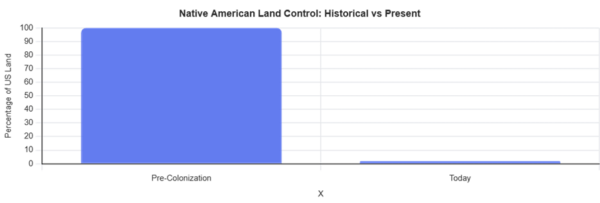
Unit 3 emphasizes that Indigenous land loss was not incidental but systematic. Native Americans once occupied the entirety of the North American continent; today, they control less than 2% of U.S. land, often in fragmented, economically nonviable parcels. The Dawes Act and subsequent allotment policies deliberately broke communal landholding structures, enabling the transfer of vast tracts of land to private settlers and corporations.
Legal Guardianship and the Illusion of Sovereignty
One of the most striking features of Native discrimination is the persistence of federal “trust” status, under which Indigenous nations are treated as wards rather than equals. Although tribes are recognized as sovereign entities, the U.S. government retains control over natural resources, land leases, and financial assets through the Bureau of Indian Affairs.
The report documents that trillions of dollars’ worth of Indigenous land revenues—derived from oil, gas, timber, and mineral extraction—have historically been mismanaged, underreported, or unaccounted for by federal authorities. The Cobell v. Salazar case exposed decades of financial mismanagement, yet meaningful structural reform has remained limited. Sovereignty, under these conditions, functions more as a legal fiction than a lived reality.
Economic Marginalization and Measured Deprivation
Quantitative data cited in Unit 3 reveals the depth of Indigenous economic exclusion. Native Americans experience:
- Median household incomes approximately 60–70% of the national average
- Poverty rates exceeding 25%, more than double the U.S. average
- Unemployment rates consistently the highest among all racial and ethnic groups
Infrastructure deficits compound these hardships. On many reservations, large proportions of households lack access to running water, electricity, sanitation, or reliable internet connectivity—conditions more commonly associated with the Global South than a high‑income democracy.

These outcomes are not the result of geographic isolation alone. The report underscores that Native lands are routinely exploited for resources, yet the overwhelming majority of economic benefits accrue to external corporations and state governments rather than Indigenous communities themselves.
Health Disparities and Structural Neglect
Native Americans also face the worst health outcomes of any ethnic group in the United States. Life expectancy is several years lower than the national average, while rates of diabetes, substance abuse, mental health disorders, and suicide are alarmingly high.
The Indian Health Service (IHS), the primary healthcare provider for Indigenous communities, is chronically underfunded. Per‑capita healthcare spending for Native Americans remains significantly lower than that for prisoners in federal custody, a comparison that starkly illustrates federal prioritization. These disparities are not accidental; they reflect long‑term policy neglect rooted in the perception of Native lives as administratively managed rather than politically accountable.
Cultural Erasure and Educational Assimilation
Unit 3 also documents cultural discrimination through education policy. For decades, Indigenous children were forcibly removed from their families and sent to boarding schools designed to eradicate Native languages and traditions. Although overt assimilationist policies have ended, their consequences persist.
Today, Native Americans remain severely underrepresented in curricula, faculty, and administrative leadership within the U.S. education system. Indigenous history is often reduced to pre‑modern folklore, detached from contemporary political and legal struggles. This narrative erasure reinforces the idea that Native peoples belong to the past rather than the present, weakening public recognition of ongoing injustice.
Environmental Sacrifice Zones
Native lands have frequently been converted into environmental sacrifice zones. Unit 3 highlights how nuclear testing, waste disposal, pipelines, and extractive industries are disproportionately located near or on Indigenous territories. The Dakota Access Pipeline controversy exemplifies this pattern, where economic expediency and energy policy overrode tribal objections rooted in treaty rights and environmental risk.
Such practices reveal a consistent hierarchy of concern: Indigenous consent is routinely subordinated to corporate and state interests, despite legal protections that ostensibly recognize tribal authority.
Policing, Incarceration, and Jurisdictional Exclusion
Native Americans are also subject to legal fragmentation that undermines protection. Complex jurisdictional arrangements between tribal, federal, and state authorities often result in effective legal vacuums, particularly in cases involving violence against Indigenous women. Perpetrators frequently escape accountability due to unclear prosecutorial responsibility.
Incarceration patterns further reflect ethnic discrimination. Native Americans are incarcerated at rates significantly higher than their population share, often far from their communities, weakening social and cultural ties and perpetuating cycles of marginalization.
Conclusion: Colonial Governance in a Post‑Colonial Age
Unit 3 paints an unambiguous picture. The United States’ relationship with Indigenous peoples is not one of reconciliation but of managed inequality. Native Americans are simultaneously recognized and restrained, acknowledged and controlled, sovereign and subordinated.
Ethnic discrimination in this context is not merely about prejudice or cultural misunderstanding. It is about land, resources, legal authority, and political power. Until Native sovereignty is realized materially—through land restitution, financial autonomy, institutional equality, and legal clarity—the United States will continue to practice colonial governance while proclaiming democratic values.
In confronting its treatment of Indigenous peoples, the United States confronts not a marginal human rights issue, but the foundational contradiction of its own statehood.
Link to the Report: https://www.cdphr.org/USA%20Report.pdf
